






After 21 days on a hunger strike, activist Sonam Wangchuk was removed from Jantar Mantar by Delhi Police and shifted to Safdarjung Hospital.
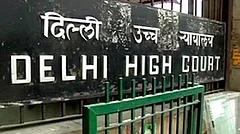
Delhi Police cited a Delhi High Court order and medical advice. Protesters, however, alleged he was forcibly detained.
Protesters described the demonstration as a defence of democratic rights, with many saying the government's handling of the protest had strengthened public solidarity and renewed calls for dialogue and accountability.
For the last 21 days, Jantar Mantar in Delhi had been home to Sonam Wangchuk, who launched a hunger strike in New Delhi to protest alleged educational mismanagement and the resignation of Education Minister Dharmendra Pradhan.
On July 18, Jantar Mantar saw a much larger turnout than usual. Despite the sweltering heat and the humid air thick with sweat, protesters continued to pack the site. Banners demanded accountability from the government, while chants for students' rights echoed through the crowd.
Amid the slogans and speeches, volunteers fanned those who had been sitting on a hunger strike, offering relief from the oppressive afternoon heat.
Among those gathered was a family of three, including their young child. The mother said her daughter has a social studies examination in the coming days that includes a chapter on democracy. Rather than teaching her the subject from a textbook, she decided to bring her to the protest site.


She said she wanted her daughter to understand what a democratic country should be like, a lesson no classroom can teach.
The gathering also reflected growing frustration over what protesters described as official silence toward a movement that began with the Cockroach Janata Party—a satirical online initiative that gradually evolved into an organised protest. It was in solidarity with this campaign that Wangchuk began his hunger strike.
Early on Saturday morning, Delhi Police personnel in plain clothes took Wangchuk from the protest site to Safdarjung Hospital as his health deteriorated. The police said the move was made in compliance with directions from the Delhi High Court and on the advice of medical experts.
"As per orders of the Hon'ble High Court and on expert medical advice, due to the deteriorating health condition of Sh. Sonam Wangchuk, he has been shifted to the hospital for essential medical care," the Delhi Police said in a post on X.


However, the manner in which Wangchuk was taken away has angered protesters. Videos from the scene show supporters attempting to prevent police personnel from removing him, describing the operation as an "abduction." The footage appears to show officers surrounding Wangchuk with white sheets, shielding him from public view, before taking him to Safdarjung Hospital.
Chahat Raghav, a lawyer present at the protest site, questioned the manner in which the police removed Wangchuk. She said officers arriving in plain clothes and taking him away wrapped in a bedsheet was not in accordance with due procedure.
"They are doing this under the guise of the Hon'ble High Court's order," she said. "The High Court only said that the Centre must step in if Mr. Wangchuk requires immediate medical assistance. His vitals have been monitored regularly over the past 21 days."
Raghav argued that the government's response reflected its unwillingness to engage with the protesters. "The problem with what happened on Saturday is how the government chose to take cognisance of this protest," she said. "Instead of opening a dialogue or even acknowledging the protest, it responded with a lathi charge."
Alongside Wangchuk, three activists from the All India Students' Association (AISA), Neha, Aameen and Manish, have also been on a hunger strike for 21 days.

"We have lost body fat and have become underweight because of the prolonged fast," Manish told Outlook. He said the three were also experiencing symptoms associated with nutritional deficiencies, including gum bleeding and back pain. He has lost around 10 kilograms, while Neha and Aameen have each lost about 8 kilograms.
"There has been no response from the government. On top of that, they are showing cruelty," he said.
Rejecting the police's explanation for Wangchuk's removal, Manish alleged that the authorities had "kidnapped Sonam Wangchuk in the name of hospitalisation." He claimed that doctors monitoring Wangchuk's health at Jantar Mantar had found his condition to be stable, with dehydration being the only immediate concern.
"The police say they took him away because of his health, but this is essentially a detention," he said.
Despite Wangchuk's removal and the government's silence, the three AISA activists said they would continue their indefinite hunger strike. They also said they would participate in the July 20 march to Parliament announced by the CJP.


Anurag, another protester at the site, said Wangchuk's removal had led to a noticeable surge in the number of people gathering at Jantar Mantar.
Participating in a one-day hunger strike himself, Anurag said he hoped more people would join, if only to understand the physical and emotional toll of fasting for a cause. "Democracies don't die when bad people scream. They die when good people become silent," he said. "Being indifferent is the opposite of patriotism."
Saturday's developments also triggered a fresh wave of discussion around the protest, both on the ground and online. Following Wangchuk's removal, Abhijeet Dipke, founder of the CJP, announced that he would begin an indefinite hunger strike.
The developments coincided with a change in the leadership of the Delhi Police. On Friday, the Union Ministry of Home Affairs appointed Anurag Kumar, a 1994-batch AGMUT cadre IPS officer, as the new Commissioner of Police, Delhi, replacing Satish Golcha, according to The Indian Express.
The newspaper reported that Golcha's early exit was linked to concerns over administrative decisions within the force, including changes to the process of appointing Station House Officers (SHOs) and the handling of the Cockroach Janata Party (CJP) protest at Jantar Mantar.
For some protesters, the timing of the transfer raised questions.
"It is too much of a coincidence for the police commissioner to be changed just a day before something like this happens," said Nikhil Saini, 21, a social media marketer attending the protest. "I think that has to be deliberate. That has to have some intention behind what happened today."
Saini, who was observing a one-day hunger strike, said Saturday was his first visit to the protest site. Despite the heat and humidity, he felt it was important to be present in support of what he described as citizens' democratic rights.
Asked what democracy meant to him, Saini recalled the definition he had learned in his ninth-grade civics textbook: a system in which people have equal participation in decision-making. While he said that idea had now become "a joke," he added, "I think we are trying to stop it from becoming one by being here, by asking for accountability."
"I want to be a very advent, a very aggressive part in decision-making. And when decisions are not, in my own opinion, in favour of my nation, in the solidarity of my nation, I would ask for accountability. Why is it not there? So that's my definition."















