Trump's interim Iran accord collapsed after renewed US-Iran military escalation
Strait of Hormuz tensions continue to threaten global energy security
Diplomacy remains uncertain with no active ceasefire or negotiation framework
NATO unveiled major defence investments amid growing geopolitical instability
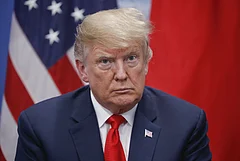
Three weeks after Washington and Tehran agreed to an interim memorandum aimed at halting hostilities, US President Donald Trump declared the accord "over".
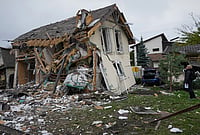
The collapse followed a rapid escalation. US carried out strikes on Iranian targets, prompting Tehran to retaliate against American military facilities in Bahrain and Kuwait. Washington subsequently revoked the sanctions waiver that had allowed limited Iranian oil exports, effectively ending the diplomatic opening created by the agreement.
The memorandum, announced on June 17 was intended to provide a 60-day window for indirect negotiations. Instead, it unravelled before reaching its halfway point.
Attacks on commercial shipping in the Strait of Hormuz triggered fresh US military action, bringing the arrangement to an abrupt end. Reuters reported that Trump indicated diplomacy could still resume if circumstances changed, but neither Washington nor Tehran has proposed a new negotiating framework.

Tehran Holds Its Position
Iran has shown little sign of altering its public stance following the accord's collapse.
In an official statement, Iran's Ministry of Foreign Affairs condemned the renewed US military strikes and the restoration of sanctions pressure, saying Tehran would continue to defend its sovereignty while rejecting Washington's actions.


While Iran's position has remained largely consistent, the diplomatic architecture surrounding it has disappeared. The temporary timeline for negotiations, the political commitments underpinning the memorandum and any mechanism for reducing tensions have all lapsed.
Why Hormuz Matters
The Strait of Hormuz remains the immediate flashpoint.
Roughly one-fifth of globally traded oil passes through the narrow waterway each day, alongside substantial volumes of liquefied natural gas. The attacks on commercial shipping that preceded the collapse of the accord once again underscored the vulnerability of one of the world's most important energy corridors.
With no ceasefire mechanism or monitoring arrangement now in place, the risk of another cycle of retaliation remains high. US military operations have resumed, while Iran has already demonstrated its willingness to respond by targeting American installations across the Gulf.

Is Diplomacy Still Possible
Although the memorandum has collapsed, diplomacy has not been ruled out entirely.
Reuters reported that Trump suggested negotiations could resume under different circumstances. However, any future engagement would effectively begin from scratch. There is no active ceasefire, no agreed timetable for talks and no mechanism to monitor compliance.
At the same time, Iran's Foreign Ministry has given no indication that it is prepared to return to negotiations under Washington's current conditions, leaving both sides without an agreed pathway back to diplomacy.
NATO Expands Its Capabilities
The collapse of the accord coincided with NATO's summit in Ankara, where allies announced one of the alliance's most significant capability expansion programmes in recent years.
NATO Secretary General Mark Rutte unveiled tens of billions of dollars in new procurements during the Defence Industry Forum on Tuesday. The acquisitions include a tenth Airbus A330 Multi-Role Tanker Transport aircraft, Northrop Grumman Triton maritime surveillance drones and Saab GlobalEye airborne early warning aircraft.
NATO also launched the Front Door for Industry initiative and the NATO Engine programme to accelerate defence production across allied industries. "The money is there, and more is coming," Rutte said, urging governments and defence manufacturers to "do more, faster, together."

Preparing For Future Conflicts
Beyond procurement, the summit focused heavily on adapting NATO's capabilities for emerging threats.
According to NATO, allies committed more than US$40 billion over the next five years to expand counter-drone capabilities and training, with the goal of increasing the number of trained drone operators fivefold by the end of 2027. The alliance also plans to establish a NATO-compatible marketplace for counter-drone technologies, while the NATO Support and Procurement Agency has already awarded surveillance drone contracts worth hundreds of millions of dollars.
NATO Deputy Secretary General Radmila Shekerinska also announced a series of new multinational initiatives. Eight allies launched the HALO mega-constellation project to strengthen communications, intelligence gathering and missile tracking from space, while Spain became the nineteenth participant in NATO's Persistent Surveillance from Space programme.
The summit also produced agreements to develop a standard NATO 155 mm artillery munition and new long-range precision strike systems. Meanwhile, the NATO Support and Procurement Agency finalised the acquisition of 700 PAC-2 and 200 PAC-3 air-defence missiles. Turkey announced further investment in its ATMACA land-based cruise missile programme, while Belgium and the Netherlands signed a joint air-defence procurement agreement.
What Comes Next
The interim accord between Washington and Tehran no longer exists. US military operations have resumed, Iran's oil sanctions waiver has been withdrawn and tensions in the Gulf remain elevated.
The possibility of renewed diplomacy has not been entirely ruled out. Yet, without a ceasefire, an agreed negotiating process or confidence-building measures, any return to talks appears distant.
At the same time, NATO's announcements in Ankara signal that the alliance is preparing for a more contested security environment. Its investments in drones, missile defence, long-range strike capabilities and space surveillance are designed not for a single crisis, but for a prolonged period of strategic uncertainty—one in which conflicts such as the latest US-Iran confrontation could become increasingly difficult to contain.