



LA 2028 will feature six men’s and six women’s T20 teams, with qualification decided through ICC rankings, continental quotas and a final global qualifier
India’s women’s team has already qualified, while the men’s team must finish as Asia’s top-ranked eligible side or go through the 2027 Olympic qualifier
Every T20I during the qualification window will matter, as rankings will directly shape Olympic entry and reduce room for errors or experimentation
For 128 years, cricket has waited for another Olympic moment. Now, as the sport prepares for its long-awaited return at the Los Angeles 2028 Games, the race for a place on the biggest sporting stage has begun. And in a country that breathes and lives cricket, one question has taken centre stage -- what will it take for the Indian cricket team to book its Olympic ticket?
For a nation where cricket dominates the sporting landscape, the possibility of winning an Olympic medal adds a new dimension to India’s ambitions.
India have enjoyed success across ICC tournaments, produced some of the biggest names in the game and remain one of the strongest forces in world cricket. However, the Olympic qualification process presents a different challenge altogether.
A team’s reputation alone will not be enough to secure a place in Los Angeles. The qualification system is built around ICC rankings, continental representation and a global qualifying tournament, meaning every T20 international during the qualification cycle could influence India’s Olympic hopes.

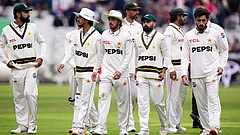

The International Olympic Committee (IOC) and the International Cricket Council (ICC) have now confirmed the pathway for cricket’s comeback at LA 2028. Six men’s teams and six women’s teams will compete in separate T20 tournaments, with both events having their own Olympic medals.
While the Indian women’s cricket team have already secured their place after their performance at the ICC Women’s T20 World Cup 2026, the men’s team will have to navigate a ranking-based battle to earn a spot.
So, how exactly will India qualify for cricket’s historic Olympic return? What role will rankings play? Could unexpected factors influence the final line-up? Here is everything you need to know.
How Many Teams Will Play Cricket At LA 2028
Cricket’s Olympic comeback will feature a much smaller field compared to major ICC tournaments.
Only six teams will compete in the men’s T20 tournament and six teams will feature in the women’s T20 competition at Los Angeles 2028. Each event will have separate medal contests, with teams competing for Olympic gold.
The tournament will mark cricket’s second appearance at the Games. The sport’s only previous Olympic outing came at Paris 1900, where Great Britain defeated France in the only match played to claim the gold medal.
This time, cricket will return with a structured competition featuring some of the best teams in the world. Each qualified nation will name a 15-player squad, meaning 90 athletes will compete in each gender category and 180 cricketers will be part of the Olympic cricket programme.
All matches will be played at a temporary purpose-built cricket venue in Pomona, California. The women’s competition will take place from July 12 to July 20, while the men’s tournament will run from July 22 to July 29.
The format will remain familiar to modern cricket fans, with T20 matches forming the basis of the competition. The six teams in each event will be divided into two groups of three before moving into the medal race.
How Will Qualification Work
The road to LA 2028 will be decided through a combination of ICC rankings, major tournaments and a final Olympic qualifier.
The hosts, United States, have been given a potential automatic place in both the men’s and women’s competitions. However, the USA teams must meet a ranking requirement to activate that host quota. They need to be ranked inside the top 15 of their respective ICC T20I rankings during the qualification period.
The remaining qualification spots will be distributed through different routes.
For the men’s tournament, four direct places will be decided through the ICC Men’s T20I Rankings. However, these spots will not simply go to the four highest-ranked teams in world cricket.
Instead, the highest-ranked eligible team from each of the four recognised cricket regions -- Africa, Asia, Europe and Oceania -- will earn a place at LA 2028. This system ensures that the Olympic tournament features global representation.
The final men’s spot will be decided through the ICC Olympics Qualifier in 2027. Eight teams that have not already qualified will compete for the last available place, with the winner earning a ticket to Los Angeles.
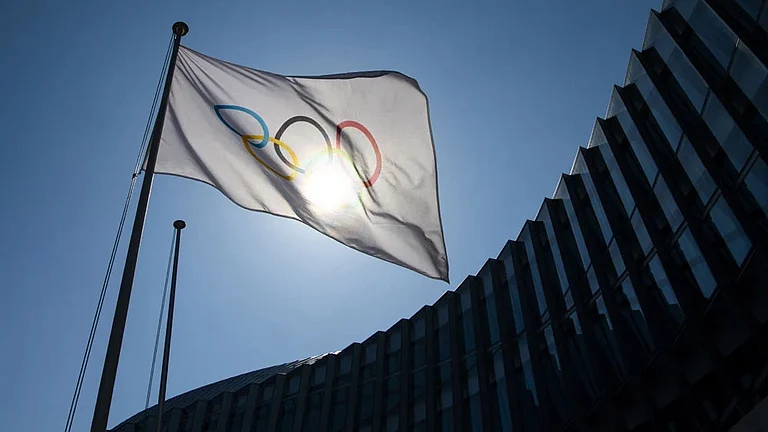
The women’s qualification pathway began through the ICC Women’s T20 World Cup 2026. The highest-placed eligible teams from Africa, Asia, Europe and Oceania earned Olympic quotas.
Australia, Great Britain (through England), India and South Africa secured those places after finishing as the best eligible teams from their respective continents.
The remaining women’s spots will be decided through the host allocation and the 2027 ICC Olympics Qualifier.
Will India Automatically Qualify For LA 2028
For the Indian women’s cricket team, the Olympic qualification question has already been answered.
India secured the Asian quota after finishing as the highest-ranked eligible Asian team at the ICC Women’s T20 World Cup 2026. Although India and Sri Lanka finished their respective group stages with six points, Harmanpreet Kaur’s side finished ahead because of a superior net run rate.
The men’s team, however, still have to earn their place.
India’s qualification will depend on their position in the ICC Men’s T20I Rankings when the ranking period closes on December 31, 2026.
To secure a direct Olympic berth, India must finish as the highest-ranked eligible Asian team. Being among the top teams globally will not automatically guarantee qualification because only one team from each continent can receive the direct ranking-based quota.
India currently remain among the leading teams in T20 cricket, giving them a strong starting position. But if another Asian team moves above them before the deadline, India could lose the direct route and would then have to fight through the ICC Olympics Qualifier.
The qualifier route will not be easy. Eight teams will compete for one remaining Olympic place, making direct qualification through the rankings the preferred path.
Why ICC Rankings Matter More Than Ever
The Olympic qualification system has transformed the importance of T20 rankings.
Previously, a defeat in a bilateral series could often be viewed as a temporary setback, especially when teams rested senior players or experimented with combinations. But during the Olympic qualification cycle, every result could have a direct impact on a team’s position.
For India, maintaining their place near the top of the ICC Men’s T20I Rankings will be crucial.
The men’s ranking window runs from June 30, 2026, to December 31, 2026. The performances during this period will determine which teams receive direct Olympic qualification and which teams enter the qualifier tournament.
This also means matches that may appear less significant on paper could carry major consequences. A poor run against lower-ranked opposition could cost valuable ranking points, while victories against strong teams could strengthen India’s position.
The competition for the Asian quota is expected to be particularly intense. If Pakistan or another Asian side finishes above India at the end of the qualification window, India’s route to Los Angeles could become much more complicated.
The Olympic dream, therefore, will not be decided only by performances at major tournaments. Consistency across the entire T20 calendar will matter.
Could Politics And Global Cricket Influence The Process
Sports is political, whether it is acknowledged openly or not. From host nations to eligibility rules and participation frameworks, international sport is shaped by decisions that extend far beyond the playing field.
The Olympics, in particular, operate on a tightly defined structure where representation is tied to sovereign nations, a distinction that becomes crucial as cricket prepares for its return at LA 2028.
The ongoing FIFA World Cup 2026 has already reflected this reality, unfolding as a global spectacle where different nations come together under layers of regulation, travel requirements and official approvals.
Questions around who can enter the host country, who can participate, and how long teams and officials can remain are shaped by political and administrative frameworks, highlighting how major sporting events extend beyond what happens on the field.
It underlines how international tournaments are not only sporting contests, but also carefully managed global events influenced by systems, decisions and circumstances that operate far beyond the game itself.
Cricket now enters that same environment, where structure can be as decisive as performance.
The clearest example is the West Indies. A composite ICC team representing multiple Caribbean nations, they are not recognised as a National Olympic Committee (NOC) and therefore cannot compete at the Olympic Games or claim a quota place.
However, if either the men’s or women’s West Indies team finishes among the eight highest-ranked sides yet to qualify by 31 December 2026, a dedicated Caribbean qualifying pathway will be activated to determine which NOC from the region will go forward to the ICC Olympics Qualifier.
Great Britain presents a similar separation, with only England’s results counting toward Olympic qualification under ICC rules.
For India’s men’s team, the path to Los Angeles will hinge not just on stature in world cricket, but on sustained consistency across the qualification cycle -- where every series, every result, and every slip could shape their Olympic destiny.















