Early this month, Rashtrapati Bhavan made an announcement of major gubernatorial-reshuffle involving many states and union territories, including Ladakh, Delhi, West Bengal, Tamil Nadu, Bihar, Maharashtra, Telangana, Himachal Pradesh and Nagaland.
The framers of the Indian Constitution, keeping in mind the Westminster inheritance, laid down the framework of the parliamentary system with the addition of federalism as a core organising principle and governors were to be formally heading the states, not the government.
The federal landscape is overshadowed by centralisation impulses and the regional parties that asserted their own identities during the 1980s and 90s are somehow being pushed back.
Come elections in the states and we see the incumbent Union government becoming super-active. The recent reshuffle, or rather reset, of both the governors and key administrative officials of the election-bound states indicate an interventionist Union impacting in the state’s electoral politics. It also smacks of the instrumentality of the Union-executives’ overreach into the electorally significant state’s governance, essentially to maintain a vigil or perhaps to elicit feedback during political mobilisations in the state elections.
Early this month, Rashtrapati Bhavan made an announcement of major gubernatorial-reshuffle involving many states and union territories, including Ladakh, Delhi, West Bengal, Tamil Nadu, Bihar, Maharashtra, Telangana, Himachal Pradesh and Nagaland. Prima facie it appears to be a routine reshuffle, even though quite sudden, bereft of any reasonable explanations. It would be quite interesting to take note of governors’ political interventions, particularly in the poll-bound states of West Bengal and Tamil Nadu and their efforts to keep federal democracy working within the states. With four states—West Bengal, Tamil Nadu, Kerala and Assam—and one union territory— Puducherry—going for elections next month, the stage is set for high stakes contests having deep ramifications for national politics.




The architecture of Indian federal democracy is sui generis, perhaps unmatched in any other democracy, and this is in a sense that the states all have quite a distinctive political susceptibility marked by, what Yogendra Yadav and Suhas Palshikar call, “an ongoing contestation between the logic of democracy and the logic of domination”. Indian states, notwithstanding the enormous diversity both politically and culturally, were originally regarded as little more than sub-units of centralised government structures, and have over the years remarkably evolved into powerful political arenas, so much so that those who rule at the Centre try hard to influence the outcomes of the power struggles in these arenas.
Federal relations, rather than being cooperative, have turned conflictual and at times mutually weakening, and since the last decade or so, they have become mutually manipulating. The federal landscape is overshadowed by centralisation impulses and the regional parties that asserted their own identities during the 1980s and 90s are somehow being pushed back. The Bharatiya Janata Party (BJP), with all its heft—money, muscle and management—is working incessantly towards capturing states’ electoral politics under the slogan of ‘double engine’ government, which is quite an anathema to the governance of any federal nation. In such a scenario, it is interesting to note the new politics of governors.

Gubernatorial Politics
The framers of the Indian Constitution, keeping in mind the Westminster inheritance, laid down the framework of the parliamentary system with the addition of federalism as a core organising principle and governors were to be formally heading the states, not the government. Governors were made the linchpins of the constitutional apparatus of the state, key figures in Centre-state relations wielding few significant discretionary powers that may upset the political processes in favour of the Centre.
In Shamsher Singh’s case (1974), the discretionary power of the governor was defined as related to the choice of chief minister in case of certain peculiar exigencies; the dismissal of government which has lost its majority in the house, but refuses to quit office; and the dissolution of the house, where an appeal to the country is necessitous. Unlike presidents, they are not bound by ministerial decisions. Rather they self-police their discretionary boundaries and also unlike presidents, who enjoy some bit of electoral legitimacy, governors escape such legitimacy. Apart from such discretionary powers, governors may withhold assent to bills (as no fixed time frame is allotted), reserve them for presidential reconsideration, recommend President’s rule in the states. And they need to administer areas marked under the fifth and sixth schedules of the Constitution. These powers are more often than not indiscreetly applied and therefore, cause much tensions and anxiety in the functioning of federalism.
The federal landscape is overshadowed by centralisation impulses and the regional parties that asserted their own identities during the 1980s and 90s are somehow being pushed back.
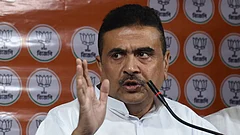
The gubernatorial office under the BJP government has undergone visible transformation. The office which was envisaged as a constitutional coordinating pivot in Indian federalism, has majorly undermined the constitutional morality undergirding the federal frame, both in letter and spirit. R.N. Ravi, the controversial ex-Tamil Nadu governor has been shifted to West Bengal, ostensibly to keep an eye on Mamata Banerjee’s Trinamool Congress’ (TMC) moves in the upcoming elections. As Tamil Nadu governor, he was criticised for his conflictual relationship with the state government, for his sitting on bills and refusing to sign them, for his attempts to amendments and refusal of the address prepared by the state government and his obnoxious statement that ‘secularism’ being a western concept has no place in India. Rajendra Arlekar, in the current reshuffle, holds the charge of both the Kerala and Tamil Nadu governors’ offices. A hardcore Rashtriya Swayamsevak Sangh (RSS) loyalist, Arlekar couldn’t conduct Raj Bhavan as a buckle between the Centre and the state (Kerala), but was often seen as contradicting the state government’s perspective, particularly his assertions over the state-run universities matter. Retired Lt. General Syed Ata Hasnain took charge of Bihar which signalled the BJP’s indirect reaching out to Muslims in Bihar, even though he has taken anti-Muslim and pro-Hindutva stances several times. If we were to take a close look at these reshuffles of governors, we find that governors are removed, replaced or transferred in a huff without even completing their tenure and that the office is more open to RSS loyalists, particularly from the retired groups of the likes of civil servants, academics, or the military and the judiciary.

Raj Bhavan, which was supposed to be a rather politically insulated institution, has become an active sight of politics at the state level. Governors are seen strengthening the processes of political, administrative and institutional centralisation. They are keener to serve the party that appoints them than the ‘interest of the nation’. What was feared has come true, in a sense, that they have become agents of the President who acts on the aid and advice of the government. In such a milieu, elections become more fascinating.

MORE FROM THIS ISSUE


Tanvir Aeijaz teaches Politics and Public Policy at University of Delhi and is Hon. Vice-Chairman at the Centre for Multilevel Federalism (CMF), Institute of Social Sciences, New Delhi
This article appeared in Outlook's April 1st, 2026 issue titled 'ParaDime Shift,' which looks at how the US-Israel attack on Iran has come home to India with the LPG crisis and is disrupting the nation's energy ecosystem, exposing policy gaps and testing the limits of diplomacy.