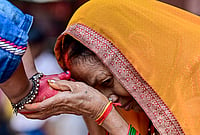
The outcome of the recent state elections defies any serious academic categorisation, rather, it unfolds certain exceptionalisms undergirded by distrust and cynicism against India’s electoral democracy. It marks, on the one hand, the seizure of West Bengal’s political terrain by the Bharatiya Janata Party (BJP), which has been hitherto occupied by the Left-liberal combo since Independence, and on the other hand, the growing uneasiness and dissensions about procedural-electoral democracy, particularly on the issue of the Special Intensive Revision (SIR) and the consequent disenfranchisement of a large number of non-BJP voters.
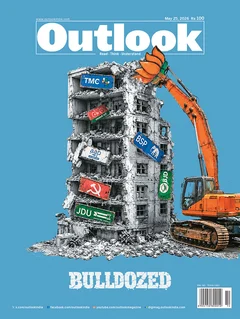
The defeat of both the All India Trinamool Congress (TMC), which ruled Bengal unflinchingly for 15 years, and the Dravida Munnetra Kazhagam (DMK) in Tamil Nadu, with an unmatched performance in terms of the state’s socio-economic development, however, signified three major departures. One, it has weakened significantly the oppositional INDIA bloc, both the TMC and the DMK being the bloc’s sinews, particularly in their opposition to the Hindutva experiments. Two, the rejection of the traditional alternative-politics of choosing between the two viable alternatives, and the acceptance of the exceptional-politics of experimentation with the new by voters, is symptomatic of democratic experimentation in our multi-party democracy. Tamilaga Vettri Kazhagam (TVK) in Tamil Nadu belying the claim of most pollsters, and the BJP’s sweep, quite akin to a wave, in West Bengal, can surely be termed ‘new politics’ in the federal democracy. And the third, the most prominent one, is the enfeebling of the regional parties, and thereby the possibility of a shift towards two-party contestations, both at the state and national levels.
The road to Delhi’s throne passes through state politics. Embedded in the federal electoral politics, Indian states are the key players on the Indian political landscape, which not only transforms and shapes Indian democracy in a significant way but also represents India’s diversity and heterogeneity in varied forms. State politics enjoys a certain degree of autonomy from national politics and because of the assertion of new social identities at the state level, we see regional parties emerging as the harbingers of national governance.
The four states that went to polls recently are marked by their own ongoing contestation between the logic of dominance and the logic of electoral democracy. The regional parties therefore retain their own distinctive flavour that differentiates them from other states. For instance, Tamil Nadu politics is shaped by the Dravidian socio-political movement and populism—a strategy rooted deeply in the Dravidian movement. Similarly, West Bengal’s politics cannot be dissociated with its peculiarities of the regional anti-colonial movement emerging from some radical underground organisations such as Anushilan Samiti and Jugantar and Operation Barga—the 1970s land reforms which removed sharecropping and crippled the landlord’s economic and political heft.

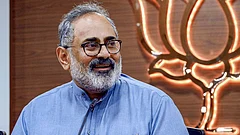


In a multi-party political system, when democracy deepens, we see more regional parties emerging and flourishing. TVK emerged as a significant regional player, not because of the DMK’s dominance, hubris and complacency, but because of voters’ experiments with exceptionalism. TVK framed its politics as contra-distinct to the All India Anna Dravida Munnetra Kazhagam (AIADMK) and the BJP on the one hand, and the DMK on the other, creating a space imbued with Dravidian ideology and upholding the Periyar, Kamraj and Ambedkar traditions. This new regional party has the potential to burnish Tamil identity politics afresh and restrain the Hindutva juggernaut into the South. But the real question is, given the shaky equilibrium of the alliance, how long is its government going to survive?
Will we witness the resurgence of regional parties in the wake of growing inequality and the regional-cultural identity crisis?
The Indian party system has been variously defined as a ‘three-party system’ in terms of its evolution since Independence, and now, perhaps, the addition of the fourth one characterised by the ascendance of the BJP in power. The first system is the Congress system (1952-67) when the Indian National Congress dominated Indian politics. The second is the period of anti-Congressism (1967-89), a sort of plebiscite on the INC, and the third, often referred to as the coalition system, is marked by pre- or post-alliances (1969-2014). With the visible paradigm shift in identity politics, the fourth system beginning in 2014, may be called the BJP system.
Under the coalition system, we saw the rise of regional parties playing an important role in the formation of the government at the national level. The coalition seemed inevitable due to disintegration of the Congress system and the further consolidation of the alternative power centres on the basis of changing socio-economic and political interests. The formation of large, multi-party governments during coalition systems was possible due to the pattern of party fragmentation into several single state parties, and thereafter, the motivations for pre-electoral coalitions. The growth of regional parties during this period is also marked by the increased incentives for opportunistic politicians to be part of the regional players sustaining the governments at the national level. The United Progressive Alliance (UPA) in 2004, known as ‘federal coalitions’ saw multiple diversities—religions, castes, linguistic, cultural and regional—in the national power arena, fostering ‘cooperative federalism’ in bargaining and competing interests of the different partners in the coalition. This eventually led to Indian states becoming the primary arenas of political contestations and further shrinking of the space for a real Opposition. The success of regional parties was predicated less on the clientelestic brand of politics and more on representing sub-national identities, but they became ineffective in securing substantial devolution of power.
With the dawn of the fourth-party system, and India under Narendra Modi, Indian politics took a paradigm shift, moving away from ‘multipolarity’ and ‘fragmentation’ of the coalition system. The BJP is seen now as a pole around which Indian politics rotates, though with a weakening federalisation of national elections. The shift towards national parties, with the Congress as the distant competitor of the BJP, is quite evident. The Congress’ restlessness can be seen from the fact that most of its regional satraps have been weakened and therefore, putting up a minimal resistance to the BJP juggernaut would require a robust organisational strategy. One faction in the Congress exults in the weakening of the regional parties as it considers these parties to be stumbling block in their quest to become the main rival to the BJP. Rahul Gandhi, nonetheless, warned the faction recently not to gloat over the fall of the TMC in Bengal. The BJP, excluding the South, dominates all regions in the country leaving some of the regional parties, including the Samajwadi Party, the Rashtriya Janata Dal, the Shiv Sena, the Bahujan Samaj Party and the Nationalist Congress Party, on the backfoot.
Two moot questions stand before us: are we going to see the continuation of the fourth-party system, with the BJP at the fulcrum or the Congress gaining strength, bit by bit, to pose a major challenge as a credible alternative? Alternatively, will we witness the resurgence of regional parties in the wake of growing inequality and the regional-cultural identity crisis?
(Views expressed are personal)
MORE FROM THIS ISSUE


Tanvir Aeijaz teaches Politics and Public Policy at University of Delhi and is Hon. Vice-Chairman at the Centre for Multilevel Federalism (CMF), Institute of Social Sciences, New Delhi