



Former US National Security Adviser John Bolton, who served during President Donald Trump’s first term, talks about the growing bonhomie between Trump and Pakistan Field Marshal Asim Munir and why India remains a central pillar of America’s strategic calculus against China. He also shares his insights on Trump’s foreign policy posture, offering a sharp criticism of his strategic approach while terming his ‘unpredictability’ a diplomatic liability. Edited excerpts from an exclusive interview with Saurabh Sharma.
There is a genuine concern in India over Trump’s growing bonhomie with Pakistan Field Marshal Asim Munir. What is your assessment?
What concerns me more broadly is China’s increasing influence over Pakistan. China’s role in arming the Pakistani military has grown pretty significantly, especially at the high end of sophisticated weapons. Similarly, China has also made huge economic investments in Pakistan and has pretty well expanded its footprints. Munir appears to have developed a personal rapport with Trump, including nominating him for the Nobel Peace Prize, something Trump clearly values. But I have long believed the US should ‘de-hyphenate’ its India and Pakistan relationships. Pakistan should also be careful about becoming overly dependent on China because that may not serve its long-term national interests.
From the US perspective, is engagement with Pakistan merely tactical and temporary?
The US has had relations with Pakistan for decades, including during periods when relations with India were difficult. But the key is to treat both relationships independently. I repeatedly tell Pakistani officials that they should be cautious about moving too close to China, even if Chinese military and economic support appear attractive in the short term.
How do you see India-US relations evolving, especially in the backdrop of tariff disputes and Trump’s claims that he brokered the India-Pakistan ceasefire after Operation Sindoor?
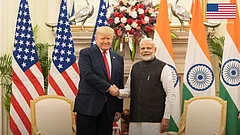
Relations are clearly under strain right now for those reasons. On tariffs, Trump’s approach is highly personal and controversial. Even US courts have begun questioning the legality of some of these tariff measures. But strategically, India and the US share major concerns regarding China and the emerging China-Russia axis. Xi Jinping and Vladimir Putin’s ‘partnership without limits’ is one of the greatest threats to global peace and security this century. That is why frameworks like the Quad [Quadrilateral Security Dialogue] remain important.



How do you see the future security architecture of South Asia and the Indo-Pacific region?
I think the Quad provides a very useful framework for strategic cooperation among countries on China’s Indo-Pacific periphery. Unfortunately, too much focus has shifted toward trade disputes, which often consume enormous diplomatic energy. Strategic issues should remain the bigger priority. Former Japanese Prime Minister Shinzo Abe strongly pushed the Quad concept. I hope future leaders continue advancing it.
US Secretary of State Marco Rubio is expected to visit New Delhi for the Quad foreign ministers’ meeting. How important is the Quad for Indo-Pacific security?
The Quad could become extremely important. It does not have a fixed structure yet; it is still evolving. I think there is genuine interest in Australia, Japan, India and the US in strengthening the framework. Rubio’s visit could help reinforce the importance of the Quad within the Trump administration itself.
How important is India in America’s long-term strategic calculus against China?
It is enormously important. Under Communist Party rule, China will remain an adversary. Its deepening relationship with Russia gives it access to vast energy and mineral resources. The challenge posed by China affects Europe, West Asia, South Asia and East Asia alike. India and the US, therefore, have strong reasons to cooperate strategically, even though there are still disagreements to work through.
“I do not think the US acts as an aggressor. Most Americans would prefer to be left alone if the rest of the world left them alone.”
Critics argue that the US often frames military interventions in the name of democracy or national security, while behaving like an aggressor. History is full of such examples. How do you respond?
I do not think the US acts as an aggressor. Most Americans would prefer to be left alone if the rest of the world left them alone. But the world is interconnected and there are genuine threats to American interests. Iran is one threat. Russia’s invasion of Ukraine is another. North Korea, Venezuela and Cuba also present challenges. The job of the US government is to protect Americans from those threats.
Are you suggesting the possibility of a US military invasion of Cuba in the future?
I have no idea what Trump may decide to do tomorrow, let alone in Cuba. But I do think the Cuban regime is weakening internally. This is less a military question and more about increasing pressure from the Cuban people themselves, especially younger generations demanding more individual freedoms.
If the US justifies interventions abroad, how would it respond if other countries followed a similar logic—for example, if China attacked Taiwan?
The key issue is what the people of those countries want. Taiwan clearly wants to remain independent. Ukrainians overwhelmingly voted for independence after the Soviet Union collapsed, including in Crimea. Similarly, in Venezuela, Maduro had effectively stolen elections. The US is not interested in imperial control. No American wants to rule Iran after this war. Americans would want Iranians themselves to determine their future government.
Trump’s second tenure has been marked by a far more aggressive foreign policy posture. Has it strengthened US global leadership or weakened it?
I think it has become weaker. Trump has ignored many longstanding US allies. The Nato [North Atlantic Treaty Organization] alliance itself is in trouble. He has not followed through on conflicts important to the US, like Russia’s invasion of Ukraine. He has not provided clear leadership on a range of issues. Even in the Iran war, it is unclear what his objectives are, how he intends to pursue them or what happens next. There is an inability to view the world strategically and to have comprehensive plans that advance American interests and those of its allies and partners.
What about the future of Nato under Trump?
Trump fundamentally misunderstands how Nato works. He thinks the US defends Europe while Europe contributes nothing, which is not true because Nato is a mutual defence alliance. His criticism has made many Europeans question whether the US would truly honour Article V commitments under his leadership. That uncertainty weakens deterrence.

Many people describe Trump’s unpredictability as central to his leadership style. Is unpredictability an asset in diplomacy or a liability?
I think it is a liability. Unpredictability may help in military operations because it keeps adversaries off balance. But catching your allies off guard is not a good way to proceed. It is also not an effective way to build deterrence policies, defence strategies or alliance coordination. In the Iran conflict, Trump did not consult allies before acting. Even when launching operations related to Gulf shipping lanes, he reportedly did not initially consult Saudi Arabia, Kuwait or other Arab states whose airspace and bases would be involved. That is really an unforced strategic error.
“Trump has ignored many longstanding US allies. The Nato alliance itself is in trouble. He has not provided clear leadership on a range of issues.”
Are you suggesting that the broader strategic objective has failed?
In Iran’s case, we still do not know what Trump’s strategic objective actually is. At first, I thought it might be regime change, but later he denied that. At another point, he said regime change had effectively happened because the people previously in charge were dead. If you do not know the objective, you cannot measure success or failure. We have certainly inflicted damage on Iran, but whether it is enough depends entirely on what the objective is.
Once the Iran war ends, do you expect the security architecture of West Asia to change significantly?
I do not think Southwest Asia will have real peace or stability until the regime in Iran changes. As long as Iran is governed by an authoritarian and militaristic-religious regime, stability will remain difficult. Iran’s nuclear programme, its support for international terrorism and its ability to threaten the global economy make it a destabilising force.

MORE FROM THIS ISSUE


Do you believe the idea of American exceptionalism still exists today or is it gradually eroding?
I believe it still exists. Trump is an aberration. I do not think he or the Maga [Make America Great Again] movement will persist after he leaves office. That does not mean he cannot do significant damage in the short term, but he is not representative of the broader American tradition.















