The defining rupture of Mehbooba Mufti’s political career did not come at the edges of power, but at its very centre, the decision to carry forward the People's Democratic Party’s (PDP) uneasy alliance with the Bharatiya Janata Party (BJP). In Jammu and Kashmir, where politics is inseparable from questions of identity, autonomy, and survival, that choice came to eclipse everything else she did in office.
Her daughter, Iltija Mufti, who is now stepping into the same volatile political terrain her mother once navigated, does not soften that judgment. “We did not form an alliance for the chair but to safeguard Article 370. For the chair, Omar sahib had offered us support,” Iltija says, framing the decision as one rooted in political compulsion rather than ambition.
And yet, she is equally clear about what it became.
“But we made the government for the people,” she adds, insisting on intent even as history recorded consequences very differently.
Mehbooba remains one of only two women from Jammu and Kashmir to have been elected to the Lok Sabha twice, a milestone no other woman from the region has matched since, even as the 2024 Assembly and subsequent bypolls together brought a record four women MLAs into the J&K Legislative Assembly marking the highest female representation in the Assembly to date, though still limited in comparison to overall numbers.
When Mehbooba, 66, took oath as Jammu and Kashmir’s first woman chief minister in 2016, she inherited not just her father Mufti Mohammad Sayeed’s legacy, but also his most controversial political gamble, the PDP coalition with BJP.
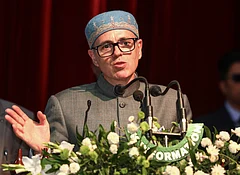
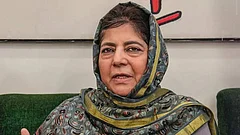
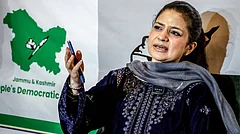
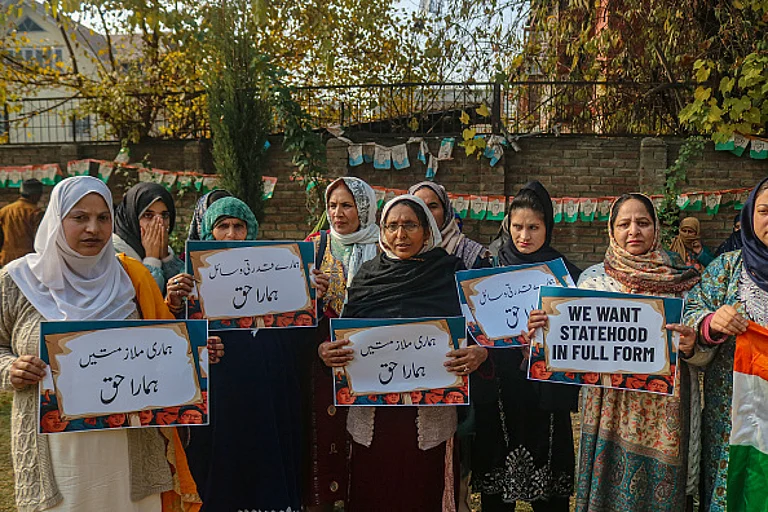
It was an alliance that should never have worked on paper. One party had built its politics on the promise of dialogue, autonomy and “soft separatism”; the other on the ideological project of integration and the dilution of Kashmir’s special status. Yet governance in Jammu and Kashmir has often been an exercise in managing contradictions rather than resolving them.
The coalition quickly became a site of friction, over AFSPA, arrests, militancy, and the meaning of “normalcy” itself. By 2018, the BJP withdrew, calling the situation “untenable”, and Mehbooba resigned.
For critics, that moment marked the collapse of a political experiment that had already lost moral ground. For Mehbooba, it was the exhaustion of an impossible balancing act, between Delhi and Srinagar, between coercion and consent.
But for Iltija, the alliance remains something more complex than betrayal or strategy. It is part of a longer inheritance, one she says cannot be separated from her mother’s political beginning. She says that her mother entered politics in a moment of deep fear and fatigue in Kashmir, at a time “when trust had collapsed, insurgency had reshaped everyday life, and even safety and dignity were uncertain.”
“She began her journey already carrying the political baggage of her father, with all the burdens and scrutiny that inheritance brings,” Iltija says.
Mehbooba’s politics cannot be understood outside the shadow of her father. Mufti Mohammad Sayeed, the PDP’s founder, was himself a product of Kashmir’s most intricate political compromises, a leader who worked with Delhi, broke with Delhi, and returned to Delhi again.

Mehbooba did not enter politics as a professional politician. She entered it as an extension of that political architecture, one that was being rebuilt in the late 1990s after years of insurgency, violence, and institutional collapse in Kashmir.
She began in the Congress, won her first Assembly election from Bijbehara in 1996, and later co-founded the PDP in 1999 with her father. What followed was not just party-building, but political manufacturing in a conflict zone. Iltija describes that early period as formative, almost mythic in its intensity.
She recalls Mehbooba as a single mother taking care of her two young daughters but also a politician beginning not in offices, but in villages where even seasoned male politicians hesitated to go. “In many ways, she was doing what no one else, no man in Kashmir at the time, was doing. That’s where she made her mark,” says Iltija, describing Mehbooba as not just outspoken but brave.
“I say this in a neutral, dispassionate way. Whatever mistakes she may have made later as a politician is separate, but the beginning of her journey was incredible,” says Iltija, adding that for Mehbooba and her grandfather, Mufti, to “break the hegemony” of the ruling party at that time, the National Conference (NC), was significant.
In her telling, Mehbooba’s early political identity was forged in risk, travelling without security, meeting grieving families, entering spaces where the state itself was often absent or feared. She remembers her mother in those years in almost cinematic detail, “She went into villages and hamlets where even men with security feared to go.”
If Mehbooba’s political legacy is contested, her tenure is inseparable from the violence that defined it. 2016, the year she became chief minister, also became one of the bloodiest in Kashmir’s recent history. The killing of Hizbul Mujahideen commander Burhan Wani triggered months of mass unrest, prolonged shutdowns, and sustained street protests. Over 100 civilians were killed in the ensuing cycle of clashes, according to multiple estimates, alongside militants and security personnel.
It was also a year when pellet guns blinded hundreds, when hospitals overflowed with injured protesters, and when entire districts lived under curfews and communication shutdowns. In total, that year alone saw 371 deaths across categories of civilians, militants, and security personnel.
Yet, the political accountability expected in other contexts rarely materialised in the same way in Kashmir’s case. The chief minister remained in office, even as the scale of civilian casualties mounted. This asymmetry, between death and political consequence, became one of the defining features of Mehbooba’s tenure.
It also produced some of her most controversial political moments.
In the aftermath of an encounter that took place in north Kashmir’s Kulgam, where three young boys were killed, Mehbooba’s remark, “kya waha doodh aur toffee lene gaye the? - Did he go there to buy milk and toffee,” a statement she made during a press conference when protesters were targeted outside an army camp during protests. Later, she clarified it was meant as a warning in a maternal tone, but the phrase endured as shorthand for perceived insensitivity in moments of public grief.

For critics, it symbolised the widening gap between governance and empathy. For supporters, it reflected the impossible burden of managing violence in a conflict zone where every statement is politically weaponised.
As chief minister, Mehbooba’s governance record was shaped by both constraint and symbolism. Her tenure coincided with one of the most violent phases in recent Kashmiri history, yet it also saw attempts, at least on paper, to foreground women in welfare policy.
Schemes such as the Ladli Beti initiative, scooty distribution for girl students, women’s police stations, and self-help group support were framed as interventions in a deeply patriarchal society. The intent was to link mobility, education and economic participation with gender justice. But the political question remained larger than policy design, could welfare schemes meaningfully alter a state structured by conflict, militarisation and centralised power?
Political scientist Indu Agnihotri places Mehbooba’s politics within a broader democratic question. “The whole question of women’s reservation needs to be understood in the context of democracy in India,” she says. And she is cautious about celebrating representation without substance, “If you separate it from that, then it becomes a kind of gender representation that risks turning into tokenism, a kind of symbolic presence.”
For Agnihotri, Mehbooba’s significance lies not in identity alone, but in the deeper question of whether women in power can reshape decision-making itself.
Radha Kumar, former Kashmir interlocutor and long-time observer of the region’s politics, reads Mehbooba Mufti’s career less as ideological divergence and more as structural constraint. “Both she and leaders like Omar Abdullah have operated under strong central constraints,” she notes, situating her leadership within the limits of Kashmir’s political architecture rather than individual agency alone. Even so, she acknowledges Mehbooba’s visibility as a Kashmiri leader, calling her “a strong voice for Kashmiris” who, in Kumar’s view, required considerable courage to sustain.
Within governance, Kumar points to symbolic but meaningful interventions, especially around women’s representation. “During her tenure as Chief Minister, the State Women’s Commission was active and led by capable women,” she says, reading it as part of an effort to place women in positions of responsibility, even within a constrained system.
On her broader political positioning, Kumar locates Mehbooba’s trajectory within shifting alliances in Kashmir, noting her proximity to the INDIA bloc while acknowledging an inconsistent record within the Gupkar alliance. “Her politics has aligned more naturally with the INDIA alliance,” she observes, though she adds that coordination with other parties was often uneven, with the PDP sometimes acting independently under internal strain.
Despite this, Kumar maintains that Mehbooba’s public presence remains significant: “Mehbooba Mufti remains a strong and articulate leader.” Yet she also flags a deeper structural limitation: “The PDP has relied more on individual leaders rather than a strong party organization,” making its long-term stability uncertain beyond her personal political weight.
Kumar resists romanticising differences in leadership styles between Mehbooba and her male counterparts, especially the current chief minister Omar Abdullah. “I would say there are two aspects. First, she is very visibly and unapologetically a woman in politics. She did not try to neutralize or hide her gender.” But she adds a note of limitation as well, especially when it comes to reforms and policies for women through Mehbooba, the first and only female chief minister of J&K. Other than the State Women’s Commission, she says, “I am not aware of any major initiatives.”
For Iltija, her mother’s political legacy is neither flawless nor finished. It is a structure still being built. She speaks of Mehbooba not as an icon, but as a precursor, someone who entered spaces where women were not expected to exist, and made them slightly more accessible for those who came after.
She recalls the stigma, the scrutiny, the weight of being a single mother in politics, and the slow transformation from vulnerability to authority. “She laid a foundation for other women like me to enter politics,” Iltija says. And finally, she returns to the idea of continuity, not triumph.
“She has, in a way, paved a road for us. For her, that road did not exist—she had to build it. Now we can walk on it,” she says.
MORE FROM THIS ISSUE


A shorter, edited version of this appears in print
Zenaira Bakhsh is an Assistant Editor at Outlook. She covers governance, minority rights, gender and conflict
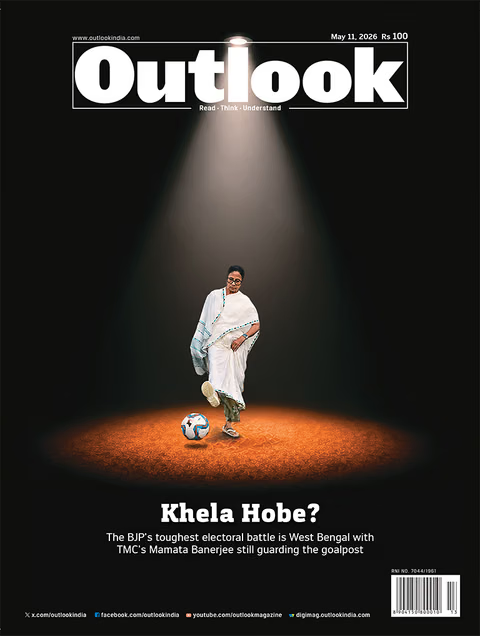
This article is part of the magazine issue dated May 11, 2026, called 'Khela Hobe? ' about Assembly Elections 2026 and how West Bengal may prove to be the toughest battleground for the Bharatiya Janata Party.