People's Democratic Party leader Iltija Mufti said CM Omar Abdullah's refusal to ban alcohol in Jammu and Kashmir because Hindus are permitted to drink liquor was illogical.
She was commenting on Abdullah's statement that liquor shops were to serve people of those faiths in which the consumption of alcohol was not forbidden.
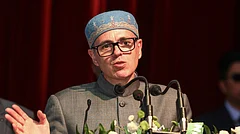
While interacting with reporters in Ganderbal on Sunday, Abdullah was asked about the demand for an alcohol ban in Jammu and Kashmir.
The air in Ganderbal is usually crisp with the scent of pine and the hum of quiet mountain life, but this past Sunday, it thickened with a familiar, stinging political tension. Chief Minister Omar Abdullah, standing before a huddle of reporters, found himself at the centre of a brewing storm over a glass—or rather, the right to sell one. When pressed on the perennial demand for an alcohol ban in Jammu and Kashmir, Abdullah didn’t offer a typical bureaucratic pivot. Instead, he leaned into a brand of blunt pragmatism that has since set the valley’s political circles ablaze.
"Is anyone forcing them to drink?" Abdullah asked, his tone more conversational than confrontational, yet undeniably firm. He argued that the presence of liquor shops is a nod to the region's diverse faith landscape, specifically catering to those whose religions do not forbid consumption. For Abdullah, it was a matter of personal agency: "You are going to a shop on your own will... We are not dragging you there." It was a defence of a secular fabric that acknowledges the "other," but in a region where religious sensibilities run deep, "will" is rarely seen as a purely individual act.




The response from the opposition was swift and sharp, humanizing a debate that often feels like a mere exchange of press releases. Iltija Mufti, the vocal leader of the People’s Democratic Party (PDP), took to social media to peel back the layers of Abdullah’s logic. To her, the Chief Minister’s stance wasn't just a policy choice; it was a "U-turn" that ignored the very precedents he claimed to protect. "If it's wrong to impose a ban on Hindus... how have Hindu-majority states like Gujarat and Bihar banned alcohol successfully without a whimper?" she questioned, pointing to a perceived inconsistency that transcends religious lines.
Beyond the legalities and the logistics of prohibition, there is a visceral, human element to this clash. Mufti’s critique touched on a sense of "indifference" she believes the government is showing toward the majority's religious sentiments. It’s a delicate dance in Srinagar: balancing the pluralistic ideals of a modern state with the deeply rooted traditional values of its people. As the debate moves from the streets of Ganderbal to the digital corridors of power, the question remains whether J&K's secular credentials are best served by the freedom to choose or the communal decision to abstain. For now, the bottles stay on the shelves, and the arguments continue to pour.