






CPI(ML) will contest independently in states like Kerala, Tamil Nadu, and Assam, stepping outside INDIA bloc and Left Front.
Weak organisation in southern states may limit gains, while increasing risk of vote division within opposition.
Different alliance strategies across states reflect deeper cracks and lack of coordination within opposition parties
After the Bihar Assembly election results, the Opposition’s show of unity appears to be weakening. One clear signal is CPI(ML)’s decision to step outside both the INDIA bloc and the traditional Left Front and contest elections independently in several states.
In Bihar, issues around seat-sharing, leadership and coordination had already surfaced. The defeat has deepened the trust deficit. Instead of working together, parties now seem to be competing with one another. In this context, CPI(ML)’s decision to contest in states like Kerala and Tamil Nadu—where it lacks a strong organisational base—raises questions. For now, the party plans to field three candidates in Kerala and around 12–15 in Tamil Nadu.
The move has two sides. On one hand, it gives CPI(ML) an opportunity to expand beyond its traditional base and build a broader presence. On the other, with limited resources and a weak cadre in these states, it may simply split votes without significant gains. This could hurt both the party and the wider Left space. It reflects intent, but also highlights the fragility of opposition unity at present.
CPI(ML) general secretary Dipankar Bhattacharya told Outlook India that the party does not have a strong organisational base in Kerala, which is why it is contesting only three seats.
Kerala is currently governed by the Left Democratic Front (LDF) led by Chief Minister Pinarayi Vijayan. In the 140-member Assembly, the LDF enjoys a comfortable majority, with the CPI(M) holding the largest share of seats and the CPI as the second-largest party in the alliance.
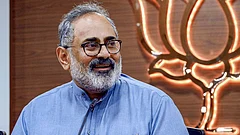



On contesting despite a weak presence, Bhattacharya said that in a state like Kerala, where established alliances such as the LDF and UDF dominate, there is little political space. However, he added that the party has seen some activity in certain pockets, which led it to field a limited number of candidates.
Out of the three candidates, one is from a tribal community, while the other two include a Muslim teacher and a lawyer. The tribal candidate will contest from the Peravoor Assembly seat, which is considered a high-profile constituency. The sitting MLA here is the state Congress president Sunny Joseph, who is again contesting from the same seat. CPI(M)’s K.K. Shailaja is also in the fray here.

In Tamil Nadu, CPI(ML) will also contest on its own. In the 239-member Assembly, the party plans to field candidates in around 12–15 seats. The ruling DMK is contesting with a large alliance, which includes Congress, CPI(M) and CPI. One noticeable point is that while Left parties and Congress are against each other in Kerala, in Tamil Nadu they are together against BJP and AIADMK.
In West Bengal, CPI(ML) has mostly contested alone in the past. This time, however, it will have an understanding with the CPI(M) and contest around ten seats. In the last Assembly election, CPI(ML) contested 12 seats on its own, while the CPI(M) was allied with Congress. This time, Congress is contesting separately in the state.
In Assam, the party is taking a mixed line. Dipankar Bhattacharya said CPI(ML) had earlier contested elections in the state and even had MLAs from there. This time, it wanted to contest as part of an alliance and had asked Congress for three seats in the plains. However, it was offered only one. As a result, CPI(ML) will contest one seat in alliance with Congress in the plains, while in the hill areas it will field candidates against Congress in three out of five seats. Here again, the situation is different from Bengal—Congress and CPI(M) are together in Assam, while they are separate in Bengal.
Senior journalist Prabhakar Mani Tiwari said CPI(ML)’s tie-up with the CPI(M) in Bengal is unlikely to make much difference. According to him, even if the Trinamool Congress loses a few seats, Mamata Banerjee is still likely to form the government. He added that any reduction in TMC’s seats is more likely to benefit the BJP than the Left or Congress.
It is also worth noting that the Left Front, which ruled West Bengal for nearly three and a half decades, failed to win a single seat in the last Assembly election.
















