The survivor alleged that Krishnamachari invited her to his Kochi residence, where he made unwelcome sexual remarks and physical advances
Earlier this month, Kochi Municipal Corporation appointed Krishnamachari as the Art, Design and Cultural Curator of the city
Which pro-active and preventive steps has the biennale taken since the MeToo movement and the case against Komu?
One of the biggest contemporary art festivals in the country, the Kochi-Muziris Biennale has been embroiled in controversies over the years. For the second time since its launch in 2012, a top official has stepped down in the wake of allegations of sexual harassment. The spectre of the MeToo movement continues to haunt the festival. The recent revelation of the reason behind the resignation of Bose Krishnamachari as president of Kochi-Muziris Biennale (KMB), allegedly due to a sexual harassment case filed against him with the internal complaints committee has sent shockwaves through the art community. However, this is not the first time that the biennale is in headlines for the wrong reasons.
Allegations of sexual harassment of co-workers by men in powerful positions have resurrected a controversy that refuses to die down.
During the 2018 MeToo movement, an artist levelled allegations of sexual misconduct against the then co-founder Riyas Komu. The woman artist shared her experience of alleged harassment against Komu through an anonymous post on the ‘Scene and Herd’ Instagram account, describing an incident from 2015.
Komu had publicly apologised for the allegations though he maintained the ‘incident was misappropriated’. Komu, too, stepped down from his position after the allegations surfaced and never returned to the foundation.

According to reports, the foundation stated at that time that it had not received any formal complaint, and while an internal inquiry was initiated, it was later dropped due to absence of an official complainant coming forward.
Despite two major cases of allegations against Biennale founders and years after the MeToo movement, there is no collective pressure group of women artists like the Women in Cinema Collective (WCC) that exposed cases of sexual harassment in the Malayalam cinema industry.
The work of the WCC has empowered voices of many survivors that led to the formation of the Justice Hema Committee. Although a few cases of sexual harassment were investigated, it hasn’t ensured justice for every survivor. Still, it created awareness on a large scale. The WCC made efforts to ensure systems were in place, through formation of internal complaints committees in largely informal workspaces in the cinema industry.
In 2018 the global wave of the #MeToo movement reached India. A tsunami of allegations of abuse, harassment and assault against male colleagues, bosses, mentors and others surfaced as women decided to identify their predators. However, many victims in the world of art were hesitant to step forward, fearing retribution from a patriarchal society.
In 2020, celebrated artist Subodh Gupta had won a defamation suit against the anonymous account Scene and Heard for publication of anonymous sexual harassment allegations against him.
However, the recent allegations of sexual harassment against Bose Krishnamachari, raise many questions. What is the mechanism in place to efficiently implement the POSH Act by the Kochi Biennale Foundation beyond forming an ICC? Which pro-active and preventive steps has the foundation taken since the MeToo movement and the allegations against Komu? Why do artists fear to talk about such cases? How will the foundation and other art organisations ensure women artists, especially from marginalised backgrounds, can navigate the complex world of art?
The controversy opens a Pandora’s box of problematic issues. These include lack of access and opportunities for women artists, dependency on powerful networks often dominated by men, the gender pay gap, everyday misogyny and the male gaze in art - which women artists can’t protest against; fearing cancel culture. Due to these structural issues, many instances of sexual harassment endured by women artists remain under wraps.
“The field of art is very informal in setting. Women artists are vulnerable and hesitant to speak up against the perpetrators of sexual harassment at the workplace, because this world functions with networking. Powerful men at the top of the pyramid bring in financial resources for the festivals etc. Those who speak up are seen as trouble-makers,” says a leading woman artist based in Mumbai who wished to remain anonymous.
A degree from a renowned institution isn’t sufficient in the industry, adds the artist. “The women, especially from marginalised caste and class backgrounds are unfortunately dependent on these men for access and opportunities.”
Many women work as freelance artists in a segment in which the structure of employer-employee contracts is largely unorganised. “Also, there isn’t any database that I know of where artists are registered, except the field of design. There isn’t a community or collective of women artists that I know of where women artists can at least raise their concerns,” adds the artist Outlook interviewed.
In the high-stakes world of art, gallery managers, most of them men, facilitate access and visibility to artists. And their work is also dependent on the big artists who bring in funding. Therefore, the other men also choose to be silent and complicit in this boys club. This is a pressing concern echoed by the two women artists we spoke to.
“When sexual harassment allegations against powerful men artists reach the public domain or the complaint reaches ICCs, men are told to step down from their positions, but resignation doesn’t ensure justice. These men then work with other organisations and artists,” complains a woman artist.
Incidentally, earlier this month, Kochi Municipal Corporation appointed Krishnamachari as the Art, Design and Cultural Curator of the city.
Misogyny and the male gaze in art is another big problem. "Berlin-based artist Joseph Marr, for instance, created sculptures of women's bodies using sugar syrup, a material that is seductive, fragile, and edible. These sculptures are licked by the viewers. His work is highly problematic and raises questions about consent, male gaze, and the long history of women’s bodies being objectified within both art and society. I feel reluctant to share my opinion on this because I might be cancelled. If this is the vulnerability I carry, there is no hope that I'll get justice in cases of sexual harassment at work,"says another woman artist. "I faced sexual abuse twice but couldn’t do much,” she adds.
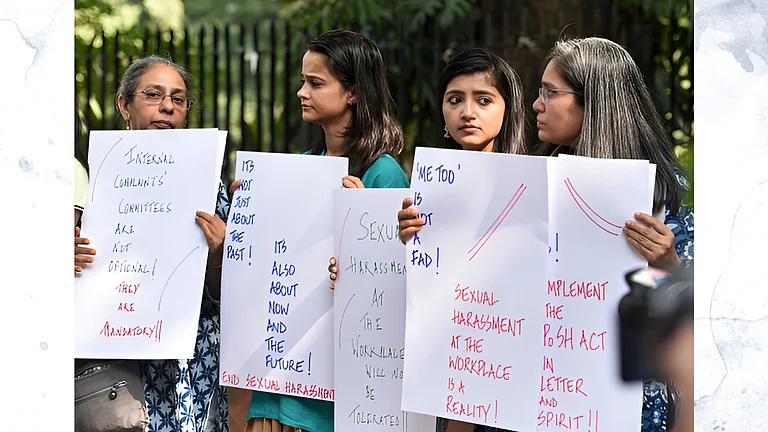
Cases of sexual harassment of women at workplace are far more complex. "They should be given serious attention and justice for survivors must be ensured," says J Devika, a feminist researcher based in Thiruvananthapuram, “However, law alone doesn’t give voice to women. The society we live in is patriarchal. At times, cases are also used by two groups fighting for power. Instead of ensuring justice for the survivor, they are used to settle scores,” says Devika.
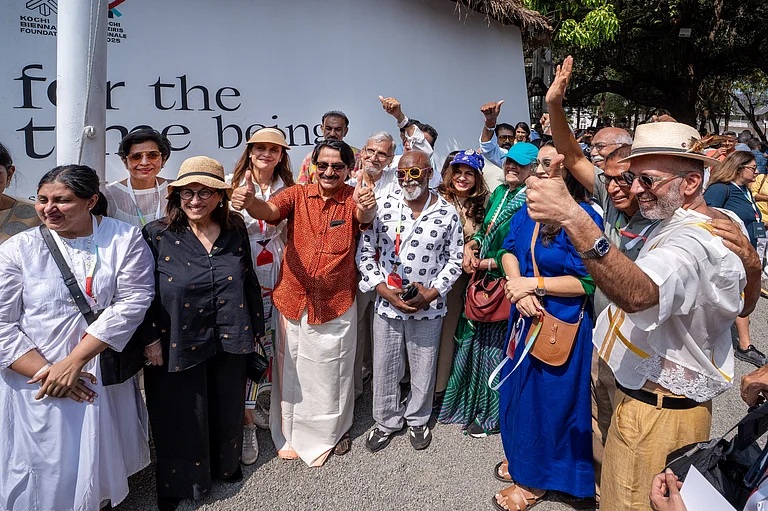
Allegations against Bose Krishnamachari
Krishnamachari resigned from his position in January 2026 following a sexual harassment complaint filed against him. Earlier the official statement by the Kochi Biennale Foundation cited “family reasons” for his resignation; it later emerged that an Internal Complaints Committee had received a complaint from a woman who worked with him, alleging sexual harassment
According to media reports, the survivor alleged that Krishnamachari invited her to his residence, where he made unwelcome sexual remarks and physical advances despite her attempts to escape. The complaint, filed in January 2026 with the ICC, led to the initiation of an internal inquiry under POSH guidelines, mandating the accused to step aside during the investigation.The Biennale Foundation’s chairperson later acknowledged that the complaint was among the factors that led to his resignation, though not the sole reason cited.
Krishnamachari, in his statement on March 25 shared with Outlook, denied the allegations, citing them as false and misleading. The statement says, “Over the past few days, certain media reports and communications have surfaced in connection with my resignation from the Kochi Biennale Foundation, alongside references to allegations that are misleading, unverified, and taken out of context.”
In his detailed response to Outlook, he further explained, “At the outset, I wish to reiterate that my decision to step down from my position as President of the Kochi-Muziris Biennale and from the Board of Trustees was taken independently and for personal reasons, as formally stated at the time of my resignation. I categorically deny any insinuations or attempts to link my resignation to unsubstantiated allegations.”
He also stated that there is no complaint pending or existing against him before any competent authority or forum in this regard. Outlook asked him a follow-up question pertaining to his statement—whether there was any such case in the past registered against him which concluded with an outcome. We did not receive any response on this till the time the story was published.
Krishnamachari has warned of appropriate legal action against the ‘defamatory allegations’ levelled against him.“I have already initiated appropriate legal proceedings against those responsible for creating and disseminating such false and defamatory material. I remain committed to the values of integrity, transparency, and the continued growth of the arts ecosystem that I have been privileged to help build over the years,” said Krishnamachari in his statement.
Outlook also reached out to Venu Vasudevan, chairperson of the Kochi Biennale foundation. “The IC committee received the complaint against Bose Krishnamachari on January 3, 2026. The incident of sexual harassment allegedly took place on December 20, 2025. The complaint is under investigation currently,” said Vasudevan.
Mired in controversy and with two top officials stepping down owing to alleged harassment complaints, what is the future of the Kochi-Muziris Biennale? “After the president stepped aside from his position, the Biennale was not affected and it will not be affected in the future. The art festival will remain the same as it is reputed today. The future of the Biennale? It will not be affected at all,” claims Vasudevan.
Jitish Kallat was appointed as president of the Kochi Biennale this month. Kallat is a globally reputed artist and also served as a chief curator of the Biennale in 2014. Anita Dube was the first woman chief curator appointed in 2018, the year that coincided with global turbulence after the MeToo movement. The regular attendees of Biennale do feel that the foundation promotes the people who are known and powerful for leadership positions of the Biennale.