






Last week, US Treasury Secretary Scott Bessent announced a temporary suspension of sanctions on Russian oil.
THE decision to ease some sanctions on Russian oil sale has led to a volley of protests from European leaders
Zelenskyy’s disappointment is understandable as the more revenues Russia can earn, the more pressure it can ease on its war economy.
As the world’s attention shifts to the war in West Asia following the US–Israel strikes on Iran, Europe’s longest-running conflict has for now slipped to the margins. The war between Ukraine and Russia, once the central geopolitical crisis dominating Western diplomacy, now risks being pushed to the background. The energy crisis triggered by the war has sent shock waves through the global economy and world leaders are scrambling to contain the aftershocks. The focus has shifted from Ukraine to Iran even for European leaders.
For Moscow, the diversion has brought unexpected advantages. With global energy markets rattled and Gulf supplies under threat, pressure to enforce sanctions on Russian oil has eased, giving the Kremlin renewed financial breathing room for its war effort. The US has lifted some of its previous sanctions against Russia. India has been given "permission’’ to buy Russian oil which it has substantially reduced, with an eye to get the additional 25 per cent tariffs slapped on India for lifting discounted Russian oil. This additional surcharge was on top of the 25 per cent tariff already slapped on all Indian exports.
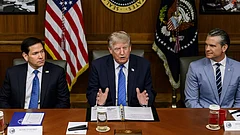

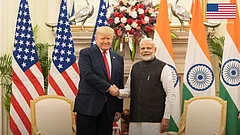

Washington accused New Delhi of fuelling the Russian war efforts. With the current energy crisis, and in the hope of stabilising oil prices, the Trump administration has lifted restrictions on India for a 30-day period.

Last week, US Treasury Secretary Scott Bessent announced a temporary suspension of sanctions on Russian oil. The US decision to ease some sanctions on Russian oil sale has led to a volley of protests from European leaders. EU Council President Antonio Costa said it was "very concerning". Chancellor Friedrich Merz of Germany said the decision was "wrong" while President Emmanuel Macron of France said there was "no justification" for it. A spokesman for UK Prime Minister Keir Starmer said all allies should maintain pressure on Russia and its war chest. "The best way to continue to stop Russia supporting hostile actors is to continue on collective pressure and end the war in Ukraine," he said.
Ukraine’s President Volodymyr Zelenskyy was as unhappy as his European supporters. Speaking in Paris after a meeting with Emmanuel Macron, Zelenskyy said that the US decision alone was worth around $10 billion, at the moment. "This certainly does not help peace," he said. Zelenskyy’s disappointment is understandable as the more revenues Russia can earn, the more pressure it can ease on its war economy.
However, whatever Europe thinks or wants is of little relevance to Trump. Instead he is now urging NATO allies to send in their forces to help escort ships across the choke point on the Strait of Hormuz .
Trump called on NATO allies to do "whatever it takes" to help the U.S. "We have a thing called NATO," Trump said. "We didn't have to help them with Ukraine. ... But we helped them. Now we'll see if they help us," Trump said, in an interview to London’s Financial Times on Sunday. ."Because I've long said that we'll be there for them but they won't be there for us. And I'm not sure that they'd be there," Trump added. "If there's no response or if it's a negative response, I think it will be very bad for the future of NATO."

Europe is concerned that lifting sanctions on Russia oil will help Moscow to continue the war in Ukraine. Russia has been under wide-ranging sanctions since February 2022, when it launched the Ukraine war. So far none of the European nations have heeded Trump’s call. But Trump is not just calling on NATO but on China, Japan and other countries to do their bit to keep the oil flowing through the Strait. Zelenskyy’s disappointment is understandable as the more revenues Russia can earn, the more pressure it can ease on its war economy.
Meanwhile, Volodymyr Zelenskyy is exploring new ways to sustain Ukraine’s military campaign, and is pitching the country’s battle-tested drone technology to oil-rich Gulf states and hoping to get funds to sustain the war. Teams from Ukraine have gone to the Gulf countries to lend their expertise on battling Iranian drones. Russia has been using drones in Ukraine and Kiev has learnt how to tackle such attacks. According to reports in the Western media, the third round of trilateral peace talks between Russia and Ukraine spearheaded by US special envoy Steve Witkoff and Trump’s son-in -law, Jared Kushner, is likely to be postponed while the crisis in West Asia takes precedence.
But the war in Ukraine continues unabated with reports of daily strikes and counter strikes as the death toll on both sides keep mounting. The shifting global focus could reshape the conflict in unexpected ways. Russia gains resources and time, while Ukraine is forced to diversify its partnerships and rely less on traditional Western backers such as the United States. Whether this momentary geopolitical distraction ultimately prolongs the war or pushes Kyiv toward new alliances may determine the next phase of the war.
















