






Nitish Kumar’s move to the Rajya Sabha signals a transition, but his continued ground activity shows he still wants to retain political influence.
Internal differences within Bharatiya Janata Party and Rashtriya Swayamsevak Sangh over leadership, especially around Samrat Choudhary, are delaying the power shift.
Janata Dal (United) is bargaining for key positions, making the transition a negotiated and strategic process rather than a simple exit.
Nitish Kumar’s recent political moves are sending several signals at once. His steps towards the Rajya Sabha, his continued activity on the ground, and the delay in the transfer of power suggest that his politics remains as carefully calibrated as before, which is something even many of his close associates do not always entirely grasp.
The way he filed his nomination for the Rajya Sabha election, and with the NDA’s agreement cleared his path to the Upper House, it was widely perceived as a sign that he was moving towards stepping away from the Chief Minister’s post in an active sense.
However, his increasing involvement in the ‘Samriddhi Yatra’, which began in Bihar on March 10, is being interpreted differently. Through this journey, Nitish Kumar has followed his familiar style, which is touring districts in phases, reviewing development schemes, interacting with people, and sending political messages at the same time.
Even while moving towards the Rajya Sabha, he appeared in what many described as a “super active” mode. Continuous visits, project inaugurations, and outreach to social groups created the impression that he still wants to retain political control. This has led to speculation about whether he might continue as Chief Minister.

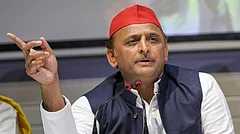


After being elected to the Rajya Sabha on 16 March, Nitish Kumar temporarily became a member of two Houses apart from the Bihar Legislative Council. Under the rules on dual membership, he must resign from the Bihar Legislative Council within 14 days if he wishes to retain his Rajya Sabha seat. That means he has to resign by March 30; otherwise, his Rajya Sabha membership will automatically lapse.
The question then arises whether he can remain Chief Minister after resigning from the Council. The answer to this is that he can, but only for a maximum of six months. Beyond that, he must become a member of either the Bihar Legislative Assembly or the Legislative Council to continue in office.
In this context, questions are being raised about what Nitish Kumar’s heightened visible activity during the Samriddhi Yatra actually indicates.

Senior journalist Pushyamitra does not see any reason why Nitish Kumar would want to remain Chief Minister. Speaking about his continued activity and the delay in the transfer of power, he said, “I don’t think Nitish would want to stay. The matter is stuck for two reasons. One is the RSS, and within the BJP, there is disagreement over the face. Samrat Choudhary is not the RSS’s preference. The RSS wants a new face, possibly from a Dalit or EBC background. On the other hand, the JD(U) has its own grievances, which is why the deal is taking time to finalise. JD(U) wants, in place of the Chief Minister’s post, not just the Deputy Chief Minister’s position but also the Home Department and the Speaker’s post.”
One reason cited for the RSS not favouring Samrat Choudhary is that he has long been seen as an outsider and as someone close to Nitish Kumar. Before joining the BJP, he was in the RJD and was close to Lalu Prasad Yadav. He first became an MLA and a minister during Lalu’s government. In 2010, he joined the Janata Dal (United), worked with Nitish Kumar, and also served as a minister from the party’s quota. After joining the BJP in 2018, he quickly emerged as one of its prominent faces in Bihar politics.
In recent years, Samrat Choudhary has been strongly promoted within the BJP. When Nitish Kumar was running the government with the RJD, he was made Leader of the Opposition. Later, when Nitish returned to the NDA, he was made Deputy Chief Minister. In the present government, he holds the post of Deputy Chief Minister along with the Home portfolio, effectively placing him second after Nitish Kumar.
Samrat Choudhary is the son of senior Bihar leader Shakuni Choudhary, who remained close to both Nitish Kumar and Lalu Prasad Yadav and frequently targeted the BJP and the RSS during his political career.
The BJP’s rapid projection of Samrat Choudhary in Bihar politics is widely linked to the Lav–Kush vote base, that is, the Koeri and Kurmi communities. Together, these groups account for roughly ten per cent of the vote base in Bihar politics, with the Koeri community, to which Samrat Choudhary belongs, forming the larger share.
Political observers believe the BJP has attracted a significant section of the Kushwaha community through him. This time, 26 MLAs from the community have entered the Bihar Assembly—three more than last time. Of these, nearly 20 were elected on NDA tickets. Considering future political calculations, the BJP is unlikely to risk sidelining Samrat Choudhary.
Even so, sections of the RSS and a faction within the BJP are said not to favour him as Chief Minister, a position that is also being linked to Nitish Kumar’s own preference.
Can Samrat Turn Into Another Sushil Modi?
Professor Rakesh Ranjan of the Political Science Department at Patna University believes the BJP fears that Samrat Choudhary might turn into another Sushil Kumar Modi. The late BJP leader Sushil Kumar Modi was also considered very close to Nitish Kumar, and it was often said that he was more loyal to Nitish than to his own party.
When the NDA government was formed in Bihar in 2005, Nitish Kumar became Chief Minister and Sushil Kumar Modi Deputy Chief Minister. The same arrangement continued after the alliance returned to power in 2010. Again in 2017, when Nitish left the Mahagathbandhan and rejoined the NDA, Sushil Kumar Modi became Deputy Chief Minister. It is widely believed that Nitish consistently preferred him in that role.
One similarity often noted between Sushil Kumar Modi and Samrat Choudhary is that both have been seen as leaders trusted by Nitish Kumar. Although Sushil Kumar Modi was a BJP leader, he had been influenced by the socialist politics associated with Nitish and Lalu since the days of the JP movement. Samrat Choudhary’s political journey also began within socialist politics, which makes him acceptable to both JD(U) and Nitish Kumar.

Professor Ranjan says, “Leaders of the JD(U) have repeatedly said that the Chief Minister will be someone of Nitish’s choice. Nitish would not want a hard-core BJP face as Chief Minister. The transfer of power is certain, but it will happen according to Nitish’s preference. Nitish would like Samrat Choudhary to become Chief Minister so that his son can be accommodated in future politics. In my view, his son’s political future could remain secure under Samrat Choudhary’s leadership.”
Professor Ranjan believes that within the JD(U), the picture may already be clear. In exchange for the Chief Minister’s post, the party may be seeking two Deputy Chief Minister positions and the Home Ministry. According to him, the delay appears to be coming from the BJP’s side. There is also discussion within the BJP about making a Dalit or EBC leader the Chief Minister. If that happens, JD(U) may interpret it as an attempt to weaken Nitish Kumar’s vote base.
For now, it is widely believed that a transfer of power will take place, though several explanations are being offered for the delay. Earlier, it was expected that the formation of the new government might be announced around Ram Navami. Now there is also talk that the term of some Rajya Sabha members from Bihar ends on 9 April. Nitish Kumar may take the oath in Parliament on 11 or 12 April and then return to Bihar to resign. The BJP reportedly wants a major ceremony on 14 April, the occasion of Ambedkar Jayanti, for the swearing-in of the new government.
On the question of delay, a BJP leader, speaking on condition of anonymity, said there is no delay and that the transition is smooth. He added that Nitish Kumar might resign by 28 or 29 March and a new government could be formed by 1 April.
On who will become Chief Minister from the BJP, he said there is a 95 per cent chance that Samrat Choudhary’s name is final, while the remaining five per cent leaves room for someone else.
Nitish Kumar has often surprised observers with his political decisions, whether leaving the Mahagathbandhan to join the NDA or returning again, which earned him the nickname “Paltu Ram.” In the present situation, too, uncertainty remains about his next move. At the same time, there is a discussion that he may be moving strategically to establish his son’s role in Bihar politics.
















