After the 2023 Karnataka Assembly victory, the Congress central leadership is said to have promised D. K. Shivakumar the chief minister’s post after two-and-a-half years under a power-sharing arrangement.
Replacing Siddaramaiah poses a challenge for the Congress as it could upset the delicate community balance carefully cultivated by the party in Karnataka.
The leadership change could provide the Congress government with a political and administrative facelift as it prepares for the Assembly elections due in two years.
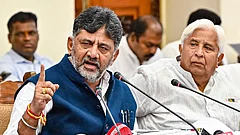
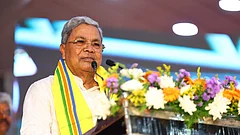
Ever since May 2023, when the Congress party secured a significant political victory by winning the Karnataka Assembly election with a thumping majority, the party’ leadership has been grappling with the challenge of balancing power between veteran leader Siddaramaiah and Karnataka Pradesh Congress Committee president D. K. Shivakumar, widely regarded as the party’s chief troubleshooter.
The leadership arrangement, which emerged after prolonged negotiations following the election, has continued to cast a shadow over the government's and the organisation's functioning. Now, after months of speculation and internal consultations, the Congress high command is reportedly inclined towards asking Siddaramaiah to step down to pave the way for a new leadership under Shivakumar.
Senior party leaders have arrived in Bengaluru to hold crucial discussions and chalk out the future course of action. With elections to four Rajya Sabha seats scheduled next month and reports suggesting that Siddaramaiah could be accommodated in the Upper House, the Congress leadership appears to be attempting a carefully managed political transition aimed at avoiding internal fissures ahead of the next Assembly election.


How the Power Tussle Began
The 2023 victory in Karnataka, the only South Indian state governed by the BJP, was a crucial battleground, and the victory provided a much-needed confidence boost for the Congress that had suffered a series of electoral setbacks across the country.
However, the triumph also presented the Congress high command with a delicate political challenge — choosing between veteran leader Siddaramaiah and PCC president. Siddaramaiah was the party’s tallest mass leader in the state with a strong support base among OBCs, minorities and AHINDA( Kannada acronym for backward, Dalit and minorities) constituents, Shivakumar had played a key role in rebuilding the organisation and steering the party to victory.
The leadership tussle continued for nearly five days after the election results, forcing the Congress central leadership to engage in intense negotiations to placate Shivakumar before finally appointing Siddaramaiah as the Chief Minister. Though never officially acknowledged by the party, it was widely reported at the time that a power-sharing arrangement had been worked out under which both Siddaramaiah and Shivakumar would each get two-and-a-half years as Chief Minister.

Coronation for DK?
After the present government completed three years in office, the party is ready for over a leadership change in Karnataka. Several rounds of meetings between the state leaders and the Congress high command have reportedly taken place in recent days, ostensibly to facilitate a smooth transition of power. With barely two years left for the next assembly election, the Congress leadership is learnt to be inclined towards asking Siddaramaiah to step down to pave the way for the elevation of D. K. Shivakumar as Chief Minister. Some leaders of the Congress even said the high command is in for a big surprise, suggesting a third person may emerge as the leader, a stance not confirmed by the party’s top leaders in the state. According to party sources, an official announcement on the transition could come either later today or tomorrow after consultations with the state leadership.
Political observers Outlook spoke to emphasised one crucial factor — how the Congress leadership manages to take Siddaramaiah into confidence during the transition. Siddaramaiah continues to command significant support among OBCs, minorities and sections of backward communities, making his political positioning critical for the party ahead of future elections.
According to unconfirmed reports, the Congress high command is considering accommodating Siddaramaiah in the Rajya Sabha and projecting him as one of the party’s prominent OBC faces in the run-up to the 2029 Lok Sabha elections. Such a move, observers say, could help the party balance the competing power centres within the Karnataka unit while also retaining Siddaramaiah’s electoral appeal at the national level.

The AHINDA Factor
In Karnataka, Siddaramaiah has long been regarded as the principal architect of the AHINDA political coalition . In contrast, D. K. Shivakumar belongs to the influential Vokkaliga community, one of the dominant social groups in the state’s politics.
As speculation over a leadership transition gathered pace, several leaders and supporters associated with the AHINDA bloc demanded that Siddaramaiah be allowed to complete a full five-year term as Chief Minister. Political observers argue that the manner in which the Congress high command manages Siddaramaiah’s exit — if it eventually happens — will significantly shape the future trajectory of the party in Karnataka.
“I think he won’t revolt against the party high command’s decision,” says senior journalist and political observer B. S. Arun. “He may demand that a person close to him be appointed as the KPCC chief and seek a few important cabinet berths, in addition to a Rajya Sabha seat. Neither the high command nor D.K. Shivakumar would have any major reservation over this,” he adds.
Shivakumar, the current Karnataka Pradesh Congress Committee president, had earlier indicated that he would relinquish the organisational post once the leadership issue was settled.
A Congress MLA, speaking on condition of anonymity, said Siddaramaiah continues to enjoy the backing of a majority of legislators in the Congress Legislature Party. “The Congress leadership will have to accommodate his demands if he decides to relinquish office,” the MLA said.
Siddaramaiah, who developed socialist leanings during the early years of his public life, joined the Congress in 2006 after leaving the Janata Parivar. Since then, he has served as Karnataka Chief Minister twice — first between 2013 and 2018, and again after the party’s victory in 2023. The Congress leadership repeatedly placed its trust in him because of his substantial mass base and welfare-orientated image. He is also seen as one of the few leaders who successfully challenged the long-standing dominance of the Vokkaliga and Lingayat communities in Karnataka politics.
“Despite his mass base and political credentials, Siddaramaiah’s governance over the last three years has been below average,” says Arun. “With barely two years left for the assembly election, both the party and the government require a facelift. Whether this change of guard can provide that remains to be seen.”
Meanwhile, the opposition BJP has accused the Congress of allowing governance to suffer because of the prolonged uncertainty over leadership change. Karnataka BJP president B. Y. Vijayendra alleged that the people of Karnataka were “being punished” for electing the Congress government. “The power struggle has led to paralysis in administration,” he said.
The Congress leadership’s decision to finally change the leadership, two years ahead of the assembly poll, is significant, as it will herald considerable change in Congress politics. Whether this will help the party to ward off any anti-incumbency that exists remains to be seen. And how the change of guard recalibrates the caste and communal equation in the state is also very significant.