Congress leaders in Delhi failed to reach a consensus on Kerala’s next Chief Minister despite hours of high-level discussions.
The high command rebuked leaders for public lobbying and ordered an end to flex-board campaigns and street mobilisation.
Past Congress governments in Kerala and other states have often been weakened by prolonged leadership battles after major electoral victories.
As Kerala awaits its next Chief Minister, talks held by the Congress high command in New Delhi on Saturday ended without a final decision. Leaders said the announcement would be made in due course, noting that there is time until May 23 to decide.
The high-level meeting, held at the residence of Congress president Mallikarjun Kharge, began at 4 pm and concluded around 7 pm. It was attended by senior leaders Rahul Gandhi, V. D. Satheesan, K. C. Venugopal, Ramesh Chennithala, and KPCC president Sunny Joseph.
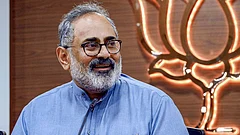
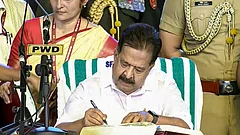
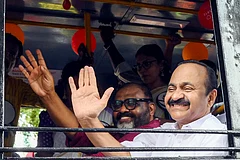
Just a week after the Congress won 63 seats and the United Democratic Front secured a historic 102-seat majority, the party has fallen back into familiar factional tensions marked by public protests, internal lobbying, and sharp exchanges. Chennithala has staked his claim to the Chief Minister’s post on the basis of seniority, while Venugopal is believed to have the support of most legislators. Satheesan has gained backing from some sections of the public and party cadre.
Sources said the high command reprimanded leaders for encouraging public displays of support and fuelling tensions, warning that such actions had damaged the party’s image and complicated the selection process. During the meeting, Chennithala argued that he was the senior-most leader. Meanwhile, Satheesan pointed to his leadership during the election campaign and his stance against attempts to divide voters along communal lines. Satheesan also requested the high command to consult allies on their preferred Chief Ministerial candidate. Venugopal highlighted his support among MLAs and his role in the party’s electoral victories.

AICC observers Mukul Wasnik and Ajay Maken also participated in the discussions at Kharge’s residence. They had submitted their report to Kharge on Friday after meeting newly elected MLAs at Indira Bhavan in Thiruvananthapuram the previous day. The observers then held separate discussions with Congress MPs and leaders from allied parties.

After the meeting, Congress leaders adopted a conciliatory tone, urging workers and supporters to stop public displays of factionalism that have overshadowed the party’s sweeping victory in Kerala.
Addressing the media, senior leader Deepa Dasmunsi appealed for restraint. “The people have given us a landslide majority. Certain unruly incidents over the past week do not reflect the culture of the Congress. We appeal to all workers to refrain from such activities. The high command will announce its final decision soon,” she said.
Across Kerala, Congress workers on Saturday began removing flex boards and posters erected in support of party leaders Satheesan, Venugopal, and Chennithala following a joint appeal by the leaders to halt public campaigning linked to the Chief Ministerial race.
Satheesan warned that the campaigns had created an impression of disunity within the party and urged UDF workers to end demonstrations and remove flex boards by Saturday night. Venugopal said campaigns promoting one leader while undermining others had to stop, while Chennithala called for an end to both the “flex board war” and social media campaigns in order to protect the party’s image. Sunny Joseph also appealed to party workers to cooperate.
Traditionally, the Congress in Kerala has balanced competing factions by dividing the top posts — with one leader becoming Chief Minister and another heading the Kerala Pradesh Congress Committee.
The clean-up drive began at Indira Bhavan, the KPCC headquarters in Thiruvananthapuram, shortly after the leaders concluded talks with the Congress high command in New Delhi. Youth Congress and KSU activists were seen removing posters and flex boards from the office premises and across the state capital.
A rally planned in support of Satheesan at Sulthan Bathery in Kozhikode was called off even as the meeting in New Delhi was under way. Flex boards put up by supporters of all three contenders were removed across districts including Alappuzha, Ernakulam, Thrissur, Kannur, Kottayam, and Wayanad.
The Congress leadership is aware of how unresolved power struggles have hurt the party in other states. In Rajasthan, a prolonged tussle between Sachin Pilot and Ashok Gehlot over the Chief Minister’s post weakened the party from within. In Madhya Pradesh, the choice of Kamal Nath as Chief Minister in 2018 triggered discontent within the ranks, with Jyotiraditya Scindia eventually quitting the Congress to join the BJP in 2020.
In Karnataka too, despite repeated attempts at reconciliation and several high-profile breakfast meetings, the rivalry between Chief Minister Siddaramaiah and Deputy Chief Minister D. K. Shivakumar over the state’s top post continues to simmer beneath the surface.

History has also shown that troubles have followed the Congress in Kerala whenever it has won a historic number of seats. The party won 63 seats in both the 1960 and 2001 Assembly elections, while securing 55 seats in 1991. Yet those victories were overshadowed by internal battles.
After the 1960 victory, Pattom A. Thanu Pillai was appointed Chief Minister but resigned in 1962. He was succeeded by R. Sankar, whose government lasted barely two years before collapsing. The crisis deepened after the resignation and death of P. T. Chacko, which triggered a split within the Congress and led to the formation of the Kerala Congress. Sankar eventually lost a no-confidence motion on the Assembly floor.
The pattern resurfaced in 1991, when K. Karunakaran became Chief Minister. Mounting dissent within the party forced him to step down, paving the way for A. K. Antony to take over in 1995. Antony, however, remained in office for barely a year.
A decade later, after the Congress again won 63 seats in 2001, Antony returned as Chief Minister. His tenure was marked by constant friction with Karunakaran, who remained openly hostile to his leadership. The government suffered a major setback in the 2004 Lok Sabha elections, when the Congress failed to win a single seat in Kerala. Antony resigned soon after, and Oommen Chandy took charge, leading the government until 2006.