When the Nationalist Congress Party’s Supriya Sule entered the Lok Sabha in 2009, it was more than just a new Parliamentarian. It was the change of guardianship of Baramati, Maharashtra’s most closely watched political bastion, from Sharad Pawar to his daughter. Seventeen years later, Sule remains the constituency’s political face, sustaining the Pawar family’s hold over a seat that has long symbolised cooperative politics, agrarian power, and western Maharashtra’s influence in state affairs.
She was especially put to the test in 2024 Lok Sabha elections, when, following the split in the NCP in 2023, Baramati was keenly watched. In her contest against her sister-in-law Sunetra Pawar (wife of her cousin late Ajit Pawar), Sule won by a margin of more than 1.58 lakh votes. The result was seen not only as a personal victory, but also reaffirmed her claim as the rightful heir to the original political legacy of her family from the constituency.
Born into one of Maharashtra’s most consequential political families, Sule is the daughter of Sharad Pawar, the Maratha strongman whose career has spanned state and national politics for over five decades However, Sule’s style of politics as also an elected member to the Lok Sabha from Baramati three years after being appointed to the Rajya Sabha in 2006, has differed from the “hard” image of regional power politics.
Sule, since then, has cultivated an image through her social sector work and legislative work rather than aggressive speeches. In the Lok Sabha last session, her attendance stood at 93 per cent, considerably higher than the national average, and she participated in 229 debates, raised 546 questions, and moved 13 Private Member’s Bills. She has received special attention for utilising constituency development funds, which has stood at over 99 per cent.
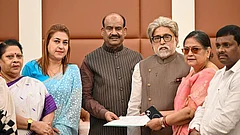




Most of her legislative efforts have focused on women and informal sector workers. In 2014, she introduced a Private Members Bill seeking special fast-track courts for survivors of sexual violence. In the same year, she introduced a Bill to provide free and compulsory education from pre-primary to senior secondary level and career guidance to the children of parents living below poverty line.
She also introduced legislation for the establishment of an Anganwadi Workers Welfare Authority in 2018 to improve the working conditions of anganwadi workers. The legislation called for recognition of frontline workers, provision of pension, maternal services, health services, and insurance for anganwadi workers. In 2022, she introduced a legislation to provide protection to widows and single women and to abolish the practices of widowhood in the country.
More recently, in 2025, she introduced the Paternal and Parental Benefits Bill in 2025 for implementing the paid leave policy for fathers. She also submitted the Code on Social Security (Amendment) Bill, 2025, to recognise platform-based gig workers as a distinct category, ensures minimum wages, regulated hours, social security, fair conditions, and equitable contracts.
Her politics in Maharashtra has also been characterised by her commitment to social issues and campaigns. In 2011, Sule launched a statewide movement against female foeticide because of declining sex ratios. Following this, she began the Rashtravadi Yuvati Congress in 2012 to promote engagement of girls in politics.
Sule’s work in her constituency, Baramati, has been focused on addressing problems related to agriculture, the primary economic activity in this region of Maharashtra that suffers from water shortages. Given that Baramati sits in Maharashtra’s semi-arid region, its average rainfall is less than 500mm annually, and it is subject to recurring drought conditions; she has consistently advocated for the provision of emergency water tankers, fodder camps, and assistance to villages impacted by drought.

MORE FROM THIS ISSUE


Yet, the continuing reliance on tankers in several villages around Baramati also underlines the limits of drought response in the region, showing that even a politically influential constituency remains subject to ecological pressures.