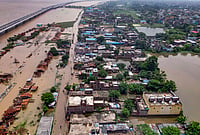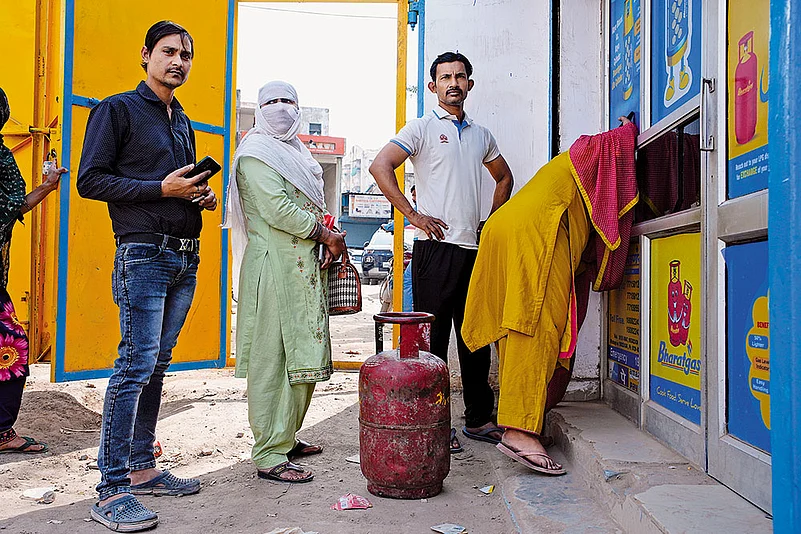
In rural areas, Jharkhand, people still depend on wood and coal for cooking, but in cities, kitchens mostly run on LPG.
Before this crisis, around 50 stalls used to operate outside RIMS. Now, hardly 10-15 are left.
The impact is visible in government hospitals as well. At Ranchi Sadar Hospital, reports said that only one day’s gas stock was left. The hospital requires 3-4 cylinders daily.
Sujit Bhokta had just stepped out after eating lunch at a small stall outside Rajendra Institute of Medical Sciences hospital in Ranchi. He says, “About 20 days ago, when I had come here with my mother, I could eat properly with Rs. 30-40. Now, even after paying Rs. 70-80, the food doesn’t fill the stomach. The stall owner says gas (LPG) is not available, so prices have gone up. I am a labourer, and I haven’t been working for many days now. From where will I bring Rs. 250 daily just for food?” He wants his mother to be discharged soon so that he can take her back to his village, Pratappur in Chatra district.
The conflict between the United States and Iran has reached Jharkhand , too. In rural areas, people still depend on wood and coal for cooking, but in cities, kitchens mostly run on LPG.

In Jharkhand, the LPG crisis has started affecting healthcare services the most. According to a report that came out two days ago about RIMS, the situation had become so bad due to a disruption in gas supply that at one point there was gas left only for preparing breakfast for a day. Keeping this in mind, the RIMS kitchen management got four big coal furnaces made. They haven’t been used yet, and the gas supply has improved a bit for now.


Every day, food is prepared in RIMS for more than 2,000 patients, which requires around seven cylinders. On average, 1,200 OPD patients visit RIMS daily, and along with the relatives of admitted patients, around 4,200 people need to eat in and around the hospital every day. Most of them come from very poor backgrounds. Many are daily wage earners who travel from different districts of Jharkhand and Bihar for treatment. For them, the food available at Rs 30-40 at stalls outside the hospital used to keep their expenses manageable. But since the supply of commercial gas has been disrupted, most of these stalls have shut down. Sixty-year-old Aarti Devi is from a Dalit family. She has come from a village near Bodh Gaya in Bihar and belongs to a very poor background. For the past four days, she has been at RIMS with her son-in-law. While her son-in-law gets food from the hospital, she and the two others with her have to eat outside. She says, “Even Rs. 70 doesn’t give you a full meal now. How can we eat such expensive food every day? At night, someone comes to distribute food here, but even after standing in line for two days, we didn’t get anything.”
Before this crisis, around 50 stalls used to operate outside RIMS. Now, hardly 10-15 are left.
Rajesh Kumar used to run a stall where long lines of patients’ relatives would gather to eat samosa chaat. For the past several days, his stall has remained shut.
The supply of commercial cylinders has dropped from around 80 per cent to just 20. Because of this, hotels, dhabas and street food businesses have been badly affected. Jharkhand needs around 2,273 metric tonnes of gas every day, but only about 454 metric tonnes is being supplied. At the same time, around 3.27 lakh LPG cylinders are pending for refill. Because of this, even household consumers are facing delays.
State minister Radhakrishna Kishore has warned that this shortage could also affect industrial activity and GST revenue. The state government has asked the Centre to increase supply, otherwise the situation may worsen.
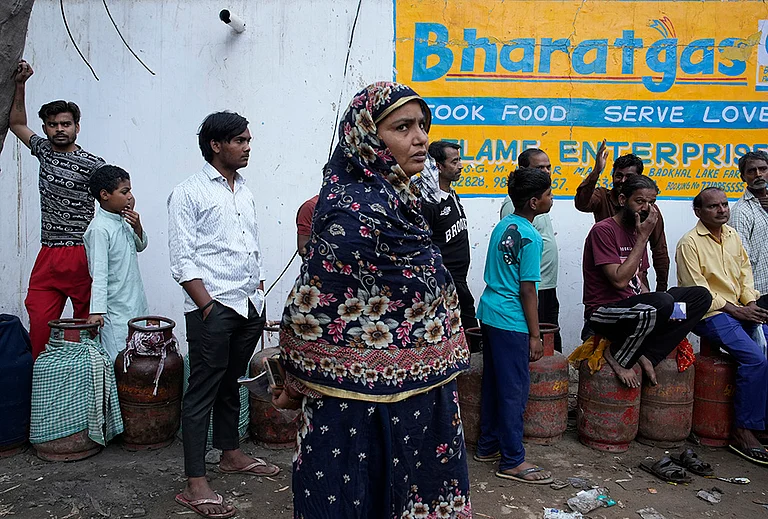
Prashant Kumar runs a small dhaba near RIMS. He has not shut it yet, but says if the shortage continues, he will have to.
According to reports, restaurants have cut down their menus and increased prices by 15-20 per cent. The impact of the gas shortage is now affecting organisations that provide free food as well. In Ranchi, due to the lack of LPG, ‘Roti Bank’ has stopped distributing rotis, while Annapurna Seva is now only distributing khichdi. Earlier, Roti Bank used to provide roti, sabzi and rice to around 500 people daily for free. But because of the disruption in gas supply, they had to stop making rotis. Now, only rice and sabzi are being distributed. Vijay Pathak from Roti Bank says they are now cooking using coal stoves and induction.
The impact is visible in government hospitals as well. At Ranchi Sadar Hospital, reports said that only one day’s gas stock was left. The hospital requires 3-4 cylinders daily.
Civil Surgeon Prabhat Kumar says, “Earlier, the shortage was very serious. Now it is better because the district administration is helping. Whenever there is a shortage, we inform them, and gas is arranged. We cook food for around 600 patients, so we need three to four cylinders daily.”
Across the state, the gap between demand and supply is making the crisis worse.
Jharkhand needs around three lakh cylinders every day, but only half of that is being supplied. Earlier, agencies used to get 1,000-1,500 cylinders daily, but now it has reduced to 500-700. There are 592 gas agencies in the state, and each has a backlog of 100-200 cylinders. Small hotels and stalls are shutting down, and in many places, even roti has disappeared from menus. Students living in hostels s are also facing problems. The crisis has affected industries; production in gas-based industries has dropped by around 25 per cent.

MORE FROM THIS ISSUE

There are around 67.27 lakh LPG consumers in Jharkhand, but none of them are getting supply as per requirement. With rising prices and reduced subsidies already putting pressure on people, this shortage has made things even harder.
This article appeared in Outlook's April 1st, 2026 issue titled 'ParaDime Shift,' which looks at how the US-Israel attack on Iran has come home to India with the LPG crisis and is disrupting the nation's energy ecosystem, exposing policy gaps and testing the limits of diplomacy.