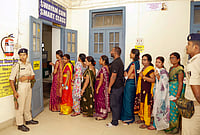
The DMK terms the rejection of the delimitation bill as a victory for the fight it led
BJP to turn it into a poll plank, says the episode has exposed the DMK and Congress
Tamilisai Soundararajan says the election narrative has now shifted to the NDA’s advantage
As Tamil Nadu’s campaign enters its decisive stretch, the delimitation flashpoint has done more than just add another issue—it has reordered the hierarchy of the election narrative. What began as a parliamentary setback has been repurposed by both sides into sharply divergent political arguments, each aimed at consolidating its core base while nudging fence-sitters.
For the DMK, the rejection of the delimitation push is being framed as a defence of federalism and Tamil Nadu’s political weight within the Union. By projecting it as a “Tamil Nadu vs Centre” moment, the party is attempting to transcend routine electoral issues and evoke a broader regional identity, something that has historically worked in its favour.
The BJP, however, is seeking to blunt that advantage the INDIA bloc received by reframing the episode through a gender lens. By branding its opponents as “anti-women,” it is attempting a narrative pivot: from a structural, federal debate (where it risks limited traction in Tamil Nadu) to a moral-political one that it hopes will resonate across states and demographics. Across the country, the party is working to turn its parliamentary setback into a political opportunity, positioning itself as a victim of what it calls an anti-women stance by its opponents.
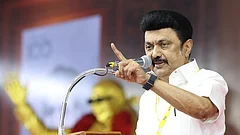
Speaking to Outlook, Tamilisai Soundararajan, BJP’s women face in Tamil Nadu and former governor, indicated that her party plans to frame the delimitation row as a “women vs M. K. Stalin” narrative in Tamil Nadu. By shifting the focus from federalism to women’s representation, the party is attempting to recast a complex institutional issue into a sharper, emotive political contest


The delimitation bill has been rejected in the Lok Sabha, and the DMK calls it a victory for Tamil Nadu. Do you think the main focus of the election has shifted.
Yes, it should. The anti-women attitude of the people, anti-women stance of the women leaders of the DMK and Congress have been exposed. They are trying to hide their anti-women mindset by saying that they are opposing the delimitation. Now it has become clear that the DMK and the Congress have opposed an important opportunity to advance women’s representation, including the push by the Modi government to implement women’s reservation. The DMK’s attempt to portray this as a victory for Tamil Nadu reflects a contradiction—projecting a setback in representation as a regional gain. We believe voters will see through this in the coming election. Moreover, framing the contest as Tamil Nadu versus Delhi risks deepening divisions, when the focus should be on inclusive growth and broader participation in governance
The charge against the BJP is that you are linking women’s reservation with a political purpose
This has already been addressed clearly by leaders like Narendra Modi and Amit Shah. But I would like to ask a counter-question: you were in power at the Centre for many years—why did you not bring forward the women’s reservation bill then?
Now, when the government is making an effort to implement it, you are the ones stalling it. This raises serious questions about intent. It reflects a mindset that is not genuinely committed to advancing women’s representation. Parties like the DMK, the Congress, and others in the INDIA alliance need to explain why they are opposing a measure that seeks to empower women politically.
But the opposition says the timing you have chosen suits your political aims.
For more than seven decades, women have been waiting, and now they are asking questions about timing. All this reveals about the anti-women stance of the opposition parties, led by the DMK and the Congress. They were in coalition with Congress for so many years. They did not bring in anything. And also there will be elections in some parts of the country every year. So how can you say the timing is politically motivated? This is absurd
So, how do you think this will affect the voting?
This is a setback for the women in the country. It is a setback for the women politicians of parties, including those in the DMK. The narrative in the election has now changed to Stalin Vs Women. And this is going to have a huge impact on the outcome of the election.