



The earlier caste survey, submitted two years ago, was not accepted by the government as it was considered outdated.
Leaked portions of the report triggered a major political controversy, as they reportedly suggested Lingayats and Vokkaligas were numerically smaller than widely perceived
The incoming government is likely to come under pressure from influential communities opposed to any policy changes arising from the caste survey.
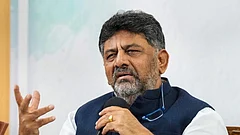
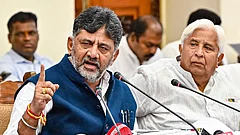
After two years of rumours, speculation and political bargaining, DK Shivakumar, the Congress party's troubleshooter and organisation man, is set to take charge as the Chief Minister of Karnataka. While the exact contours of the power-transfer formula are still unclear, the challenges before Shivakumar extend far beyond managing internal party equations. He will have to navigate a complex political landscape marked by competing caste interests, unresolved questions surrounding the socio-economic and caste survey, and the task of preserving the delicate social coalition that helped the Congress secure a decisive victory in 2023. As he assumes office, the new Chief Minister will be expected not only to maintain unity within the party but also to balance the aspirations of diverse social groups whose demands are becoming increasingly assertive.
After submitting his resignation, Siddaramaiah met Rahul Gandhi and Sonia Gandhi, and according to leaders from Karnataka, expressed his desire to continue playing an active role in state politics. Among the demands reportedly placed before the Congress leadership are the appointment of his nominee as the KPCC president and the inclusion of a considerable number of ministers from his camp in the new cabinet including his son. The negotiations underline Siddaramaiah’s continued political relevance and suggest that while the leadership transition may appear smooth on the surface, intense power-sharing discussions continue behind closed doors
Though Siddaramaiah has publicly maintained that he is stepping down in obedience to the Congress high command and has avoided making any demands in the open to avoid embarrassing the leadership, the manner in which his successor manages Karnataka’s complex caste and religious equations is expected to be a major challenge.


The issue has become more sensitive as discussions around the leadership change coincided with the submission of the caste survey report to the government, reopening contentious debates over representation and reservation. Siddaramaiah, a former socialist and a strong proponent of social justice, has consistently advocated affirmative action and welfare-driven politics centred on backward classes and minorities. Any attempt to alter that political balance could create unease within sections that have remained loyal to him over the years.
The Congress leadership also faces the difficult task of ensuring that the transition does not sharpen fault lines within the party at a time when questions of caste representation are becoming politically volatile in Karnataka. The caste survey has the potential to reshape political discourse in the state, particularly around demands from backward communities for enhanced representation and reservation benefits. While Siddaramaiah’s politics has been closely associated with AHINDA (the Kannada acronym for backward classes, minorities, and Dalits) mobilisation and welfare-oriented social justice, DK Shivakumar is perceived as drawing support from the Vokkaliga community.
Vokkalingas are traditionally considered to be aligned with the JD (secular) of former prime minister Deve Gowda. “But after electoral debacles and sexual cases involving leaders, there has been growing disenchantment among many and are shifting allegiance to DK Shivkumar, who is from the community”,says a former leader of JD(S) in Mysuru
The submission of the caste survey report assumes significance in this context. There were reports that the report was hastily submitted after the political leadership change was decided, leading to speculation that the report may be used by Siddaramaiah and his supporters as a political weapon in the days to come.
Chief Minister Siddaramaiah had commissioned the first State-level socio-economic and caste survey in 2015. The Karnataka survey, conducted under the chairmanship of H. Kantharaj, was finally presented in April 2025, though it was never officially released. By then, many in the political establishment had argued that the findings were outdated, given that nearly a decade had passed since the exercise was initiated.
However, leaked portions of the report triggered a major political controversy, as they reportedly suggested that dominant communities such as the Lingayats and Vokkaligas were numerically smaller than widely perceived, while Muslims and Dalits constituted a much larger share of the population but remained underrepresented in the legislature and bureaucracy. The findings have the potential to significantly alter Karnataka’s political discourse, especially on questions of reservation, political representation and resource allocation, making the leadership transition within the Congress even more politically sensitive.
The future of the socio-economic survey is likely to be one of the first major policy tests for the incoming government. While there is uncertainty over whether the report will be officially released and acted upon, supporters of the exercise argue that it has acquired significance beyond caste enumeration and should serve as a blueprint for public policy. “Though there is apprehension about the fate of the report, I hope the Congress government has a commitment to study and implement the report. This is not a caste survey per se. It deals with employment, well-being and many other economic indicators. So this should be a reference point for policymaking,” said Alphons Kennedy, convenor of Dalit Christians in Karnataka.
The debate is closely intertwined with the political legacy of Siddaramaiah, a leading advocate of AHINDA and one of the Congress party’s most prominent OBC leaders nationally. Although reports had suggested that the party leadership wanted him to assume a national role, Siddaramaiah is understood to have preferred remaining active in Karnataka politics. Supporters of the survey believe that his continued influence within the state unit, coupled with the Congress party’s public commitment to social justice, could make it difficult for the new leadership to sideline the report.
Political observers also argue that the Congress leadership is unlikely to have overlooked the survey's implications while negotiating the transition of power. “I think there must have been some discussion already among Congress leaders regarding the caste survey report, since it is a very important issue in Karnataka. The elections are two years away, and Congress has been pushing for a caste survey for some years. The report, prepared after extensive groundwork, should be comprehensive,” said Cynthia Stephen, a caste studies expert and public policy researcher.
How the DK Shivakumar government handles the report could therefore become a defining indicator of whether the Congress seeks to maintain continuity with Siddaramaiah’s social justice agenda.
However, how influential communities such as the Vokkaligas and Lingayats react to the survey and any subsequent policy decisions will be crucial. Both communities wield considerable political influence across party lines, including within the Congress, and have traditionally played a dominant role in Karnataka's electoral and power structures.
Any move perceived as diminishing their political weight or altering the existing balance of representation could invite strong resistance. As a result, the debate over the caste survey is likely to become even more contentious in the coming months, placing the new government under pressure to balance competing social and political interests while maintaining its commitment to social justice.















