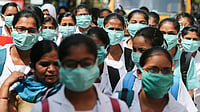
Hospitality, construction, and wood industries have been the worst hit as workers return home to vote.
SIR-related fears, rather than political enthusiasm, are driving migrants from Assam and West Bengal back home during elections.
The shortage of labourers has forced hundreds of establishments to shut down.
Abdul Kareem’s hotel in Thrikkakara, Kochi, runs almost entirely on migrant labour. From the cooks in the kitchen to the waiters on the floor, his workforce is drawn largely from Assam and Bengal—a reality he has long been comfortable with.
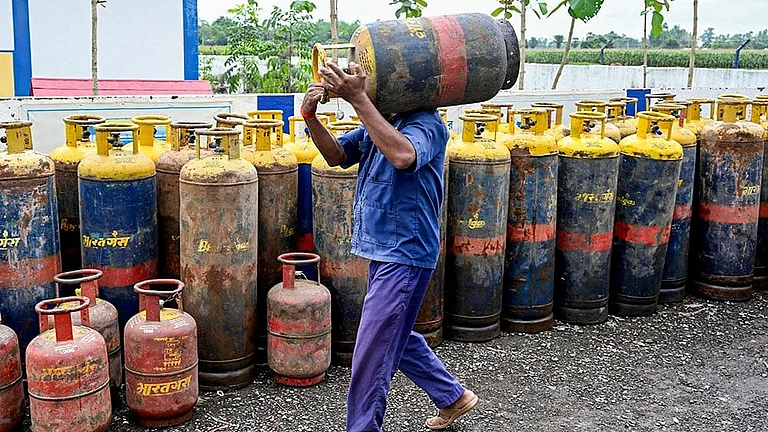
In recent weeks, however, multiple pressures have begun to weigh on his business. The LPG shortage, linked to disruptions in West Asia following the US and Israel’s war on Iran, has forced him to switch to firewood and trim his menu. But what concerns him more immediately is the sudden exodus of his workers, who have returned home to vote in the upcoming assembly elections.
“Once they leave, I’m not sure when they’ll be back. You can’t find ready replacements,” Kareem says, underlining the uncertainty that now shadows his daily operations.
It is not just hotels that are feeling the impact of migrant workers returning home to vote. In industrial clusters like Perumbavoor, about 30 kilometres from Kochi, where thousands are employed in the plywood sector, factories are already reporting disruptions to working hours.
In Irattupetta, a town in Kottayam district, Outlook met Ismail, who runs a small tyre repair workshop. Like many others, he depends heavily on migrant labour. “My workers are from Assam and West Bengal. One of them has already left, and the other will leave in a couple of days. This will affect my business,” he says. Finding local replacements, he adds, remains a persistent challenge. “It’s not that there are no people here, but for various reasons, many are not interested in this kind of work,” he says, pointing to what he sees as a reluctance among locals to take up labour-intensive jobs.



“In Kerala, around 70 per cent of migrant labourers are from Assam and West Bengal,” says Binoy Peter of the Centre for Migration and Inclusive Development. According to him, migrant workers have recently shown a heightened interest in political developments, driven by a growing sense of insecurity. “Many fear they could be stripped of their citizenship. This anxiety has intensified after the SIR issue became a major talking point. Earlier, they were largely indifferent to Assembly or Lok Sabha elections,” he says.
That fear was visible at Aluva railway station, where Outlook met a group of workers heading back to Assam. “There are already some issues. But we have to go to participate in the elections,” says Shefikul Islam from Nagaon district. The journey comes at a steep cost. “It will cost at least Rs 5,000 and about 30 days without work. But if they bring in laws stripping citizenship for not participating in elections, we could be thrown out,” he says, his voice reflecting the anxiety shared by many.
In Perumbavoor—widely regarded as a hub for migrant workers—around 1.5 lakh labourers from Assam, West Bengal and Odisha are employed across industries. “Within a 40-kilometre radius, there are nearly 1,500 wood-based units, of which about 800 are plywood industries. Almost all the workers are migrants from these states,” says Mujeeb Rehman of the Plywood Industries Association.
He adds that multiple disruptions have converged to hit the sector. “After the war began, the availability of raw materials derived from petroleum products became scarce. This, coupled with the elections, has deepened the crisis, forcing a majority of units to halt production,” he says.
Binoy Peter points out that a well-defined migration corridor has emerged over the years, linking Kerala with some of the poorest districts in Assam and West Bengal. “Earlier, workers came mainly through contractors. Now, many arrive through social networks—friends, relatives, and community links that have made migration easier and more organised,” he says.
“It is mostly Muslims who are going back home to vote,” says Shihab, who runs an NGO that assists migrant workers with various issues. The surge in travel has also led to a spike in transport services. Regular weekly buses to Odisha—where rail connectivity remains limited—have been operating for a long time. But with elections announced and hundreds of migrants returning home, additional services to Assam and West Bengal are now being run on demand.
A construction contractor says a combination of factors—Eid, the elections, and the LPG shortage—has triggered an exodus-like situation among migrant workers. “This has affected economic activity across sectors, with the hospitality industry being the worst hit,” he says.
The ripple effects are visible even in public transport. In several bus routes across Ernakulam district, daily collections have dipped as migrant workers leave for their home states, a bus operator says.
Many industries in Kerala—particularly hospitality, construction, and wood processing—are heavily dependent on migrant workers, especially those from the northeastern states. Even a partial outflow can have a significant impact. If even half of the workers from Assam and West Bengal were to leave, the economic cost would be staggering. Industry estimates suggest that as many as three lakh migrant workers may have already left the state.
“The problem is multi-fold,” says Mujeeb Rehman of the Plywood Industries Association. “We expect workers from Assam to begin returning by the 15th of this month. That should ease the strain on the wood industries to some extent. But the uncertainty across sectors is likely to persist until the US-Iran war comes to an end,” he adds.
Kerala’s economic growth in recent years has been significantly driven by migrant labour, making many sectors acutely sensitive to disruptions in workforce availability. Any fluctuation in this labour pool has wide-ranging effects on economic activity.
Elections in the home states of migrant workers were rarely a major concern in the past. But that appears to be changing. With the SIR issue gaining prominence and anxieties around citizenship intensifying, many workers now feel compelled to return home to vote. For them, the decision is driven less by political preference and more by a fear of exclusion.