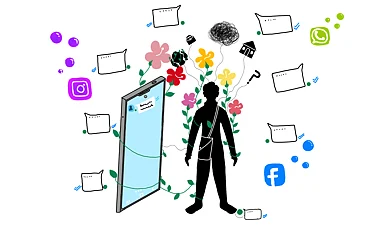
The modern idea that everyone has a right to speak out about matters of public concern was invented only in the 18th century
It's never just about the words that anyone is saying. It's always about who is speaking, what is the audience, what is the context
Parts of ‘What is Free Speech?’ cover India and colonial history and how the idea of free speech is imported by the British
Historian and academic Faramerz Dabhoiwala was born in England, educated in Europe and is of Indian descent. His first book, ‘The Origins of Sex’ (2012), was a landmark history of the first sexual revolution. In his new book, ‘What Is Free Speech? The History of a Dangerous Idea’, Dabhoiwala explores the paths free speech has taken across the globe since its invention 300 years ago. For centuries, it has been shaped by the tide of both national and international events; and nowhere has it ever been equally available to women, the colonised, or those deemed ‘racially inferior’. ‘What Is Free Speech?’ is an in-depth history of this cherished ideal. Dabhoiwala who was at the 2026 Jaipur Literature Festival spoke to Vineetha Mokkil about the reasons that compelled him to write ‘What is Free Speech?’ and the intricacies of the laws that govern free speech.
Let’s talk about the timing of your book. Why did you decide to write it at this particular point?
In 2015, I travelled to China and was talking about my previous book, The Origins of Sex. They translated it into Chinese. I was just blown away by the apparatus of censorship there. It's a totalitarian dictatorship where everything, even online, is scrubbed clean all the time. I met lots of wonderful intellectuals who explained to me how the system works; that nothing can be published in any medium without permission. In those days, India was quite a free society by comparison. After I came back, I thought, I believe in free speech and everywhere that I've lived, people believe in free speech. Yet, we are constantly fighting about it. Why is that? As a historian, I knew it's quite a recent idea. There are lots of older ideas of free speech, but the way we think about it now is quite recent. So, the modern idea that everyone has a right to speak out about matters of public concern is invented only in the 18th century. Until the 18th century, in every culture around the world, including India, China and Europe, they understand two very important things about speech, which are true.
One, speech is an action in the world. Every kind of speech act is meant to do something. To convince another person, to entertain them, to make them fall in love, to make them vote for you, etc. Second, most of the time, it's a fleeting action but sometimes it can be harmful. And particularly, it can be harmful if it is untrue. If you spread lies, then you can harm individuals. Slandering and defaming, telling people lies about someone else in the past, as in the present, is really harmful to them. And, it can be harmful to the community as well. If you spread medical misinformation about vaccines, or elections, that’s extremely dangerous. So, for that reason, all cultures regulate its speech quite strictly. There are some boundaries. And individuals are constantly going to court to defend their good name, and so on. What is Free Speech? The History of a Dangerous Idea explains why that happens, and then how it comes to the present.


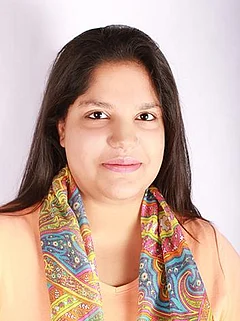
Lies can harm individuals and the community. But who decides what is true and what is false?
In the case of vaccines, Robert F. Kennedy Jr. in the United States doesn't believe in vaccines. He refutes science. So, then it's quite clear that it is a lie. But oftentimes, it's not that clear. So, who decides? This is a perennial question with any law. The law is set up so that there are processes for establishing the truth. If someone lies about you and defames you, and you want to take action, then one way is to bring a lawsuit, after which the facts come out and the judges are supposed to decide.

But often it's people in power who get to make the decision.
It's always about power. It's never just about the words that anyone is saying. It's always about who is speaking, what is the audience, what is the context, etc. So, one of the themes of my book is that free speech, from its inception, has always been weaponised by people with power to suppress and silence others. But the flip side of that is, once this idea is out there, then the powerless also have a new weapon to make their voices heard, to say, ‘I also demand the right to be heard’, to speak out. And so, a major theme that I talk about in my book is how, on the one hand, this is an idea invented by 18th -century white Europeans who then go around telling other people to shut up. Women, shut up. Indians, natives, colonised people, shut up. It's part of imperial history. But then, women start speaking out. And the origins of early feminist ideas are all about freedom of speech, about free speech.
All those power imbalances are still going on. But both things are true; the power is a problem, it’s never equitable. On the other hand, it is a wonderful ideal to appeal to and people throughout history have used that. Abolitionists use it. Feminists use it. Indian nationalists use it.
Some chapters in my book cover India and colonial history and how the idea of free speech is imported by the British. And then how it develops in various very interesting and not very good ways. Because on the one hand, the British want to proclaim themselves as always being for truth and freedom and liberty. On the other hand, they don't want the natives to be free, they don't want any opposition. So, sedition laws and hate speech laws, which still exist in India.
Free speech is in danger because of the rise of the right-wing in many parts of the world. Do you see historical patterns in this?
Yes, there are historical patterns. The playbook that these people follow across cultures is very similar and it's alarmingly effective. A lot of this is based on just simple historical amnesia. When I was growing up, people remembered the 1930s and the Second World War and all the horrible things that happened then, partly because politicians were able to rabble-rouse, to behave demagogically and to demonise whole populations by saying that they are infiltrators in our culture and so on. This is a very dangerous kind of messaging. Different cultures adopt different forms, but take the Tutsis in Rwanda, the Rohingya in Burma, Muslims in India, immigrants in America, anyone who's not white in America—it's insane.
Many of the laws about speech that we have inherited actually came out of a recognition in the 1940s and 50s that this had been a terrible period and a mistake, and that we need to regulate what we now call hate speech. It's a knotty problem, but the idea that speech of that kind is poisonous was an important realisation. I think we've forgotten that as cultures. One dangerous aspect of the present is that all of our discourse is online and it's monopolised by these giant American corporations that only care about money. They are not acting as responsible publishers. Though they are the most powerful publishers the world has ever seen, they don't care if people are spreading misinformation or defamation or lies.

They're actively anti-democracy.
Indeed. Elon Musk is a great example. This is not new though. Ever since the 19th century, people have said that free speech is great, but it's not just about the individual on the one hand and the power of the government on the other hand. The really important thing you need to add in is the power of the media, because the media shapes public opinion. And then you need to think, well, what about the public good? If public opinion needs to be based on truth and it's about advancing together to a collective understanding, then you need to make sure the people doing that are not very biased and just seeking profit. Unfortunately, they have always have been very biased and profit-seekers. So then, you need to as a society, put in place mechanisms to oversee those entities. That has been done throughout history with newspapers, with radio and television. We have not done that with social media today, and it's a disaster. Now, societies are pushing back in Australia, in Brazil, in Europe, and the publishers don't want to, because it's expensive to act responsibly.
There is a lot of rewriting of history going on now. Facts are being removed from history text books, historical facts being distorted.
That’s a very dangerous enterprise. National cultures always create a version of the past that suits the present. And it's always slightly mythical. What academics and what the public think are always far apart. But this kind of explicitly politicised rewriting that's happening now is particularly nasty because it's also about elevating certain populations and squashing the others and treating them as not equal citizens.
So, that is what's happening with Muslims in India, and the history of why there are about 200 million people here who have a different religion is now being rewritten as somehow, you know, these are not real Indians. That’s ridiculous! But the same is happening in the United States, too.
This is another reason why it's crucial in a flourishing democracy to respect scholarship and to respect universities as independent sources of authority because ultimately, they are the people who really do know the truth in the greatest detail and do extensive research. If you ban their books and don't allow them visas to come to this country, then, you're impoverishing your culture in a very dangerous and sad way.