.png?w=800&auto=format%2Ccompress&fit=max&format=webp&quality=75&dpr=1.0)
Rebel TMC legislators led by Ritabrata Banerjee expressed unease over the proposal to reduce Mamata Banerjee's role to that of a chief adviser.
Panchla MLA Gulshan Mullick warned that reducing Mamata Banerjee's authority could lead to further defections from the rebel bloc.
Sitai legislator Sangeeta Roy Basunia asserted that Mamata Banerjee remains the supreme leader and cannot be relegated to an advisory position.
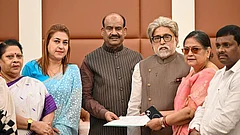
Unease emerged within the Trinamool Congress rebel bloc on Thursday during a meeting led by newly recognised Leader of Opposition Ritabrata Banerjee. Several legislators pushed back against a proposal to reduce Mamata Banerjee's role, insisting she must remain the party's supreme leader.
The internal friction follows a dramatic move on Wednesday when 58 rebel MLAs seized control of the TMC legislature party. During the takeover, they elected expelled leader Ritabrata Banerjee as the Leader of Opposition and successfully secured recognition from the Assembly Speaker.
This unprecedented split follows the TMC's electoral defeat at the hands of the BJP, triggering the gravest internal crisis in the party's 28-year history. The latest dispute threatens to complicate the dissidents' efforts to establish a new power structure while retaining their political connection to the founder.
It also marked the first time since the TMC's formation that a substantial section of its legislators openly challenged the authority of the party's central leadership, opening up larger questions over the future direction of a party that has dominated Bengal politics for more than a decade.

Pushback over Leadership Role
The divergent voices surfaced after Ritabrata Banerjee proposed on Wednesday that Mamata Banerjee should serve as the chief adviser to the reconstituted legislature party. Ritabrata's suggestion had been widely interpreted as an attempt by the dissidents to soften the political blow of the rebellion and reassure Trinamool workers that the movement was not directed against the party supremo herself. The suggestion immediately drew criticism from factions within the rebel group.
"We were told that the party would continue under Mamata Banerjee's leadership. She is not merely an adviser. We want the party to function under her leadership," rebel MLA Gulshan Mullick told reporters following Thursday's meeting.
Mullick, the Panchla legislator, warned of potential defections if her authority is diminished. "If Mamata Banerjee is not accepted as the supreme leader, then we will have to think whether we should remain in this bloc or not," Mullick said.
Another rebel legislator, Sangeeta Roy Basunia of Sitai, echoed this sentiment. "Mamata Banerjee is our supreme leader and will remain so. She cannot be an adviser. She is our leader," Basunia said.
The Abhishek Banerjee Factor
The dissident legislators have consistently framed the rebellion as a revolt against Abhishek Banerjee, the nephew of the party founder and former national general secretary, rather than against Mamata Banerjee.
In their communication to the Assembly Speaker, the rebels said that they recognise Mamata Banerjee as the chairperson but firmly reject Abhishek Banerjee's authority over the legislature party. That distinction has become the rebellion's central political argument -- separating loyalty to Mamata from opposition to Abhishek. For the dissidents, it has also served as a shield against accusations that they are attempting to dismantle the party's founding leadership structure.
The dissidents are attempting to frame the legislative coup as a necessary course correction. Mamata Banerjee founded the party in 1998 and eventually led it to power in 2011, establishing a political legacy the rebels remain eager to claim.
Constituency and Administrative Concerns
Beyond leadership disputes, Thursday's meeting addressed practical matters, as the legislators discussed constituency-level issues, pending cases involving party workers, and administrative concerns across their districts.
To tackle these operational challenges, the legislators constituted a committee to take up the issues directly with the state government and senior officials.
"We discussed problems faced by people in our constituencies, court cases and police excesses. A team has been formed which will speak to the chief minister and the DGP on these matters," Mullick said.