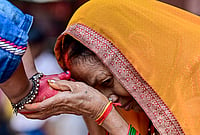
For Gursimran Kaur, who lives in Mohali, Punjab, the Rs 3,000 credited to her account under the Mukhya Mantri Mawan Dhiyan Satkar Yojana on July 1 has given her financial freedom she had never experienced. “So far, I have had to give an account for every penny spent. But now, for the first time in my life, someone is giving me money that I can spend on anything that I wish for,” says the 58-year-old housewife.
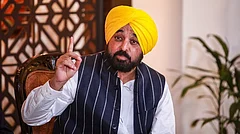
Kaur is among the 40 lakh women in Punjab who have registered for the scheme launched by chief minister Bhagwant Mann, under which eligible women will get Rs 1,000 per month. For those falling in the Scheduled Caste category, the amount is fixed at Rs 1,500 per month. The first payment, for July, August and September, was credited as a lump sum of Rs 3,000/Rs 4,500 in the accounts of these women.
The timing isn’t coincidental. Punjab is going to polls next year. Many in the state are lauding the welfare scheme, particularly aimed at women, considering female labour force participation has remained below the national average and unemployment has stayed persistently high between 2017-18 and 2022–23. This direct income support will not only make women financially independent; it will also help deal with the long-running economic challenge ailing the state. It, however, raises a larger question: can one of India’s most indebted states sustain a recurring commitment of this scale?

Punjab’s Financial Health
The scheme accounts for about 6 per cent of the state’s budgeted expenditure this year, excluding debt repayment. It comes at a time when the state’s outstanding liabilities have increased more than sevenfold since 2007-08 to Rs 4.13 lakh crore in 2025-26, according to the Reserve Bank of India’s (RBI) State Finances report.


At the end of 2025-26, at 46.4 per cent, Punjab had the third-highest outstanding liabilities as a share of Gross State Domestic Product (GSDP). This means that for every Rs 100 generated by Punjab’s economy, the state owes Rs 46.40 in outstanding liabilities. Only two states carry a heavier debt load than Punjab—Arunachal Pradesh (59.8 per cent) and Nagaland (47 per cent), both Special Category States with far smaller populations than Punjab.
While Punjab’s debt grew, the economy also struggled to keep pace. Between 2012-13 and 2021-22, the state’s real GSDP grew at an average annual rate of five per cent, below the national average of 5.6 per cent, according to the NITI Aayog.
Sum pain directly into accounts is reaching around 12 crore women in India at a cost of about Rs 1.7 lakh crore.
Debt tells only half the story. Over the past decade, Punjab complied with its legally mandated fiscal targets only 36.7 per cent of the time, among the worst records in the country, as per the NITI Aayog.
Even before the government can think about building a road, hiring teachers or opening a hospital, most of its revenue is already committed to existing obligations. In 2024-25, 85 per cent of revenue receipts were spent on committed expenditure items, typically including payment of salaries, pension and interest. That leaves barely 15 paise of every rupee earned for new spending. In 2026-27, Punjab is projected to spend Rs 90,335 crore on committed expenditure, 72 per cent of its estimated revenue receipts, according to non-profit organisation PRS Legislative Research.
A significant part of this burden comes from servicing past debt. Punjab’s revenue expenditure on interest payments is projected at 18.4 per cent in 2025-26, the second highest in India, only after Tamil Nadu (18.5 per cent). This means for every Rs 100 Punjab spends from its day-to-day budget, Rs 18.40 goes toward interest on past borrowing. For Odisha, this amount is only Rs 3.2, and West Bengal is paying Rs 16.2, while interest payment for Maharashtra stands at Rs 10.7 out of every Rs 100 spent from the budget in 2025-26.
Punjab was already spending almost a fifth of its budget to pay interest on old debt even before the newlyintroduced scheme added more burden.

Cash Transfers Go Mainstream
Punjab is not alone. Across India, states are increasingly opting for direct cash transfers to women. The Economic Survey 2025-26 noted that unconditional cash transfers have expanded rapidly and now form a growing share of state-level welfare spending, even as around half of these states are estimated to be in revenue deficit. The unconditional transfer paid directly into women’s bank accounts is reaching close to 12 crore women in India at a cost of about Rs 1.7 lakh crore, as per a paper from the Economic Advisory Council to the Prime Minister.
Considering schemes from Maharashtra and Odisha as case studies, the paper found that these cash transfers have generated large, statistically significant and broadly consistent improvements in beneficiaries’ savings and consumption, along with meaningful positive spillovers to male household members.
The paper concludes that such transfers improve consumption, savings and women’s economic well-being, while questions over their long-term fiscal impact remain.

How Healthy are Other States?
The monthly transfer amount varies significantly across states, ranging from Rs 1,000 in Tamil Nadu, Punjab and Chhattisgarh to Rs 3,000 in West Bengal. Odisha, with total liabilities at Rs 2.15 lakh crore, is the only state that is giving the amount annually—in two equal instalments of Rs 5,000 each.
In 2026-27, West Bengal budgeted Rs 36,000 crore for its scheme, almost four times Punjab’s outlay. But it is Punjab that carries the heavier debt burden. For every Rs 100 generated by Punjab’s economy, the state owes Rs 46.40 in outstanding debt as against Rs 38.90 in West Bengal. Odisha and Maharashtra owe Rs 20.30 and Rs 19, respectively, for every Rs 100 generated by their economies.
For Kaur and the 52 lakh eligible women of Punjab, the scheme means financial independence. For Punjab, it represents a recurring fiscal commitment that will outlast the first transfer and test whether welfare expansion and fiscal discipline can coexist at a time when its outstanding liabilities have almost doubled since 2019.

MORE FROM THIS ISSUE


(This story appeared in Outlook magazine’s August 3 issue, 'The AI Divide', which focuses on how India's AI education ambitions are colliding with the reality of inadequate digital infrastructure, undertrained teachers and AI tools that are not built around Indian students' cultural context)