CENTCOM used armed sea drones in combat during the July 13 strike on Iranian naval targets
Major navies are investing in unmanned fleets for surveillance, strikes and high-risk maritime missions
Sea drones could reshape future naval warfare by complementing traditional warships with cheaper, autonomous capabilities
What are sea drones?
Sea drones, also known as unmanned surface vessels (USVs) or unmanned underwater vehicles (UUVs), are remotely operated or autonomous craft designed to carry out missions at sea without a crew onboard. Depending on their role, they can conduct surveillance, electronic warfare, mine-hunting, anti-submarine operations, logistics, or even precision strikes.
Unlike conventional warships that require large crews and expensive maintenance, sea drones are smaller, cheaper and can operate in high-risk areas without putting sailors in harm's way. Advances in artificial intelligence, satellite communications and autonomous navigation have made them increasingly capable of working independently or alongside manned naval platforms.

How were they used in the strike on Iran?
The growing military value of sea drones was demonstrated recently, when the US Central Command (CENTCOM) confirmed that it had employed unmanned surface vessels in combat during strikes on Iranian naval infrastructure. Three one-way attack sea drones were used to hit a submarine and ship maintenance facility at Iran's Bandar Abbas naval base, alongside fighter aircraft, aerial drones and other precision-guided weapons. The operation was aimed at degrading Iran's ability to threaten commercial shipping and maritime traffic.


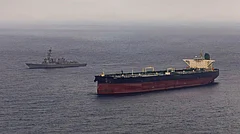

The strike marked a significant shift in naval warfare. While aerial drones have become common on modern battlefields, deploying armed sea drones for offensive missions signals the arrival of a new class of autonomous maritime weapons.
Why are navies investing in them?
Sea drones offer several operational advantages over traditional naval platforms. They are far less expensive than destroyers or frigates, can be produced in larger numbers, and are difficult for adversaries to detect because of their small size and low radar signature.
Navies also see them as force multipliers. Instead of risking billion-dollar warships in contested waters, commanders can send swarms of unmanned vessels to conduct reconnaissance, clear mines, monitor chokepoints or launch attacks.
The lessons from the Russia-Ukraine war, where Ukrainian sea drones repeatedly struck Russian naval assets in the Black Sea, accelerated global interest. The latest US combat use against Iran further reinforces the belief that unmanned systems will increasingly carry out frontline maritime missions.

How do sea drones differ from traditional warships?
Traditional warships remain indispensable for air defence, long-range missile strikes and power projection. However, they require hundreds of sailors, extensive logistics and years to build.
Sea drones, by contrast, can often be operated remotely by a handful of personnel. They are designed for specific missions rather than multi-role operations and can be deployed in large numbers to overwhelm enemy defences. Even if one is destroyed, the financial and operational loss is significantly lower than losing a frigate or destroyer.
Rather than replacing conventional fleets, military planners increasingly view sea drones as complementary systems that extend the reach of manned naval forces.
Which countries are leading the race?
The United States is investing heavily through the US Navy and CENTCOM's Task Force 59, which focuses on integrating autonomous systems into maritime operations. China has showcased several large unmanned surface vessels and autonomous underwater platforms as part of its naval modernisation.
Ukraine has emerged as an innovator by using low-cost explosive sea drones against Russia's Black Sea Fleet. Russia is developing counter-drone systems while expanding its own unmanned naval capabilities. The United Kingdom, Türkiye and Israel are also testing armed and surveillance-oriented maritime drones for future operations.
Could they reshape naval warfare?
Military analysts increasingly believe autonomous vessels will become as central to future naval operations as aerial drones have become on land. Swarms of sea drones could patrol strategic waterways, escort merchant ships, hunt submarines, gather intelligence and carry out precision attacks with minimal risk to human life.
The CENTCOM strike on Iranian naval facilities demonstrated that sea drones are no longer experimental platforms but operational weapons. As maritime competition intensifies in regions such as the Indo-Pacific, the South China Sea and the Strait of Hormuz, unmanned fleets are likely to become an increasingly important element of naval power.