Saudi Arabia imported $47.2 million worth of Taiwanese drones in April 2026
The deal reflects Taiwan's rapid expansion as a global drone manufacturer
Taiwan is promoting "non-red" supply chains to reduce reliance on Chinese drone technology
The agreement highlights the growing strategic and commercial importance of Taiwan's drone industry
Saudi Arabia has become the destination for Taiwan's largest-ever monthly drone export after importing $47.2 million worth of unmanned aerial vehicles (UAVs) in April 2026, according to official trade data released by Taipei.
The shipment accounted for nearly all of Taiwan's drone exports that month and represents the single biggest monthly UAV sale to one overseas market. It comes as Taiwan has accelerated efforts to develop its domestic drone industry, positioning unmanned aerial systems as a strategic sector alongside semiconductors and other advanced technologies.
The deal also marks a significant milestone for an industry that only recently began expanding its international footprint. According to Taiwan's Ministry of Finance, drone exports totalled $54.8 million during the first 10 months of 2025—more than eleven times the $4.4 million exported in the whole of 2024. Until then, Taiwan's principal export markets were Poland, the Czech Republic and the United States.
The Saudi order therefore reflects more than a record-breaking export. It highlights Taiwan's growing efforts to establish itself as a competitive supplier in the global drone market as the government works to strengthen domestic manufacturing, expand overseas partnerships and build an internationally competitive UAV industry.


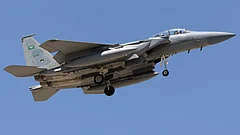


Why Is Saudi Arabia Buying Taiwanese Drones?
While Taiwanese authorities have not disclosed the specific drones included in the shipment, the agreement signals growing international confidence in the island's expanding UAV manufacturing capabilities.
Over the past few years, Taiwan has identified drones as one of its priority emerging industries, bringing together government agencies, manufacturers and research institutions to develop new technologies and strengthen production capacity. Through initiatives such as the Asia UAV AI Innovation Application R&D Centre and the Taiwan Excellent Unmanned Aircraft Overseas Business Opportunities Alliance, Taipei has sought to accelerate research, commercialisation and international cooperation across the sector.
Those efforts are beginning to translate into exports. Official statistics show that Taiwan's drone sales have expanded rapidly, with manufacturers reaching new overseas markets while diversifying beyond their traditional customer base. The Saudi shipment represents the largest example of that strategy to date, extending Taiwan's UAV exports into the Middle East and reinforcing its ambitions to become a more prominent player in the international drone industry.
Why Is Taiwan Reducing Reliance On Chinese Drones?
The Saudi deal also reflects a central pillar of Taiwan's drone strategy: building supply chains that are independent of Chinese technology.
Taipei has repeatedly argued that the global drone industry remains heavily dependent on Chinese components, creating vulnerabilities for governments and critical infrastructure. In response, Taiwan has promoted what it describes as a "non-red" supply chain, encouraging manufacturers to source components from trusted partners while strengthening domestic production capabilities.
The Ministry of Economic Affairs says reducing dependence on Chinese-made drones and components is essential to improving supply chain resilience, safeguarding cybersecurity and ensuring the reliability of systems used by governments, emergency services and critical industries. As part of that effort, Taiwan has encouraged collaboration between domestic manufacturers and international partners to develop alternative supply chains that are not reliant on Chinese technology.
The Executive Yuan has similarly identified drones as one of Taiwan's strategic industries, saying the government is working to strengthen research, manufacturing capacity and overseas partnerships to make the island a competitive global supplier of unmanned aerial systems.

How Does The Deal Fit Into Rising Geopolitical Tensions?
The expansion of Taiwan's drone industry has taken place against a backdrop of growing cross-Strait tensions.
Taiwan's Ministry of Foreign Affairs has repeatedly accused China of increasing military pressure on the island through military exercises and activities that threaten peace and stability in the Taiwan Strait. The ministry has also criticised Beijing's missile tests and military operations, saying they undermine regional security and reinforce the importance of strengthening Taiwan's resilience.
Against that backdrop, Taiwanese authorities have increasingly linked industrial policy with national security, arguing that developing advanced technologies such as drones is an important part of enhancing economic resilience and reducing strategic vulnerabilities.
The Global Taiwan Brief notes that Taipei is seeking to build a competitive defence industrial base by combining its strengths in advanced manufacturing, electronics and semiconductor production with greater international cooperation. Developing a domestic drone ecosystem forms part of that broader strategy, with policymakers viewing unmanned systems as both an emerging export industry and a capability that supports Taiwan's long-term economic and security objectives.
The Saudi agreement is the latest indication that those efforts are beginning to translate into commercial partnerships beyond Taiwan's traditional export markets.
What Does The Deal Mean For The Global Drone Industry?
Taiwan's record shipment to Saudi Arabia highlights how the global drone industry is evolving beyond traditional manufacturing centres.
According to Taiwan's Ministry of Finance, the island's drone exports have grown rapidly in a short period, rising from US$4.4 million in 2024 to US$54.8 million during the first 10 months of 2025. The Saudi order, valued at US$47.2 million in April 2026 alone, exceeds nearly all of Taiwan's drone exports recorded the previous year, underscoring the pace at which the sector is expanding.
Taiwanese authorities view that growth as part of a broader effort to establish the island as an international hub for drone development and manufacturing. The Executive Yuan has identified drones as a strategic industry, while government-backed initiatives seek to connect manufacturers, researchers and overseas partners to strengthen Taiwan's position in the global UAV market.
The Global Taiwan Brief similarly notes that Taiwan is leveraging its strengths in advanced manufacturing, electronics and semiconductor production to build a competitive drone industry capable of serving both domestic and international demand. Rather than competing on volume alone, Taiwan's strategy focuses on developing an integrated industrial ecosystem supported by research, innovation and trusted supply chains.

The Bigger Picture
Saudi Arabia's purchase is significant not only because of its value, but because it demonstrates that Taiwan's long-term investment in its drone industry is beginning to translate into major overseas orders.
For Taipei, the agreement validates a strategy centred on expanding manufacturing capacity, strengthening international partnerships and promoting supply chains that reduce dependence on Chinese technology. For international customers, it signals that Taiwan is emerging as another source of advanced UAV technology as governments and industries diversify their procurement.
Whether similar deals follow will depend on Taiwan's ability to continue expanding production and deepening international cooperation. However, the record April shipment suggests the island's drone industry has entered a new phase—one in which Taiwan is increasingly positioning itself as a global supplier rather than simply a regional manufacturer.