Satellite images show reconstruction work at Iran's Taleghan-2 facility
Analysts say the site is being repaired after recent US strikes
Available imagery does not prove Iran has resumed weapons-related activities
IAEA says only renewed inspections can verify Iran's nuclear intentions
Fresh satellite imagery has reignited questions over Iran's nuclear intentions after analysts identified reconstruction work at Taleghan-2, a sensitive facility within the Parchin military complex damaged during recent US military strikes.
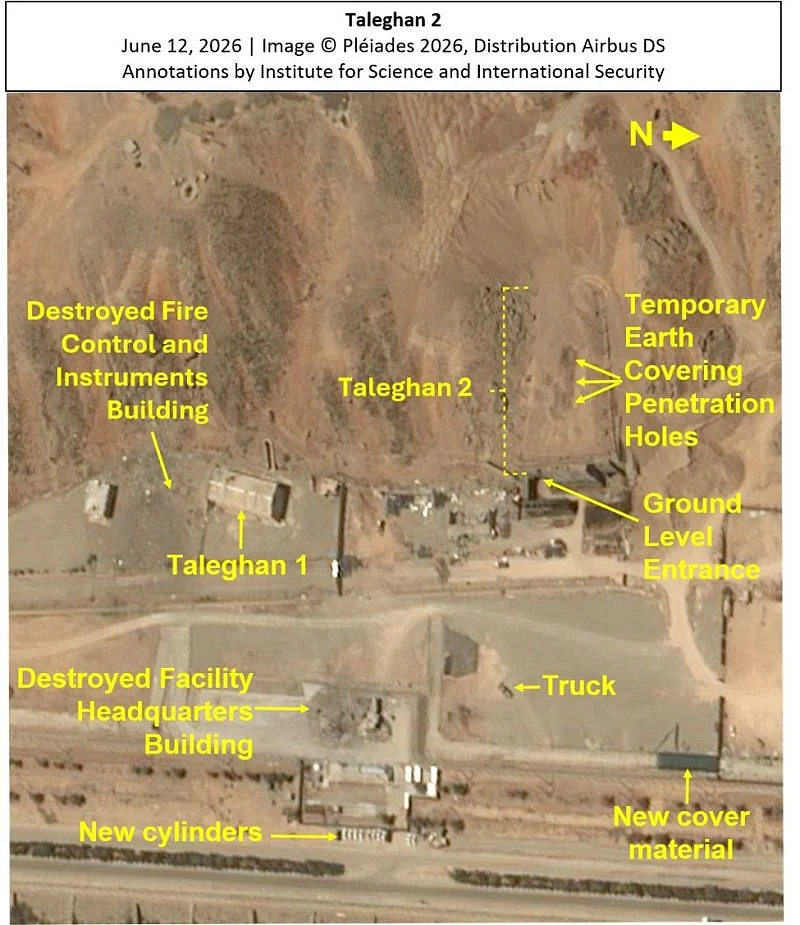
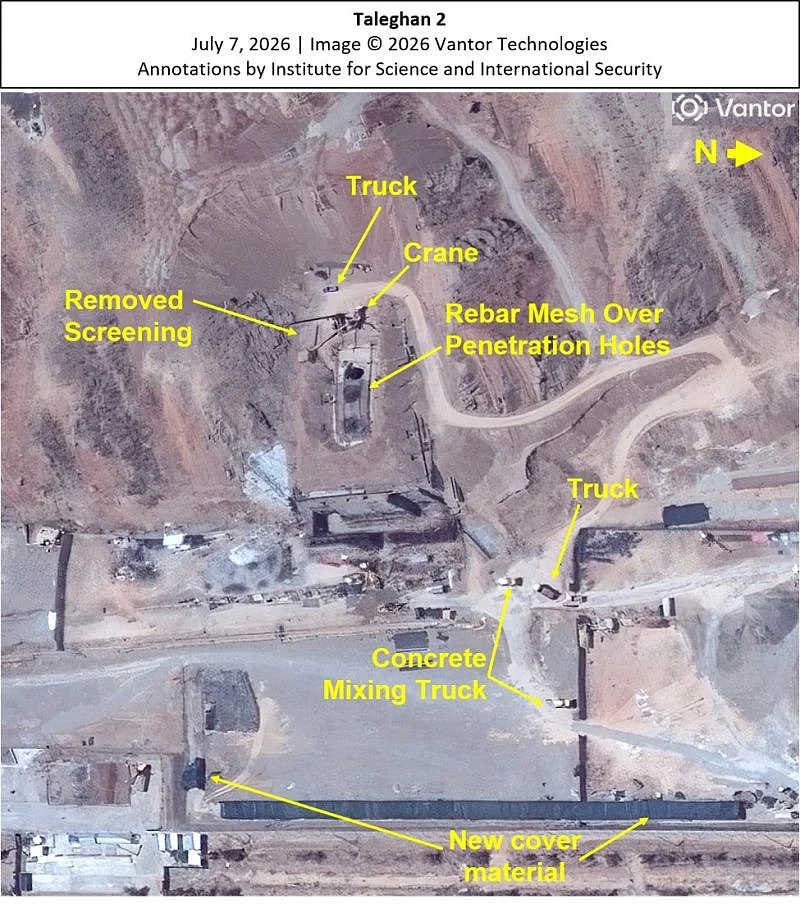
According to the Institute for Science and International Security (ISIS), images captured in late June and early July show excavation work, heavy construction equipment and repairs around damaged sections of the site. The assessment, which follows an earlier CNN investigation based on commercial satellite imagery, suggests Iran has moved beyond debris clearance to more permanent reconstruction.
However, ISIS cautions that the images show only physical repairs. While they indicate that Tehran is restoring infrastructure at one of its most sensitive nuclear-related facilities, they do not establish that Iran has resumed nuclear weapons-related activities.

What Is Taleghan-2?
Taleghan-2 is located within the Parchin military complex southeast of Tehran and has long featured in international assessments of Iran's past nuclear activities. Unlike Natanz and Fordow, which are central to Iran's uranium enrichment programme, Taleghan-2 has been linked to alleged weapons-related research carried out under the former Amad Plan.


According to ISIS, the facility housed a large explosive containment chamber used for hydrodynamic experiments involving high explosives. Such experiments are considered relevant to studying the implosion systems required for a nuclear weapon, although they do not involve nuclear material themselves.
Those historical links have kept the site under close international scrutiny despite Iran's longstanding insistence that its nuclear programme is exclusively peaceful.
The latest satellite imagery indicates that Iran is repairing damage sustained during the US strikes. But while reconstruction is clearly visible, the images cannot determine how the facility will be used once repairs are complete, leaving the broader question of Tehran's nuclear intentions unanswered.
Why Did The US Target Taleghan-2?
Taleghan-2 was among the facilities targeted during the US strikes not because it was involved in uranium enrichment, but because of its historical association with Iran's alleged nuclear weapons-related research.
According to the Institute for Science and International Security (ISIS), the site formed part of the former Amad Plan, Iran's alleged pre-2003 weapons programme. The institute says the US operation sought to disable infrastructure linked to weaponisation research and deny Tehran the ability to quickly restore capabilities that could support future weapons-related activities if it chose to pursue them.
ISIS assessed that the strikes caused significant damage to the underground complex, including entrances, access points and supporting infrastructure. However, the institute also noted that underground facilities can often be repaired over time, making continued monitoring essential to assess the long-term impact of the operation.

Is Iran Rebuilding Its Nuclear Programme?
The reconstruction activity has inevitably prompted renewed speculation over Iran's nuclear ambitions. However, the evidence currently available does not support the conclusion that Tehran has resumed a nuclear weapons programme.
ISIS says the latest satellite imagery documents repair and rehabilitation work at Taleghan-2, including excavation, engineering activity and the restoration of damaged infrastructure. Those findings indicate that Iran is rebuilding a facility with historical links to weapons-related research, but they do not reveal the purpose of the reconstruction or the activities that may eventually take place there.
That distinction is significant. Taleghan-2 is separate from Iran's principal enrichment facilities at Natanz and Fordow, and the latest assessments focus solely on visible reconstruction at the Parchin site. They do not conclude that uranium enrichment has resumed at previously damaged facilities or that Iran has restarted a nuclear weapons programme.
For now, the available evidence answers a narrower question: Iran appears to be repairing a strategically important facility damaged in the US strikes. Whether that reconstruction eventually supports activities beyond infrastructure restoration remains a matter for future verification rather than satellite imagery alone.
What Does This Mean For The US-Iran Standoff?
The reconstruction activity comes as Washington and Tehran cautiously move back towards diplomacy following weeks of military confrontation. While both sides have indicated a willingness to resume talks, questions surrounding Iran's nuclear infrastructure are likely to remain central to any future negotiations.
For the United States and its allies, visible reconstruction at a facility historically associated with alleged weapons-related research is likely to reinforce calls for closer international scrutiny. For Iran, the work can be presented as the restoration of infrastructure damaged during military strikes while maintaining that its nuclear programme remains exclusively peaceful.
The differing interpretations underscore a broader challenge facing negotiators: satellite imagery can reveal changes to physical infrastructure, but it cannot determine the purpose of those changes or what activities may ultimately take place inside repaired facilities.

Impact On Nuclear Diplomacy
The latest developments illustrate that the debate surrounding Iran's nuclear programme has entered a new phase.
The immediate focus after the US strikes was on assessing the extent of the physical damage inflicted on Iran's nuclear infrastructure. The emergence of reconstruction activity has shifted attention to what follows—whether Tehran is merely restoring damaged facilities or laying the groundwork for future nuclear activities.
At present, the available evidence points only to visible reconstruction at Taleghan-2. It does not establish that Iran has restarted a nuclear weapons programme. That distinction is expected to remain central as diplomatic efforts resume.
The International Atomic Energy Agency (IAEA) has repeatedly stressed that the status of Iran's nuclear programme cannot be determined through satellite imagery alone. Director General Rafael Grossi has said inspectors must regain access to Iranian nuclear facilities to verify their condition, account for nuclear material and independently assess Tehran's activities. Following the US and Israeli strikes, however, Iran suspended its cooperation with the agency, leaving inspectors without access to key sites.
Until those inspections resume, satellite imagery is likely to remain an important but incomplete source of information. For now, the images from Taleghan-2 show that Iran is rebuilding a damaged facility. Whether that reconstruction is limited to restoring infrastructure or signals something more significant remains a question that only independent verification, not satellite imagery alone can answer.