US and Iran clash over nuclear inspections after Switzerland talks.
Both sides dispute use of frozen Iranian assets under peace framework.
Strait of Hormuz reopens as disputes persist over broader deal terms.
The United States and Iran are at odds over key elements of the framework agreement intended to end their war, with both sides offering conflicting accounts of commitments on nuclear inspections, frozen assets and regional security arrangements days after concluding a first round of negotiations in Switzerland on Monday.
The disagreements highlight the challenges facing efforts to turn last week's framework deal into a lasting settlement. While the agreement ended active hostilities and reopened the Strait of Hormuz to shipping, major issues — including Iran's nuclear programme, access to frozen funds and Israel's role in Lebanon — remain unresolved and are due to be addressed in further talks over the next 60 days.
US President Donald Trump said on Tuesday that Iran had agreed to permit nuclear inspections indefinitely, a claim Tehran rejected following the talks in Switzerland.
"Iran has fully and completely agreed to highest level Nuclear inspections long into the future (Infinity!!!)," Trump said on social media.
Iran denied that its nuclear programme had been discussed during the negotiations and said it had not agreed to allow inspectors from the International Atomic Energy Agency to return.
The two sides also differed over the handling of Iranian assets frozen abroad. Trump said any released funds would be used to purchase food and medical supplies from the United States. Iran's ambassador to the United Nations in Geneva, Ali Bahreini, said Tehran would determine how the money would be spent.


Despite the disputes, Trump said negotiations were proceeding well.
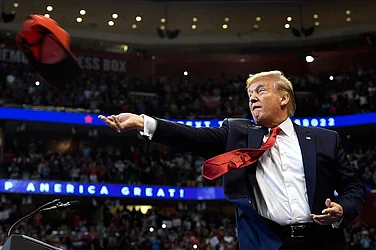
"We're getting along quite well," he told a rally in Pennsylvania.
According to Reuters, the United States also eased travel restrictions on Iran's World Cup soccer team, allowing it to travel from Tijuana, Mexico, to Seattle two days before its next match instead of one.
Signs of weakening domestic support for the war emerged in Washington. A Reuters/Ipsos poll found that 35% of Americans believed the United States was in a weaker position with Iran than before the conflict, while 23% said it was in a stronger position.
Reuters reported that the Republican-controlled Senate voted 50-48 to halt the war, backing a resolution passed by the House of Representatives earlier this month. The vote reflected growing concern even among some of Trump's Republicans over the conflict that began on 28 February.
It marked the first time both chambers of Congress had approved a resolution directing a president to remove US armed forces from hostilities under the War Powers Act, although it was not immediately clear how the move might affect the conflict.
The initial agreement between Washington and Tehran has also allowed shipping traffic to resume through the Strait of Hormuz, which normally carries around one-fifth of global energy supplies.
Trump said on Wednesday he had instructed the Justice Department to look into oil companies for failing to reduce gasoline prices in line with falling crude costs.
"Gasoline prices better start going down a lot faster than what I'm seeing!" he wrote on social media.
Oil prices fell more than 1% on Wednesday, extending losses recorded earlier in the week and trading near their lowest level since before the war began on 28 February.
According to Reuters, the United Nations shipping agency is working to evacuate 11,000 seafarers stranded when Iran closed the strategic waterway.
The agreement requires Iran to allow ships to pass freely through the strait for 60 days, although Tehran has said it may later impose tolls or other charges on shipping.
In a joint statement on Tuesday, Iran and Oman, which control the opposite side of the strait, stressed their "sovereign rights" in the waterway and said they would work together to manage traffic and associated costs.
Oman said it had coordinated with the International Maritime Organization to establish a temporary corridor for vessels seeking to transit the Strait of Hormuz.
US Secretary of State Marco Rubio, visiting Gulf allies unsettled by the agreement, said Iran would not be permitted to charge tolls in the strait as part of any final settlement.
The framework deal calls for an immediate end to the war, including in Lebanon, the lifting of US sanctions on Tehran and the release of Iranian assets frozen abroad. It also outlines a $300 billion investment fund for reconstruction in the Islamic Republic.
However, the framework places no limits on Iran's nuclear programme, leaving that issue to be addressed during the next 60 days of negotiations.
Washington has already agreed to waive sanctions on Iran for 60 days, allowing Tehran to sell oil and related products and receive payment for them.
Israel's parallel conflict with Iran-backed Hezbollah in Lebanon remains another point of contention.
Bahreini said the agreement requires Israel to withdraw its troops from Lebanon. Israel, however, has said it will maintain a security zone in southern Lebanon and continue acting to "neutralize" threats against Israeli soldiers and civilians.
Even as Israeli and Lebanese officials resumed talks in Washington on Tuesday, Israeli gunfire killed two people in southern Lebanon, according to the country's civil defence and health ministry.
The deaths prompted Iran-backed Hezbollah to accuse Israel of violating a ceasefire that has largely held since Sunday.
(With inputs from Reuters)