Alleged theft of Ram Temple donations triggered an SIT probe, exposing security lapses and suspected financial irregularities
Yogi Adityanath backed strict action as the Trust initiated leadership changes following the investigation's preliminary findings
The controversy has intensified political scrutiny, with BJP distancing itself and Congress demanding accountability from the government
The alleged theft of donations at the Ram Temple in Ayodhya has emerged as one of the biggest controversies to confront the Shri Ram Janmabhoomi Teerth Kshetra Trust. The case centres on allegations of systematic embezzlement of cash and valuables offered by devotees.
The controversy surfaced after former temple staff and opposition leaders alleged that substantial sums of money had gone missing from the temple's donation boxes. While estimates cited by political leaders varied widely from ₹7 crore to as much as ₹200 crore, the allegations raised serious questions about the handling of devotees' contributions.
The Shri Ram Janmabhoomi Teerth Kshetra Trust initially rejected the claims, dismissing suggestions of large-scale financial irregularities. However, as complaints mounted and public scrutiny intensified, the matter prompted a formal investigation.

What Did SIT Investigation Find ?
The Special Investigation Team (SIT) found evidence of repeated thefts and serious security lapses in the Ram Temple's donation counting room. According to its preliminary report, CCTV footage recorded between April 27 and June 5 allegedly captured staff concealing cash in their pockets, shoes and clothing on around 70 occasions. The incident suggested a pattern of organised pilferage rather than isolated incidents.

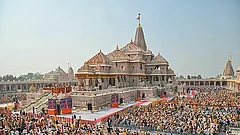

The probe has named former temple employee Avinash Shukla as the prime accused in a supplementary chargesheet, alleging that he played a central role in the theft and misappropriation of devotees' donations. Investigators have also accused him of tampering with records, gaining unauthorised access to donation boxes and diverting funds with the help of a small group of associates.
The investigation also highlighted weak supervision and inadequate security protocols, which it said enabled the thefts to continue unchecked. While the total amount allegedly stolen remains uncertain because older CCTV footage had been overwritten, investigators recovered cash, foreign currency and jewellery from staff members and identified bank deposits allegedly disproportionate to the accused employees' known incomes.

What Action Yogi Adityanath Has Taken ?
UP Chief Minister Yogi Adityanath has sought to project a policy of zero tolerance towards the alleged theft of donations at the Ram Temple while defending the autonomy of the Shri Ram Janmabhoomi Teertha Kshetra Trust. After the Trust sought the probe, Adityanath said the investigation would "separate the wheat from the chaff".
Following its preliminary findings, the Trust registered an FIR, accepted the resignations of general secretary Champat Rai and trustee Anil Mishra, removed administrator Gopal Rao, and constituted a three-member committee to appoint a new chief executive officer.
Adityanath has also dismissed opposition allegations, accusing them of attempting to defame Ayodhya and the Ram Janmabhoomi. He visited Ayodhya twice since the controversy emerged, first on June 19, when he met Trust officials and publicly backed the investigation, and again on 10 July, when he reviewed development projects and renewed his attack on the opposition over the donation row.

Is BJP Distancing Itself From The Ram Temple Trust?
The alleged theft of devotees' donations has placed the BJP in an uncomfortable political position, prompting the party to distance itself from the Shri Ram Janmabhoomi Teerth Kshetra Trust even as the controversy unfolds.
Although the Trust functions independently of the government, the Ram Temple has been closely associated with the BJP's political narrative. The party's cautious approach comes amid concerns that the controversy could overshadow one of its most significant ideological achievements, particularly after its defeat in the Faizabad Lok Sabha constituency—which includes Ayodhya—in the 2024 general election.
The row has also acquired an internal political dimension in Uttar Pradesh. Chief Minister Yogi Adityanath ordered the probe and directed strict action against those accused, signalling an effort to demonstrate accountability and contain the fallout. In another notable development, newly elected BJP national president Nitin Nabin did not visit Ayodhya during his recent trip to Uttar Pradesh, a decision that drew political attention amid the ongoing controversy.
Meanwhile, the Congress has sought to intensify pressure on the BJP. On July 11, the party held press conferences across the country, with senior leader Abhishek Manu Singhvi accusing the government of failing to safeguard devotees' contributions and urging Prime Minister Narendra Modi to respond publicly to the allegations.
Who Runs The Ram Temple Trust?
The Shri Ram Janmabhoomi Teerth Kshetra was constituted following the Supreme Court's landmark Ayodhya verdict of November 2019. In its judgment, the Court directed the Union government to formulate a scheme within three months for the creation of a trust to oversee the construction and management of the Ram Temple and to transfer the disputed land to it.
Acting under the Acquisition of Certain Area at Ayodhya Act, 1993, the Centre formally established the Trust on 5 February 2020 and, through a Gazette notification, transferred the acquired land to its control.
The 15-member Trust is the temple's highest decision-making body. It is chaired by Mahant Nritya Gopal Das, although day-to-day responsibilities have largely been handled by ex-General Secretary Champat Rai, who emerged as the institution's public face.
The trust deed provides for a mix of permanent members, nominated members and ex-officio representatives, ensuring representation from the religious community as well as the Union and Uttar Pradesh governments. Construction of the temple has been overseen by a committee headed by former Principal Secretary to the Prime Minister Nripendra Mishra in his capacity as an ex-officio member.
The Trust also includes senior advocate K Parasaran, IAS officer Prashant Lokhande as the Centre's representative, and IAS officers Sanjay Prasad and Shashank Tripathi representing the Uttar Pradesh government. The remaining members comprise prominent Hindu seers associated with the Ram Janmabhoomi movement.
Unlike statutory temple boards headed by executive officers or chief administrators, the Ram Temple's administration has largely been managed by the trustees and office-bearers themselves.