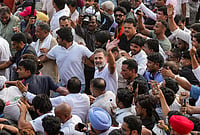
For 33-year-old Sweety Bibi and her two children, Qurban (6) and Imran (12), Wednesday marked the end of more than a year spent stranded in Bangladesh. The family returned to India through the Malda border after allegedly being pushed across the border following their detention in Delhi.
On Tuesday evening, the Bangladesh Border Guard handed over Sweety, her children and Danish Sheikh, another member of the group allegedly pushed into Bangladesh, to the Border Security Force. After medical examinations, they were handed over to the West Bengal Police before leaving for their home in Birbhum district.
The case comes weeks after four Indian men from West Bengal were brought back from Bangladesh after they were allegedly deported despite possessing valid Indian citizenship documents. Following verification of their identities by the West Bengal Police, they were returned to India through flag meetings between the Border Security Force and the Bangladesh Border Guard.

What Is The Difference Between Deportation And Pushback?
The Ministry of Home Affairs recently issued a new policy in April 2026 on the deportation of illegal immigrants.
Under the policy, deportation is a formal legal process in which foreigners suspected of staying illegally in India are detained, tried in court and deported only after legal procedures are completed and their identity is confirmed with their home country.
Pushbacks, however, are informal actions carried out at the border. They are not specifically defined under Indian law and may involve security forces sending a foreign national back across the border depending on the circumstances.




Under the Citizenship Act, 1955, an "illegal migrant" is defined as a foreigner who entered India without valid travel documents or who entered legally but remained beyond the permitted period.

What Does The New Deportation Policy Say?
Since citizenship falls under the Union List, the Ministry of Home Affairs oversees deportation while delegating responsibilities to state authorities.
The new policy directs states and Union Territories (UTs) to verify the credentials of suspected illegal immigrants from Bangladesh and Myanmar within 30 days. It also requires every district to establish a Special Task Force under police supervision to identify and process illegal immigrants and create holding centres for those awaiting deportation.
Once identified, the biometric and demographic details of suspected illegal immigrants must be uploaded to the Foreigners' Identification Portal. States are also required to maintain records of those handed over to border forces and submit monthly reports to the Centre.
The Bureau of Immigration has also been directed to publish a list of deportees and share the information with the UIDAI, the Election Commission (EC) and the Ministry of External Affairs (MEA) to prevent the future issuance of Aadhaar cards, voter identity cards or passports to deported individuals.

How Is Citizenship Verified In India?
India, like most European countries, primarily follows the jus sanguinis principle. Citizenship is governed by the Citizenship Act, 1955, although the legal framework has evolved significantly to accommodate migration during Partition, later amendments, and the unique circumstances of the North East.
Unlike many countries, India does not issue a single, universally recognised national citizenship card. Since most Indians acquire citizenship automatically through birth or descent, citizenship is established through what is commonly described as a "multiple-document approach."
Under this system, an individual's citizenship is verified by establishing a chain of facts relating to their date of birth, place of birth, and parentage using a combination of official records.
When government processes, such as a National Register of Citizens (NRC) exercise, require proof of citizenship, the burden of proof rests on the individual. In the absence of a standalone citizenship document, applicants are typically required to submit a combination of birth certificates, parental records, educational certificates, and other government-issued documents to establish eligibility under the law.

Why Have Wrongful Deportation Concerns Emerged?
The recent cases involving Sweety Bibi and the four men from West Bengal have drawn attention to concerns over citizenship verification before deportation or pushback.
Rights groups and activists have raised concerns over wrongful detention, inadequate verification of citizenship documents and the possibility of individuals being wrongly removed. They have also highlighted the need for procedural safeguards when citizenship is disputed.

The Debate Ahead
Citizenship emerged as one of the defining political issues during Prime Minister Narendra Modi's second term, particularly following the passage of the Citizenship Amendment Act and the proposed NRC exercise.
With the government's stated commitment to identifying and removing illegal immigrants, especially in border regions such as West Bengal and the North East, the debate over citizenship is likely to remain politically significant.
Special Intensive Revision (SIR) exercises conducted before Assembly elections in several states have also brought citizenship into focus, as electoral authorities have sought to verify voter eligibility and revise electoral rolls.
The government has repeatedly faced criticism from Opposition parties and civil society groups over its citizenship policies.