The mosque project has been revised since its original announcement in 2020.
It was planned on the five-acre plot allotted under the Supreme Court's 2019 Ayodhya verdict.
The revised plan includes changes to the project's scale and facilities.
Years after the Supreme Court's Ayodhya verdict reshaped one of India's longest-running legal and religious disputes, the mosque project ordered as part of the judgment has hit a funding crunch. The 2019 ruling awarded the controversial site for the construction of the Ram Temple while directing the allotment of a separate five-acre plot in Ayodhya for a mosque.
The Indo-Islamic Cultural Foundation (IICF), which is overseeing the project, told Reuters that it has been forced to scale down the original proposal after donations from the Muslim community fell far short of expectations. The trust said the lack of financial support made it difficult to execute the project in its original form.
The original plan envisioned not just a mosque but a larger socio-cultural complex with a hospital, community kitchen, library, museum and research centre on the five-acre site allotted by the Uttar Pradesh government. Several of these components have now been dropped or substantially downsized as the project is revised to match available funds.


Why Was Land allotted For The mosque?
On 9 November 2019, the Supreme Court awarded the disputed site to Ram Lalla Virajman for the construction of a Ram temple while directing the Uttar Pradesh government to allot five acres of land to the Sunni Waqf Board at an alternative location for a mosque.



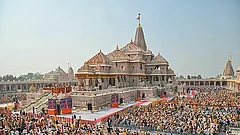
The court ordered the allotment under Article 142 of the Constitution as part of its effort to ensure complete justice while resolving the dispute.
Following the Supreme Court's verdict in the Babri Masjid–Ram Janmabhoomi title suit, the Uttar Pradesh government allotted five acres of land in Dhannipur village, located in Ayodhya's Sohawal tehsil, about 25 km from the site where the Babri Masjid once stood, to the Uttar Pradesh Sunni Central Waqf Board for the construction of a mosque.

How Did The project evolve?
After the land allotment in 2020, the IICF was established to execute the project. Rather than constructing only a mosque, the foundation unveiled an ambitious masterplan for a broader social and cultural complex. A foundation stone was later laid as the project formally began, with construction expected to rely largely on community donations.
IICF Chairman Zufar Ahmad Faruqi told Reuters that there has been "a disinterest from the community" and the donations received have been insufficient to support the original proposal. The foundation had planned a large multi-purpose complex but has since abandoned those plans after contributions fell far short of expectations.
IICF Secretary Athar Husain said the revised proposal now envisages a much smaller mosque requiring between ₹3 crore and ₹5 crore, while only about ₹1.5 crore has been collected so far. The trustees have therefore decided to prioritise construction of a modest mosque instead of pursuing the larger project.

What Does The Revised Plan Mean?
The revised proposal does not alter the Supreme Court's 2019 judgment or the allotment of five acres for the mosque. Instead, it shows the financial constraints facing the project and the foundation's decision to pursue a more modest and achievable plan.
While the larger vision of a hospital and other community facilities has been put on hold, the mosque remains the central element of the project and could be expanded in the future if additional funding becomes available.
The project has also faced procedural hurdles. According to media reports from September 2025, the Ayodhya Development Authority (ADA) rejected the mosque trust's building plan, citing the non-submission of mandatory no-objection certificates (NOCs) from several government departments. The trust has since been required to secure the necessary clearances before construction can proceed.