The trust comprises 12 members appointed directly by the central government, while the remaining three members were selected during its inaugural meeting
Key leadership figures of the trust include founding trustee K. Parasaran, chairman Mahant Nritya Gopal Das, and treasurer Govind Dev Giri Ji Maharaj
Unlike state-controlled temple boards, the trust operates independently with its own deed, relying on internal audits and resisting state-level financial control
As allegations of missing donations and expensive offerings at the Ram Mandir trigger an SIT probe, questions are being raised about how one of India's most visited temples manages crores it receives from devotees. The spotlight has also turned to the trust that oversees the temple's affairs.
The Uttar Pradesh government formed a three-member Special Investigation Team on June 13, 2026 to probe allegations of financial irregularities at the Ram Mandir. Led by Lucknow divisional commissioner Vijay Vishwas Pant, the team received a 15-day deadline to submit its final report. As of 19 June 2026, officials still await the findings.
Political tensions escalated early in the month. Samajwadi Party chief Akhilesh Yadav cited reports claiming crores of rupees in temple donations were missing. Trust General Secretary Champat Rai immediately dismissed the accusations.
What Are The Allegations?
The controversy began after Samajwadi Party leader and former Ayodhya MLA Pawan Pandey alleged that between Rs 7 crore and Rs 7.5 crore in donations received at the Ram Mandir had been misappropriated. The allegations were amplified by SP chief Akhilesh Yadav, who demanded an impartial investigation and questioned the Uttar Pradesh government's initial silence on the issue. Yadav also called for CCTV footage related to the donation-counting process to be made public.
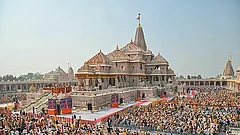



The Shri Ram Janmabhoomi Teerth Kshetra Trust has strongly denied the allegations. On June 8, trust member Mahant Dinendra Das Maharaj said that all donations and financial transactions are properly recorded and handled through a transparent process.
Amid the controversy, the Uttar Pradesh government constituted a Special Investigation Team (SIT) to examine the allegations and review the temple's donation-handling system.
Additionally, internal audits conducted by statutory auditor V. Shankar Aiyar & Co. and TCS flagged severe cash-handling vulnerabilities as of June 2026.
Ten chest-boxes of gold and silver offerings were removed without corresponding accounting entries. Officials also discovered the deletion of seven to eight months of CCTV footage in the cash-sorting area.
Meanwhile, police detained temple employee Lavkush Mishra and recovered Rs 10 lakh in cash from his home. Authorities have not yet officially linked this money to the missing donations.
Who Oversees The Temple?
Major decisions regarding the Ram Mandir's administration, finances, construction, and future development are taken by the Shri Ram Janmabhoomi Teerth Kshetra Trust, a 15-member body.
Founded in February 2020 following the Supreme Court's Ayodhya verdict, the trust oversee the temple's construction, finances, and administration.
Around 12 of the 15 members were appointed by the government, while the other three were selected in the first meeting. Former Attorney General K. Parasaran is the founding trustee member.
The trust is chaired by Mahant Nritya Gopal Das. Day-to-day administration and many public communications are handled by Champat Rai, while Swami Govind Dev Giri oversees financial matters as treasurer.
The trust's accounts are maintained independently and are subject to statutory audits by chartered accountants. For donation handling, the trust has authorised State Bank of India to manage the counting and banking process.
How Is Cash Counted?
The counting process is layered. Around 35 donation boxes sit across the temple premises, temple staff said, as reported by The Indian Express.
Temple employees estimate daily cash offerings range from Rs 8 lakh to Rs 13 lakh, rising to Rs 50 lakh to Rs 60 lakh on festival days.
The Trust authorised the State Bank of India to handle the money.
The bank then outsourced the counting to a private agency, creating a multi-layered chain of custody. Counting occurs in two daily shifts, from 8 a.m. to 2 p.m. and 2 p.m. to 8 p.m., with 20 tellers working per shift.
Multiple groups monitor the money. Nearly 50 employees are involved in the entire process, including around 24 employees from the private agency who prepare bundles of currency notes.
Twelve trust employees oversee the private tellers, while TCS handles the CCTV network. Finally, 14 SBI staffers verify the currency bundles before deposit.
After inspecting the boxes, the SIT concluded that direct removal of cash from the boxes themselves is highly unlikely, shifting their focus to post-collection handling.
Who Controls The Finances?
The trust operates independently. The Shri Ram Janmabhoomi Teerth Kshetra Trust is an autonomous charitable trust governed by its own deed. The Uttar Pradesh government does not control its finances. The body relies on internal audits and resists Right to Information disclosures, with state intervention occurring only upon explicit request or through judicial public interest litigations.
How are other major temple's donations managed?
The structure of Ram Mandir's donation management contrasts sharply with state-controlled temple boards. The Tirumala Tirupati Devasthanams for instance, operates under the Andhra Pradesh government via the Andhra Pradesh Charitable and Hindu Religious Institutions and Endowments Act, 1987. State authorities legally bind the TTD to government-run audits, require contributions to state welfare funds, and can intervene directly in its administration, as demonstrated by the state appointing a committee during the ghee procurement scandal as of June 2026.
While the Ram Mandir has received substantial donations since its consecration, institutions such as Tirumala Tirupati Devasthanams and Padmanabhaswamy Temple have accumulated wealth, assets and endowments over decades
What Has SIT Found?
The probe remains ongoing. The SIT arrived at the temple at 2 p.m. on Monday and offered prayers before inspecting the premises. The team examined the donation boxes and questioned trust employees, private agency tellers, and banking staff involved in preparing currency bundles, leaving around 10 pm.
The final report of this investigation is still awaited. The Uttar Pradesh government gave the SIT a 15-day deadline to finish its work. As of June 19, 2026, the state awaits the specific findings, conclusions, and administrative recommendations from the investigating panel.
Calls for management overhaul
The donation controversy has also triggered calls for reforms in the temple's administrative structure. Ram Janmabhoomi Temple Construction Committee chairman Nripendra Misra has argued that the episode exposed weaknesses in supervision, accountability and compliance mechanisms within the institution.
Speaking to The Hindu, Misra said the temple's operations are currently handled largely by volunteers, with limited formalisation of roles and responsibilities. With nearly 1,500 people involved in various activities across the temple complex, he said a more professional management structure is needed, including clearly defined administrative procedures, stronger oversight mechanisms and the appointment of a Chief Executive Officer (CEO).
Misra also defended the Uttar Pradesh government's decision to order an SIT probe, noting that the Shri Ram Janmabhoomi Teerth Kshetra Trust itself had sought intervention. He described the allegations as "painful" and warned that any misuse of devotees' contributions could undermine public faith in the institution.
Yogi Adityanath's response
Amid the ongoing controversy, Uttar Pradesh Chief Minister Yogi Adityanath visited Ayodhya and the Ram Mandir on Friday, where he said that anyone found guilty of wrongdoing would face strict action, regardless of their position.
Calling for restraint, the chief minister urged people not to make statements that could hurt the sentiments of devotees and asked those with documentary evidence related to the allegations to submit it to the Special Investigation Team (SIT). His visit came as scrutiny intensified over the handling of temple donations and the functioning of the Shri Ram Janmabhoomi Teerth Kshetra Trust.
The visit also attracted attention due to reports that trust general secretary Champat Rai was absent from the chief minister's stage engagements, though no official explanation was provided.
"My appeal to all Ram devotees is this: at the request of the trust, we have ordered a Special Investigation Team (SIT) inquiry. I can assure you that the SIT investigation will separate truth from falsehood. I request everyone and all parties involved to refrain from making baseless comments or statements that hurt the sentiments of Ram devotees. If anyone has any documentary evidence, they should kindly submit it to the SIT," CM Yogi said in Ayodhya.