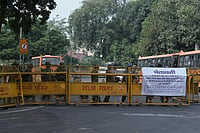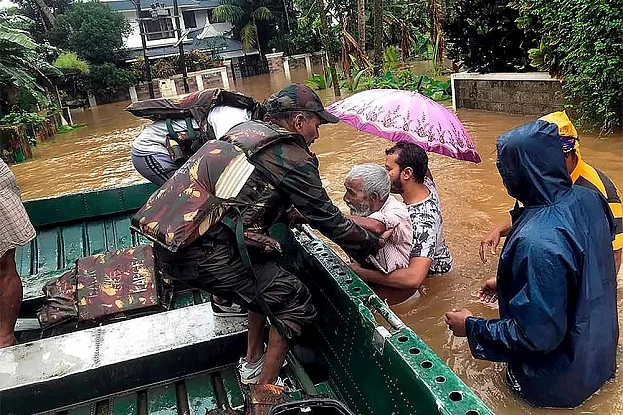
Delhi remains under red alert as heavy rain triggers widespread waterlogging and traffic chaos.
Maharashtra, Gujarat and Kerala battle floods and landslides, with rescue operations continuing in the worst-hit areas.
IMD warns of more heavy rainfall as the Centre assures assistance to affected states.
Heavy monsoon rains continued to batter large parts of India on Thursday, triggering floods, landslides, transport disruptions and rescue operations across several states. While Delhi remained under a red alert after torrential overnight showers, Maharashtra grappled with overflowing rivers and a major rescue operation in Pimpri-Chinchwad.
Meanwhile Gujarat's Surat continued to reel under a flood-like situation after record rainfall, and Kerala's Wayanad remained on high alert as search efforts continued following a deadly landslide at a tunnel project site. The India Meteorological Department (IMD) has warned that several regions are likely to receive more rain in the coming days.
Here is a look at how the heavy monsoons have impacted the country.
Delhi: Red alert as torrential rain paralyses city
Delhi woke up to grey skies, waterlogged roads and uprooted trees after overnight rainfall, prompting the IMD to issue a red alert for Thursday. Safdarjung, the city's base weather station, recorded 72.6 mm of rain in the 24 hours ending 8.30 am, while Lodhi Road received 80.2 mm, Ridge 77.8 mm and Palam 63 mm.
The downpour inundated several parts of the capital, including Vikas Marg, Munirka, Sadar Bazar, Dwarka and areas around the New Delhi Railway Station. Traffic slowed to a crawl on the Delhi-Noida Expressway, Ring Road, Outer Ring Road and NH-48 as commuters navigated waterlogged roads and poor visibility.


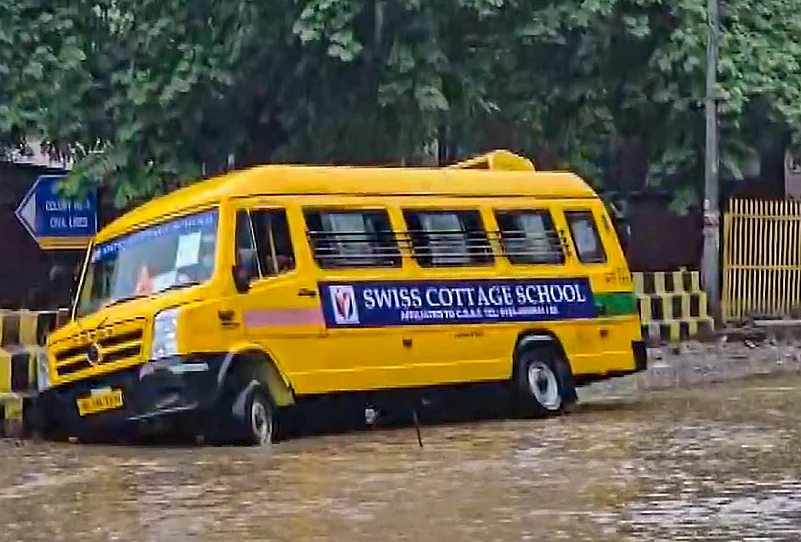
Two trees were uprooted in East of Kailash, disrupting traffic, while civic agencies received multiple complaints of waterlogging, tree falls and power disruptions. Weather experts attributed the prolonged spell to the seasonal monsoon trough shifting northwards towards the Himalayan foothills, with widespread rainfall expected to continue before conditions gradually improve.
However the rain has provided some relief to the capital as it registered its cleanest air in more than 10 months on Wednesday, even as waterlogging and traffic snarls disrupted normal life with Delhi's Ridge weather station recording 154 per cent excess rainfall in July.
Maharashtra: Rescue operations continue as rains disrupt transport
Although Mumbai witnessed a relatively rain-free Thursday morning after days of relentless showers, the state continued to battle the aftermath of intense rainfall.
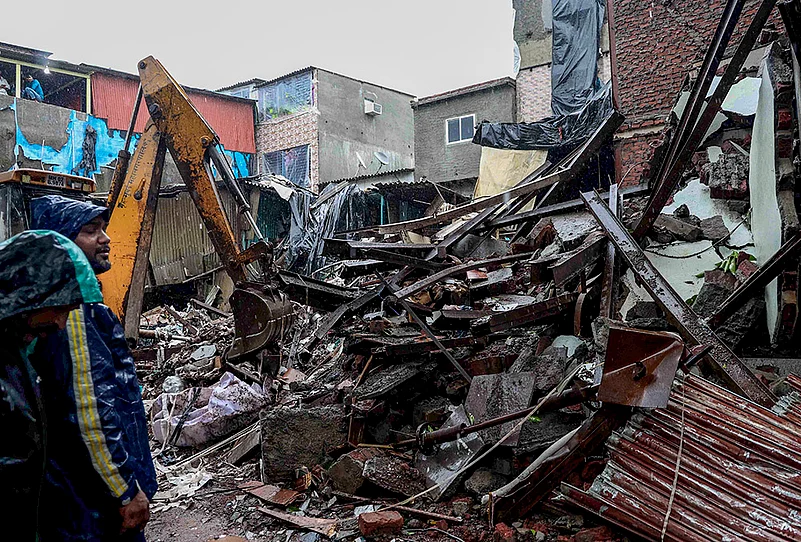
The most serious incident occurred in Pimpri Chinchwad's Moshi area near Pune, where a rain-soaked mound of legacy waste collapsed onto a three-storey administrative building at a waste-to-energy plant. Rescue teams from the NDRF, Army, fire services and local authorities continued efforts to reach 11 people believed to remain trapped beneath the debris after several others were rescued.
Officials said the area had received over 600 mm of rainfall in the past 30 to 35 hours, causing the garbage mound to loosen and collapse "like a landslide."
Elsewhere, rising water levels in the Godavari and other rivers prompted authorities in Nashik to advise residents living along riverbanks to move valuables and livestock to safer locations.
In Mumbai, transport services gradually returned to normal after severe disruptions earlier in the week. Local trains, Metro services and BEST buses were operating, though suburban trains continued to run with minor delays. IMD has forecast intermittent light to moderate rainfall with isolated heavy spells, thunderstorms and gusty winds through the day.
Gujarat: Surat battles flood-like situation
Surat remained among the worst-hit regions after receiving 358 mm of rainfall in just 24 hours ending Wednesday morning, leading to widespread flooding across the city.
Authorities said at least nine people, including children, have died in rain-related incidents involving electrocution, drowning and tree falls over the past few days.
More than 3,400 people were rescued from inundated neighbourhoods while nearly 3,900 residents were shifted to relief centres. Water entered homes, commercial complexes and shops, forcing authorities to distribute over 12,000 food packets and drinking water to stranded residents.
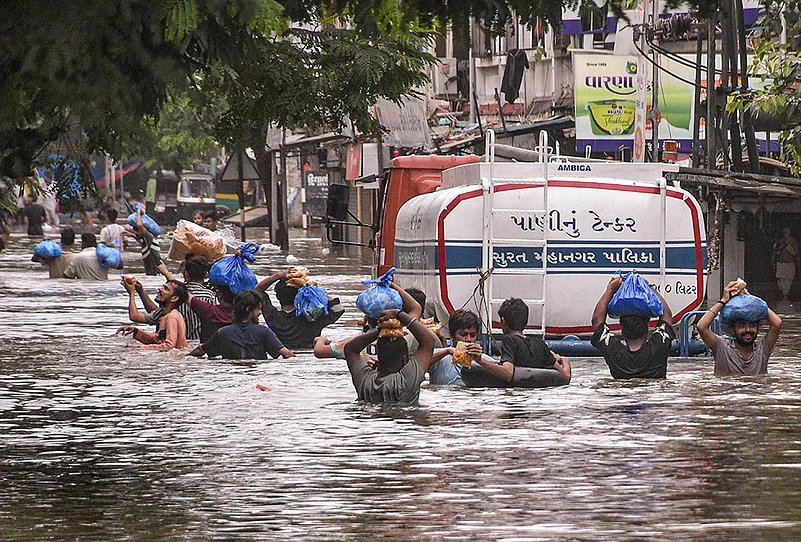
Areas near the city's creek, including Limbayat, Udhna, Varachha and Kadodara, remained marooned, with NDRF and SDRF teams carrying out rescue operations using boats. Schools, colleges and anganwadi centres were ordered shut as authorities urged residents to remain indoors unless absolutely necessary.
Chief Minister Bhupendra Patel reviewed the situation and directed ministers to visit affected districts to oversee relief and rehabilitation efforts.
Kerala: Search continues after Wayanad landslide
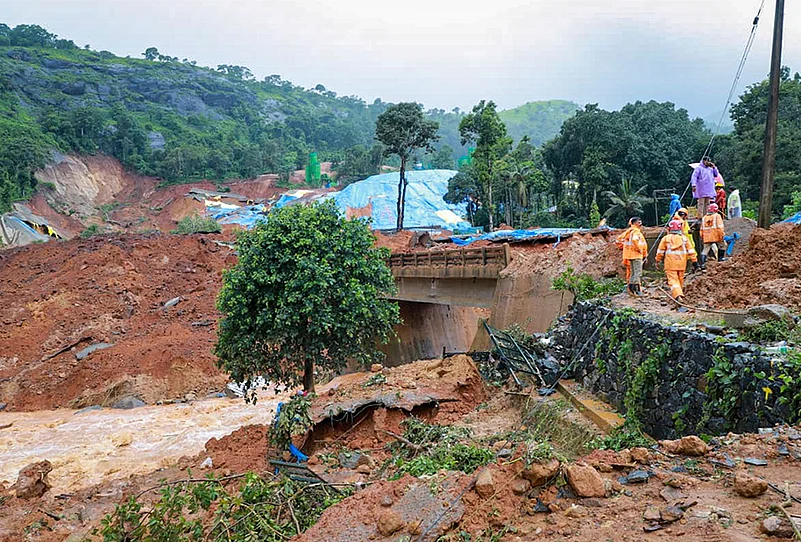
Rescue teams in Kerala's Wayanad continued searching for atleast four missing people after a landslide struck the Anakkompoyil-Meppadi tunnel project site earlier this week.
The death toll rose to four after another body was recovered on Thursday morning. The victims were migrant workers from Madhya Pradesh, Bihar and Jharkhand employed at the tunnel construction site.
Continuous rainfall has complicated rescue operations, with the IMD maintaining a red alert for Wayanad. Authorities said searches are continuing across multiple zones, including downstream river stretches.
Chief Minister V D Satheesan, who visited the site, said the government would prioritise locating the missing persons before beginning a detailed investigation into the disaster. Two committees have been constituted to examine the causes of the landslide and determine whether environmental clearance conditions for the tunnel project were followed. The project has been put on hold pending the inquiry.
Centre reviews situation
Amid the widespread monsoon damage, Union Home Minister Amit Shah spoke with the chief ministers of Kerala, Maharashtra, Gujarat and Jammu and Kashmir to review the situation and assured them of all possible assistance from the Centre.
With the IMD forecasting continued heavy rainfall in several regions, district administrations have intensified surveillance in vulnerable areas, kept rescue teams on standby and urged residents in low-lying and landslide-prone locations to remain alert.