India urged the international community to hold Pakistan accountable for its handling of protests in PoJK
The MEA accused Pakistan of using lethal force, suppressing dissent and violating the rights of civilians
Protests in PoJK have intensified over alleged economic exploitation, arrests and restrictions on essential supplies
India said the unrest reflects longstanding grievances over Pakistan's governance of the region
India has called on the international community to hold Pakistan fully accountable for what it described as the "systemic exploitation" and use of lethal force against unarmed civilians in Pakistan-occupied Jammu and Kashmir (PoJK), where protests against Islamabad's rule have intensified in recent weeks.
Responding to a question on the ongoing protests in PoJK during a media briefing in New Delhi, Ministry of External Affairs spokesperson Randhir Jaiswal said the protests are "a direct consequence of Pakistan's decades-long systemic exploitation, denial of fundamental rights, and administrative oppression in areas under its illegal and forcible occupation."
Jaiswal pointed out that rather than addressing the legitimate grievances of the local populace, the Pakistani state has responded with "extreme police brutality" and "deploying lethal force against unarmed civilians that has resulted in tragic fatalities," the report said.


Protests And Crackdown In PoJK
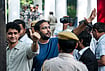
The unrest in Pakistan-occupied Jammu and Kashmir has been escalating since early June, when authorities banned the Jammu Kashmir Joint Awami Action Committee (JAAC) under Pakistan's Anti-Terrorism Act. Thousands of people have taken to the streets across PoJK, demanding an end to an alleged economic blockade, restoration of communication services, release of detained leaders and implementation of a 38-point written agreement.
According to the Ministry of External Affairs, more than 27 protesters have been killed and several others injured during clashes between demonstrators and security forces across the region. A human rights report compiled by the JKJAAC Human Rights Cell documented at least 14 civilian deaths and over 70 injuries between June 5 and June 13, with field reports alleging three further civilian deaths and at least eight injuries at the Dharake/Eidgah Ground in Rawalakot on June 14.
Protest organisers have alleged that more than 600 workers and political leaders have been arrested, while authorities have imposed an economic blockade by restricting the supply of food, flour and essential medicines.

International Concern And India's Position
The developments have drawn international attention, with members of the Kashmiri diaspora staging protests outside Pakistani diplomatic missions in the United Kingdom and British lawmakers expressing concern over alleged human rights violations, reports of arrests and communication restrictions in the region.
India has repeatedly raised concerns about the treatment of residents in PoJK. In June, the MEA accused Islamabad of attempting to suppress public dissent through force while diverting attention from what it called Pakistan's internal governance failures. Jaiswal said the violence reflected "Pakistan's continuing inability to address the concerns of people living in territories under its control."
The violence has further heightened tensions surrounding the disputed Himalayan region, with observers warning that continued unrest could deepen political instability and intensify scrutiny of Pakistan's handling of dissent in PoJK.
The protest movement has highlighted deep-seated grievances in the region, with demonstrators accusing Islamabad of economic exploitation, political marginalisation and human rights abuses. The JAAC's call for a "grand and final" response on July 9, which was later deferred following negotiations, underscored the volatility of the situation.