Ukrainians staged rare wartime protests after President Volodymyr Zelensky dismissed Defence Minister Mykhailo Fedorov
Fedorov was widely credited with transforming Ukraine's drone warfare and defence technology capabilities
Protesters fear the leadership change could disrupt key military reforms as Russia intensifies attacks
Hundreds of protesters took to the streets of Kyiv, Lviv and Odesa on Thursday after Ukrainian President Volodymyr Zelensky dismissed Defence Minister Mykhailo Fedorov, the man widely credited with transforming Ukraine into one of the world's most innovative drone warfare powers.
The demonstrations are among the rare public protests witnessed in Ukraine since Russia's full-scale invasion began, showing unease over the removal of a minister closely associated with the country's military modernisation.
The protests came as Ukraine remains under sustained Russian military pressure. On the same day, the Verkhovna Rada appointed Sergii Koretskyi as the country's new Prime Minister, while Russia launched another missile barrage on Kyiv and Odesa, showing the difficult security environment in which the political transition is unfolding.
Rather than focusing solely on the dismissal itself, the public reaction has centred on Fedorov's wartime record and the role he played in reshaping Ukraine's defence capabilities through rapid technological innovation.
Why Was Fedorov Removed?
President Zelensky dismissed Fedorov on Thursday. The presidency has not publicly explained the reasons behind the decision.


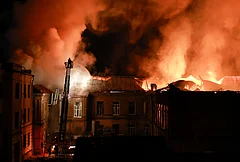
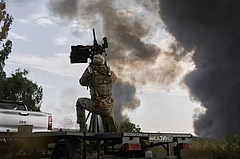
Fedorov had served as Defence Minister since September 2025 after previously leading Ukraine's Ministry of Digital Transformation. His tenure coincided with one of the most significant shifts in Ukraine's military strategy, as drones and emerging technologies became increasingly central to the country's battlefield operations.
Demonstrators carried signs reading "Fedorov is a hero" and "Don't shoot our army", expressing concern that replacing one of the country's most recognisable wartime ministers could disrupt military reforms at a critical stage of the conflict.
Although the dismissal coincided with Sergii Koretskyi's appointment as Prime Minister, the government has not indicated whether the two decisions formed part of a broader restructuring of the wartime administration.

Why Did Fedorov Become So Influential?
Unlike many defence ministers, Fedorov built his reputation around technology rather than traditional military command.
According to Ukraine's Ministry of Defence and Fedorov's own account on X, his tenure focused on accelerating innovation and expanding Ukraine's domestic defence industry as the country adapted to a war increasingly shaped by unmanned systems and digital technologies.
Among the flagship initiatives launched during his tenure was the Drone Line project, designed to strengthen frontline units through the wider deployment of unmanned aerial vehicles. Ukraine also established the Unmanned Systems Forces as a separate branch of the Armed Forces, recognising drones as a core component of modern warfare rather than a supporting capability.
Fedorov also oversaw a sharp expansion in drone production. By September 2025, contracts had been signed for more than one million FPV drones, while production of long-range strike drones also increased significantly.
His ministry launched the Drone Data project to accelerate the integration of artificial intelligence into military technologies, created a nationwide network of service centres for repairing military equipment, and expanded the Brave1 defence technology cluster to support Ukrainian military startups and accelerate battlefield innovation.
The Ministry of Defence said these reforms contributed to strengthening Ukraine's ability to respond to Russia's growing use of drones and precision weapons. According to the General Staff's latest battlefield update, Russian losses now include approximately 411,005 unmanned aerial vehicles alongside more than 1.42 million personnel, 46,019 artillery systems and 12,144 tanks, illustrating the scale of the conflict and the importance of technological adaptation on the battlefield.
Why Does The Timing Matter?
Russia launched another missile barrage against Kyiv and Odesa on the day of Fedorov's dismissal, highlighting the continued intensity of the war despite more than four years of fighting. Ukraine's expanding drone industry and broader defence technology ecosystem have become central to the country's strategy for offsetting Russia's advantages in manpower and conventional firepower.
Against that backdrop, the removal of the official most closely associated with those reforms has resonated beyond politics, becoming a broader debate over continuity, military innovation and wartime leadership.

How Did Fedorov Reshape Ukraine's Defence Strategy?
Fedorov's rise to prominence highlighted a broader shift in how Ukraine has fought the war.
As Russia expanded its use of drones, electronic warfare and long-range missile strikes, Kyiv increasingly prioritised technology-driven solutions over conventional military advantages. During his tenure, Ukraine accelerated investment in domestic drone manufacturing, artificial intelligence, battlefield digitalisation and military innovation, making unmanned systems a central pillar of its defence strategy.
According to Fedorov's announcement on X, one of the defining initiatives was the Drone Line project, aimed at strengthening frontline units through greater integration of unmanned aerial vehicles. The government also established the Unmanned Systems Forces as a separate branch of the Armed Forces, recognising drone warfare as a dedicated military domain rather than simply a supporting capability.
His ministry simultaneously sought to expand Ukraine's defence-industrial base. Contracts for more than one million FPV drones had been signed by September 2025, while production of long-range strike drones increased significantly. Alongside manufacturing, Ukraine launched the Drone Data project to accelerate the use of artificial intelligence in military technologies, created a nationwide network of service centres to repair military equipment and expanded the Brave1 defence technology cluster to help military startups rapidly develop battlefield innovations.
Together, the initiatives showed a strategy aimed at reducing dependence on foreign supplies while enabling Ukraine to adapt more quickly to rapidly changing battlefield conditions.
The scale of that challenge remains evident in the latest figures released by Ukraine's Ministry of Defence. As of 16 July, Russian combat losses were estimated at approximately 1,424,620 personnel, 12,144 tanks, 46,019 artillery systems and 411,005 unmanned aerial vehicles, underscoring both the intensity of the conflict and the growing role of drone warfare in shaping its course.
Why Has His Removal Resonated?
For many Ukrainians, Fedorov became one of the faces of the country's wartime technological transformation, helping build an ecosystem that linked the armed forces, private industry and technology companies in support of the war effort.
His emphasis on innovation distinguished him from more conventional defence leaders and helped position Ukraine as one of the world's fastest-growing military technology hubs.
The protests therefore appeared to be driven as much by concerns over continuity as by the dismissal itself. Demonstrators questioned whether leadership changes could disrupt programmes that have become integral to Ukraine's battlefield strategy at a time when Russia continues to launch regular missile and drone attacks.
The timing has amplified those concerns. On the day Fedorov was dismissed, the Verkhovna Rada appointed Sergii Koretskyi as Ukraine's new Prime Minister, while Russian forces launched another missile barrage targeting Kyiv and Odesa. Although the government has not linked the personnel changes to any shift in military policy, the overlap between a major political reshuffle and continued Russian attacks has inevitably drawn public scrutiny.

What Happens Next?
Whether the protests endure remains uncertain, but they have highlighted the political significance of wartime leadership in a country still confronting daily military threats.
Ukraine's defence strategy has evolved rapidly since Russia's full-scale invasion, with drones, digital technologies and domestic innovation becoming as important as conventional military capabilities. Much of that transformation unfolded during Fedorov's tenure, making his departure a moment of uncertainty for many Ukrainians.
The government has yet to explain the reasons behind his dismissal or outline how his reforms will be carried forward. As Ukraine enters another phase of the war under a new prime minister, public attention is likely to remain focused not only on who leads the Defence Ministry, but also on whether the technological momentum built over the past year can be sustained while the conflict continues.