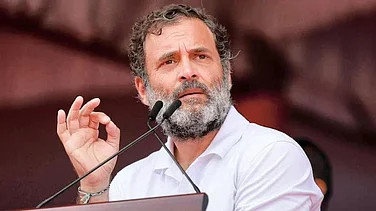
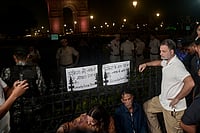
Omar Abdullah has escalated his statehood campaign with a July 20 protest in Delhi.
The National Conference has consistently made statehood its central political demand since 2020.
The Centre's delay and continued LG-led administrative powers have intensified the standoff.
The planned protest at Delhi’s Jantar Mantar on July 20 marks a decisive shift in Jammu and Kashmir Chief Minister Omar Abdullah’s campaign for the restoration of statehood. After nearly two years of resolutions, meetings and appeals to the Union government, Abdullah is taking the dispute from official negotiating rooms to the national capital’s most prominent protest site.
The demonstration, scheduled for the opening day of Parliament’s Monsoon Session, is intended to increase pressure on the Centre to specify when Jammu and Kashmir will regain the statehood it lost in 2019.
National Conference president Farooq Abdullah has invited leaders from opposition parties as well as the BJP to join the protest. The party has also sought a meeting with President Droupadi Murmu.
How Jammu And Kashmir Lost Its Statehood?
On August 5, 2019, the Union government revoked Jammu and Kashmir’s special constitutional status under Article 370. Parliament subsequently passed the Jammu and Kashmir Reorganisation Act, dividing the former state into the Union Territories of Jammu and Kashmir and Ladakh.
Unlike Ladakh, Jammu and Kashmir retained a legislature. However, its elected government operates within a Union Territory framework in which major powers, particularly those concerning police and public order, remain with the Lieutenant Governor and the Centre.


In December 2023, the Supreme Court upheld the constitutional changes involving Article 370. The court did not rule on whether Parliament could permanently convert a state into one or more Union Territories, as the Centre assured the bench that Jammu and Kashmir’s statehood would be restored.
The judgment directed that Assembly elections be conducted by September 30, 2024, but it did not prescribe a deadline for restoring statehood.

From Boycott To Electoral Promise
Omar Abdullah’s position on statehood predates his return to office. In July 2020, less than a year after Jammu and Kashmir was downgraded to a Union Territory, he declared that he would not contest Assembly elections until full statehood was restored. He argued that he could not be part of what he described as a weakened legislature compared with the former state Assembly.
Despite this stance, the National Conference eventually decided to contest the 2024 Assembly elections following the Supreme Court’s directive to hold polls. By then, the restoration of full statehood had become the party’s central political demand.
Abdullah reiterated his position in April 2024, saying, “I have said this all the way back from 2020 onwards and my position has not changed. I most certainly do not aspire to lead a Union Territory.”
The National Conference’s 2024 election manifesto explicitly promised to seek the immediate restoration of Jammu and Kashmir’s statehood. It framed the demand as essential to restoring democratic rights, constitutional governance and the region’s political dignity.
Cabinet Resolution And Quiet Negotiations
The National Conference emerged as the largest party in the 2024 Assembly election, winning 42 seats, while the BJP secured 29, all of them in the Jammu region. Omar Abdullah was sworn in on October 16, 2024, as the first chief minister of the Union Territory of Jammu and Kashmir.
His government placed statehood at the top of its agenda. At its first Cabinet meeting in October 2024, it passed a resolution seeking the immediate restoration of Jammu and Kashmir’s statehood in its original form. The Cabinet described restoration as the beginning of a “healing process” that would help reclaim constitutional rights and protect the identity of the region’s people.
After the April 2025 Pahalgam terror attack, in which 26 people were killed, Omar Abdullah made the widely publicised decision to temporarily pause and separate his statehood demand from the tragedy.
“After Pahalgam, with what face can I ask for statehood for Jammu and Kashmir? Meri kya itni sasti siyasat hai? (Do I have such cheap politics?) It would be shameful on my part if I go and tell the central government that 26 people have died, now give me statehood,” he said.
Weeks after the attack, in May 2025, Abdullah clarified that although he had chosen not to exploit the tragedy in its immediate aftermath, the broader conversation surrounding statehood had not stalled. He continued to push the formal demand through official channels, including by making a categorical reference to it in his speech at the NITI Aayog Governing Council meeting chaired by the Prime Minister.
Abdullah continued this approach into 2026. During a meeting with Prime Minister Narendra Modi in New Delhi on June 11, he once again raised the question of restoring full statehood. However, no public timetable emerged from the engagement.

Why Does the Elected Govt Say Statehood Matters?
Before the 2024 election, the Centre amended the Transaction of Business Rules governing the Union Territory. The changes strengthened the Lieutenant Governor’s authority in matters involving police, public order, All India Services officers, and transfers and postings.
The limitations became visible after the elected government took office. In April 2025, the Omar Abdullah administration objected to the transfer of Jammu and Kashmir Administrative Service and revenue officers ordered through Raj Bhavan.
According to The Indian Express, the Chief Minister’s Office described the transfers as lacking approval from the competent authority and viewed them as an encroachment on the elected government’s jurisdiction.
Abdullah initially refrained from openly escalating such disputes, even as sections of the National Conference demanded a harder line against Lieutenant Governor Manoj Sinha. By December 2025, however, the chief minister publicly alleged that the Lieutenant Governor was interfering in the functioning of the elected government. At the same time, he maintained that his broader relationship with the Centre was not problematic, except over the statehood issue.
This institutional overlap has strengthened the National Conference’s argument that an elected government cannot be held fully accountable by voters when crucial executive powers are exercised elsewhere.

Why Omar Abdullah Has Changed Course?
The primary reason for Abdullah’s escalation is the absence of a deadline. The Centre has repeatedly said that statehood will be restored at an “appropriate time”, but it has not defined the conditions that would determine when that time arrives.
On July 11, Abdullah warned the Centre not to mistake his government’s patience for weakness and questioned what “appropriate time” actually meant. The remarks suggested that the phase of restrained engagement was coming to an end.
The Jantar Mantar protest is therefore designed to achieve several political objectives at once. It allows Abdullah to demonstrate to his supporters that dialogue has not turned into passivity. It shifts the statehood debate from Srinagar and Jammu to Delhi. It also ensures that the issue coincides with Parliament’s Monsoon Session, increasing the likelihood that opposition MPs will raise it in both Houses.
Farooq Abdullah reportedly invited 52 national and regional political leaders to participate, including BJP representatives. The invitation allows the National Conference to argue that it is not demanding the restoration of Article 370 through this protest, but is instead seeking the fulfilment of a promise already made by the Union government.
That distinction is strategically important. Mirwaiz Umar Farooq has called for Article 370 to be included in the campaign, but the National Conference’s immediate emphasis remains on statehood.
BJP’s ‘Drama’ And ‘Eyewash’ Counterattack
The BJP has rejected the National Conference’s protest strategy, describing it as political theatre intended to distract attention from the elected government’s performance.
Sunil Sharma, the Leader of the Opposition in the Jammu and Kashmir Assembly, called the proposed demonstration a “drama”. He argued that the Centre had already committed itself to restoring statehood and accused the National Conference of using the issue to conceal governance failures and unfulfilled promises.
For Abdullah, the July 20 protest is an attempt to combine negotiation with public pressure. A significant turnout by opposition leaders would strengthen his claim that statehood has become a national democratic issue.