






Germany has proposed an EU force to replace the UNIFIL peacekeeping mission when its mandate expires on December 31, 2026
Foreign Minister Johann Wadephul said the move would help prevent a security vacuum following any Israeli withdrawal from southern Lebanon
The proposal comes as Israel and Lebanon continue US-mediated talks and violence in southern Lebanon has eased
German Foreign Minister Johann Wadephul on Friday has proposed replacing the expiring UN peacekeeping mission in Lebanon with an EU-mandated force to prevent a security vacuum following the withdrawal of Israeli forces, news angecy Reuters reported, citing RedaktionsNetzwerk Deutschland.
"We should examine in the EU whether we can ensure that no security vacuum arises with a European mandate following the UNIFIL mission," Wadephul said in an interview published on Friday, as reported by Reuters.
The UNIFIL mission expires on December 31, 2026. Germany's parliament extended the country's participation in the mission for the final time just weeks ago, Reuters reported.
Wadephul said Lebanon, with a stabilising government, represented "one of the most hopeful developments in the region at the moment." Lebanon and Israel held ambassador-level talks at the US embassy in Rome on Tuesday and Wednesday, their sixth round of face-to-face negotiations since a new war erupted on March 2 between Israel and Lebanese armed group Hezbollah, triggered by the wider regional conflict, as per the report.
An EU-mandated force could "create the conditions for the Israeli army to withdraw without Hezbollah returning with its terror," the minister added.


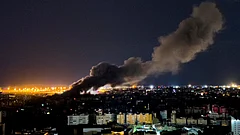

UNIFIL Mission And Current Situation
The UN Interim Force in Lebanon (UNIFIL) was originally created by the Security Council in March 1978 to confirm Israeli withdrawal from Lebanon, restore international peace and security and assist the Lebanese Government in restoring its effective authority in the area, according to the UN.
The mandate was adjusted following the July/August 2006 crisis, when the Council enhanced the Force to monitor the cessation of hostilities, accompany and support the Lebanese armed forces as they deploy throughout the south of Lebanon, and extend assistance to help ensure humanitarian access to civilian populations and the voluntary and safe return of displaced persons.
With violence in south Lebanon significantly decreased since mid-June, UN peacekeepers have returned to core functions such as protecting humanitarian aid and restoring critical infrastructure as families continue to return home, according to a UN news report. "The welcome reduction in violence allows our peacekeepers to do more of what we are here to do," UNIFIL spokesperson Kandice Ardiel said on Thursday.
UNIFIL peacekeepers have facilitated the movement of civilian workers, technical teams, humanitarian convoys and mobile medical clinics carrying out repairs and services related to water networks, electricity systems, telecommunications infrastructure and healthcare delivery. They have also helped repair and maintain water infrastructure in dozens of towns and villages in south Lebanon in recent weeks, the report said.
Netanyahu Reaffirms Security Commitment
The proposal comes as Israeli Prime Minister Benjamin Netanyahu has reaffirmed Israel's commitment to maintaining security zones along its borders. Speaking at the Negev Conference in Dimona on July 14, Netanyahu said Israel's approach has fundamentally shifted since October 7, 2023.
"This means one thing: Where is the Gaza envelope today? Today it is inside Gaza. Where is the Lebanon envelope today? Inside Lebanon. Where is the Golan envelope? Inside Syria. This is a new concept. We have changed our entire approach," Netanyahu said.
"We do not have a military with a state. Even though the military is fantastic, it is not good at statecraft and policy. That is the responsibility of the statesmen, and we took responsibility and led the country onto a different path: A path of initiative, action, and attack, not containment. Indeed, this is a polar shift, and the change we made has not only changed the face of the Middle East, it has also changed us," he added.

European Balancing Act
The proposal comes as European nations seek to maintain regional stability while balancing relations with Israel and Lebanon. A European force could potentially fill the gap left by UNIFIL's departure, ensuring that Israeli forces can withdraw without allowing Hezbollah to re-establish its military presence in the area.
The proposal is expected to be discussed among EU member states in the coming weeks, with the aim of reaching a decision before the UNIFIL mandate expires at the end of the year.















