The Supreme Court upheld the legality of Bihar’s Special Intensive Revision of electoral rolls and backed the Election Commission’s powers under Article 324.
The court ruled that the SIR exercise promotes free and fair elections by ensuring accurate electoral rolls.
The bench clarified that the Election Commission can examine citizenship questions for electoral purposes, but cannot make final determinations on citizenship status.
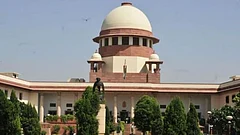
The Supreme Court of India on Tuesday upheld the legality of the Special Intensive Revision (SIR) of electoral rolls carried out by the Election Commission of India (ECI), ruling that the exercise advances the constitutional mandate of free and fair elections.
A bench comprising Chief Justice of India Surya Kant and Justice Joymalya Bagchi delivered the verdict on petitions challenging the ECI’s June 2025 notification ordering the SIR exercise in Bihar.
The court held that the Election Commission has the authority to conduct Special Intensive Revision under Article 324 of the Constitution, read with the Representation of the People Act, 1950 and related electoral rules.
Supreme Court Says SIR Linked to Free and Fair Elections
In the judgment, the bench observed that accurate and credible electoral rolls form the foundation of democracy and are directly linked to free and fair elections.
“When the statute itself authorises a special revision at any time, for reasons to be recorded and in such manner as the Election Commission may deem fit, the impugned exercise cannot be invalidated merely because it does not conform in every respect to the ordinary modalities contemplated for routine revision,” the court said.



The bench added that the SIR exercise did not replace existing electoral laws but operated within the statutory framework provided under Section 21(3) of the Representation of the People Act.
The court accepted the Election Commission’s reasoning that rapid urbanisation, migration, duplication of entries and the long gap since the last intensive revision justified the exercise.

EC Can Examine Citizenship Questions for Electoral Rolls
The Supreme Court also ruled that the Election Commission has the power to examine questions relating to citizenship while preparing or revising electoral rolls.
However, the bench clarified that any determination made by the Election Commission would be limited strictly to electoral purposes and would not amount to a final declaration on citizenship status.
“The Commission’s determination, being confined to electoral purposes, cannot assume finality on the question of citizenship,” the court observed.
The court directed the ECI to forward names deleted from the 2003 electoral rolls on grounds of doubtful citizenship to the Central Government within four weeks for further adjudication under citizenship laws.
Court Rejects ‘NRC-like Exercise’ Argument
Petitioners, including the Association for Democratic Reforms (ADR), had argued that the SIR exercise amounted to a backdoor citizenship verification drive similar to the National Register of Citizens (NRC).
They claimed the process forced already-enrolled voters to re-establish citizenship through documentary proof and violated the presumption of citizenship recognised in earlier judgments.
The court rejected these arguments, holding that asking voters to furnish supporting documents during revision does not negate the presumption of citizenship.
“Calling upon electors to furnish supporting material… reflects the procedural mechanism through which the Commission seeks to reaffirm or, where necessary, correct existing entries,” the judgment noted.

Petitioners Had Questioned Scope of EC’s Powers
The petitions had also challenged the scale of the exercise, arguing that Section 21(3) of the Representation of the People Act only permitted targeted revisions rather than a broad multi-state exercise.
Among those who challenged the process were political leaders and activists including Mahua Moitra, Manoj Jha, K. C. Venugopal, Supriya Sule and activist Yogendra Yadav.
Senior advocates including Kapil Sibal, Abhishek Manu Singhvi and advocate Prashant Bhushan appeared for the petitioners.
SIR Already Expanded Beyond Bihar
The court noted that the SIR process has already been completed in Bihar, Kerala, Tamil Nadu, Puducherry and West Bengal, and is currently underway in several other states including Uttar Pradesh, Gujarat and Rajasthan.
The verdict is expected to significantly strengthen the Election Commission’s authority to undertake large-scale electoral roll verification exercises in future.