Emergency procurements were fast-tracked to plug immediate gaps in drones, anti-drone systems, precision munitions, and secure communications
In the past year alone, the Defence Ministry has approved acquisitions worth ₹6.81 lakh crore
A new fast-track mechanism has been created for urgent operational needs, aiming to finalise contracts within six months and achieve deliveries in two years
It was five past one in the morning of 7 May 2025 when, 25 minutes later, the Indian Armed Forces launched their strikes on the terror infrastructure that had loomed over the Pahalgam attack. The first missiles hit Markaz-e-Taiba in Muridke and Markaz-e-Subhan Allah in Bahawalpur, Pakistan. Pakistan's ISPR reported that the Indian strikes hit multiple locations, claiming the lives of at least 31 people. The retaliation came in the form of shelling and drone attacks. While the armies relied on military might, the Indus Waters Treaty was put in abeyance, with India declaring that "blood and water cannot flow together."
The terror attack of April 22, where victims were reportedly asked about their religion before being killed, spread venom across two nations. It left women weeping over a new identity thrust upon them, that of a widow. The demand for a true "war" began to germinate or, as Leo Tolstoy would have said, a moment where the impossible became near, then possible, and finally inevitable.
The etymology behind sindoor lied in the honour and sanctity it holds in Hindu tradition, an imprint that the terrorists sought to erase in the valley of Kashmir. One photograph that came to embody the nation's grief was that of Himanshi Narwal sitting motionless and dazed beside her husband's body. The attackers primarily targeted Hindu tourists, but the violence also claimed the life of a Muslim. Syed Adil Hussain Shah, a local Kashmiri pony rider, sacrificed his life while trying to snatch a rifle from one of the terrorists in an attempt to protect the tourists. Yet, in the end, the terrorists achieved what they intended most, to deepen the crack between religions.



One year after the picture’s retaliation, the Indian military and the treaty sat in the direction of resistance.
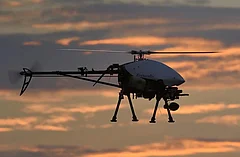
Emergency procurements was fast-tracked to plug immediate gaps in drones, anti-drone systems, precision munitions, and secure communications, while larger medium and long-term acquisitions have also been pushed through at a much quicker pace. The Defence Ministry has approved acquisitions worth ₹6.81 lakh crore, a sharp rise compared to ₹1.76 lakh crore in the preceding year. These include unmanned combat aircraft, stealth warships, long-range air defence systems, precision strike drones, cost-effective anti-drone solutions, space-based assets, and a range of indigenous missiles.
Defence industry partners were brought into operational planning loops early on to prepare for sustained resupply and emergency manufacturing in case the conflict had extended. The focus has now shifted to awarding long-term contracts to Indian manufacturers to create excess capacity, especially for ammunition and drones. The armed forces aim to maintain stocks sufficient for at least 40 days of high-intensity operations, with a target to eventually reach 60 days.

Emergency financial powers were granted to the services, enabling nearly ₹30,000 crore in urgent purchases. A comprehensive overhaul of the defence acquisition procedure is underway, expected to cut timelines by 30-50 percent. A new fast-track mechanism has been created for urgent operational needs, aiming to finalise contracts within six months and achieve deliveries in two years. Additionally, provisions have been made for limited procurement of up to ₹75 crore for experimental technologies from startups, allowing quicker field testing and evaluation.
Lithe and lethal
Beyond procurement, the very structure of the forces is being reconfigured for the demands of unmanned warfare, multi-domain operations, and high-tempo conflicts. The emphasis is on creating modular, self-contained units that can manoeuvre rapidly and operate in a decentralised manner. The Army, in particular, has raised new formations aligned with this vision, including compact, networked units that integrate infantry, armour, artillery, drones, and logistics for swift, self-reliant strikes, as well as highly equipped battalions designed for cross-border operations in support of special forces, and smaller, agile teams tailored for specific mission profiles.
Indus Waters Treaty
Since placing the Indus Waters Treaty in abeyance following the April 2025 Pahalgam terror attack, New Delhi has aggressively overhauled its approach to the shared river systems that have defined India-Pakistan water diplomacy since Independence.
The frontline symbol of this strategic pivot is the proposed Chenab-Beas Link Tunnel Project, an ambitious 8.7-kilometer engineering feat designed to divert water from the Chandra River, a primary headwater tributary of the Chenab, directly into the Beas basin. Alongside this diversion, India has significantly accelerated a series of hydroelectric projects across the Western Rivers of the Indus system.
Recent reports indicate that the Union government has crystallized a high-priority blueprint for irrigation, power generation, and allied developmental infrastructure within the Indus River Basin. This coordinated push underscores a resolute, time-bound commitment to fully harness the unutilized water allocations of the Western Rivers, the Indus, Jhelum, and Chenab, to drive growth across Jammu & Kashmir and its neighboring states.