






DMK hopes its welfare measures and political battle for federalism will deliver electoral victory.
Crucial election for AIADMK as the party battles internal rifts and the BJP’s alleged bid to assimilate it.
Reports of TVK–BJP talks add another layer of complexity to the contest.
When Prime Minister Narendra Modi visited Tamil Nadu on the 11th, posters put up by the ruling DMK were visible across many cities and towns, portraying the upcoming election as a battle between the NDA and Tamil Nadu. Chief Minister M. K. Stalin has sought to frame the election as one in which the entire Tamil Nadu is fighting against the NDA.
By coining this narrative, he has effectively laid out his party’s poll agenda — projecting the contest as a fight for Tamil identity and federalism. By framing the election in these terms, he has also caught his principal rival, the AIADMK off guard, attempting to strip it of its Dravidian credentials and portray it as part of a front that allegedly stands opposed to Tamil culture.
With the elections now announced in Tamil Nadu, the BJP is reportedly attempting to bring actor Vijay’s TVK into the NDA fold
According to reports, the BJP has offered TVK around 80 seats and the post of Deputy Chief Minister for Vijay in the event of an NDA victory. However, the response of the AIADMK which leads the NDA alliance in the state, is yet to be made clear. This development has made the political landscape in Tamil Nadu even more intriguing.


What is at stake?
Compared to the 2021 Assembly election, when the DMK returned to power after a decade in the opposition, the broad contours of the electoral fronts in Tamil Nadu remain largely similar. In 2021, the AIADMK was aligned with the BJP. However, the political arena has seen a few notable changes since then.
The most significant new development is the political entry of actor Vijay through his party, the TVK. Though political observers remain sceptical about the electoral impact he may have, his rallies have been drawing large crowds, raising the question of whether these gatherings represent committed political supporters or simply enthusiastic fans.
Alliance configurations have also undergone some changes. In the previous election, T. T. V. Dhinakaran’s AMMK had contested on its own. This time, it has joined the NDA alliance. On the other hand, the DMDK, the party founded by late actor Vijayakanth, is now aligned with the Secular Progressive Alliance led by the DMK.
In the last Assembly election, the DMK contested 173 of the 234 seats and secured victory in 133, winning a simple majority on its own. Its ally, the Congress, contested 25 seats and won 18. The Left parties — CPI(M) and CPI — contested six seats each. While the MDMK won four seats, both the CPI and CPI(M) secured two seats each.
On the other side, the NDA front led by the AIADMK has now added the AMMK to its fold. However, the AIADMK has also been grappling with internal challenges. The party’s recent history has been marked by a leadership crisis and the departure of several senior leaders. The power struggle that followed the death of former Chief Minister J. Jayalalithaa took dramatic turns, eventually leading to former Chief Minister O. Panneerselvam leaving the party and joining the DMK last month.
DMK’s poll plank
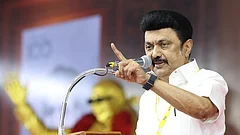
The DMK and Chief Minister M. K. Stalin have been among the most vocal critics of the government led by Prime Minister Narendra Modi, particularly on issues related to federalism. Stalin’s confrontation with former Governor R. N. Ravi — whom the DMK accused of acting at the behest of the BJP — attracted considerable public attention.
Stalin even approached the Supreme Court of India over the Governor’s decision to indefinitely delay action on Bills passed by the state Assembly. The court’s intervention led to the setting of timelines for Governors to decide on such legislation, effectively curbing their ability to hold Bills indefinitely. The issue subsequently led to a Presidential reference to the court, and the legal debate over the scope of gubernatorial powers continues.
By projecting himself as a strong advocate of federalism, Stalin has sought to position himself as a defender of Tamil identity and state rights.
Apart from this political narrative, the DMK is also relying heavily on its welfare programmes implemented over the past five years. One of the latest initiatives was the transfer of Rs 5,000 to the bank accounts of around 1.3 crore women. The government has also promised that, if re-elected, it will double the monthly assistance to Rs 2,000 under the Kalaignar Magalir Urimai Thogai scheme.
The economic and social development achieved by the state, along with the welfare measures implemented by the government and the political battles it has fought on the issue of federalism, constitute the main poll plank that the DMK hopes will propel it back to power in Tamil Nadu.

Political challenges before AIADMK
For the AIADMK, besieged by defections and prolonged leadership struggles, this election assumes critical importance. The party, now led by Edappadi K. Palaniswami, faces formidable challenges. It must demonstrate that despite the exit of several senior leaders, it remains the principal political platform around which anti-DMK forces can rally.
The situation has been further complicated by the aggressive attempts of the BJP to expand its base in the state and position itself as the main challenger to the DMK. This makes the election particularly crucial for the AIADMK, as it seeks to retain its position as the dominant opposition force.
The recent move by former Chief Minister O. Panneerselvam (OPS) to join the DMK could also have electoral implications. OPS is widely considered to have significant influence among voters of the Mukkulathor community in parts of southern Tamil Nadu — a social group that has traditionally leaned towards the AIADMK in past elections. How this section of voters responds to his political shift will be closely watched.
Internal tensions within the NDA in the state have also surfaced. Relations between the AIADMK and AMMK remain strained. A recent statement by T. T. V. Dhinakaran that he would negotiate seat-sharing arrangements directly with the BJP rather than the AIADMK has only accentuated this rift.
The BJP itself is facing organisational challenges following the removal of K. Annamalai as state president. The state chief, Nainar Nagendran, is reportedly at odds with Annamalai, reflecting internal friction within the party.
Yet, as some political observers note, the BJP may be looking beyond the immediate contest. For the party, the 2031 Assembly election could be a more significant milestone, by which time it hopes to transform the political contest in Tamil Nadu into a direct battle between the DMK and the BJP, with the AIADMK relegated to the margins.
For the AIADMK, therefore, the central challenge is two-fold: to counter the perception that the BJP is trying to subsume it politically, while simultaneously maintaining its alliance with the party in order to effectively challenge the DMK.
Will TVK align with its ideological enemy?
When TVK was launched, its leader Vijay had declared DMK as the party’s political enemy and the BJP as its ideological adversary, effectively ruling out the possibility of an electoral understanding with the latter.
However, the BJP, according to reports, is now actively exploring the possibility of bringing the TVK into its fold. According to reports, the BJP has offered around 80 seats to the TVK and the post of Deputy Chief Minister for Vijay in the event of an NDA victory. The development has added another layer of complexity to the already fluid political landscape in Tamil Nadu.
Whether the upcoming election in Tamil Nadu will witness a two-cornered contest or a three-cornered fight may ultimately depend on the stand taken by the TVK. While the party has publicly denied any alliance with the BJP, reports suggest that TVK leader N. Anand recently met with some BJP leaders to explore a political arrangement.
How the alliances eventually take shape is likely to become clear in the coming days. But one thing appears certain: Tamil Nadu’s political landscape is on the cusp of a significant churn, and the extent of that change will become clearer over the next month or two.
















