






DMK started seat-sharing talks with allies on Sunday
Talks with Congress are expected in two or three days
DMK reportedly told some of the allies that they may need to sacrifice some seats in order to accommodate new allies
The Congress appears set for tough negotiations in Tamil Nadu, as late-night discussions between Chief Minister M. K. Stalin and representatives of the party’s High Command have sparked intense political speculation.
Senior Congress leaders, including K. C. Venugopal and T. S. Singh Deo, held meetings with the DMK leadership even before formal seat-sharing talks began — a development that has drawn attention across political circles. Venugopal also met Stalin separately, signalling that negotiations may be more layered. Venugopal reportedly handed over a “sealed cover” to Chief Minister M. K. Stalin during the meeting, further fuelling speculation about the nature of the discussions between the Congress central leadership and the DMK top brass.

Will Vijay contest from North Chennai?
In another development, on the other side of political spectrum, Tamilaga Vettri Kazhagam’s (TVK) resolution urging its leader Vijay to contest from a North Chennai constituency currently held by the DMK has also raised the political temperature in the state, signalling an attempt by the fledgling party to directly challenge the ruling establishment.
Leaders familiar with the developments indicate that Congress is preparing for tough negotiations. Its earlier demand for power-sharing in the event of the alliance returning to power has been rejected. However, while the party may soften its stand on formal power-sharing, it is expected to push for a higher number of seats this time. The visit of K. C. Venugopal and T. S. Singh Deo — former Deputy Chief Minister of Chhattisgarh and chairman of the Congress screening committee — has raised eyebrows in political circles, particularly as formal seat-sharing negotiations are yet to commence.
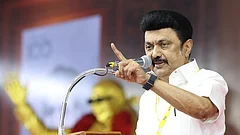


Venugopal separately met Chief Minister M. K. Stalin, who was accompanied by Lok Sabha MP Kanimozhi Karunanidhi. The high-level engagement, ahead of structured talks, has fuelled speculation about the intensity of backchannel discussions and the Congress’ preparedness for a more assertive bargaining strategy within the alliance.

The arithmetic of seats
In parallel discussions with the Indian Union Muslim League (IUML), the DMK has reportedly indicated that the inclusion of new allies means all constituents may have to sacrifice some of their existing seats. The IUML has sought four seats; in 2021 it contested three but lost all the seats
The entry of the Desiya Murpokku Dravida Kazhagam (DMDK) into the DMK-led Secular Progressive Alliance, along with Makkal Needhi Maiam (MNM) founded by Kamal Haasan, has further complicated the arithmetic with in the front. Other key constituents include the Viduthalai Chiruthaigal Katchi (VCK), the CPI(M), CPI, and the Marumalarchi Dravida Munnetra Kazhagam (MDMK). In the previous election, the VCK and the Left parties were allotted six seats each. The VCK reportedly said it expects a larger share this time, citing its performance over recent years.
According to a Congress leader, if the DMDK is allotted more than six seats, it would significantly reduce the Congress’s chances of securing a higher tally. In 2021, the Congress contested 25 seats and won 18, while the DMK contested 173 and won 133. There is also a perception within alliance circles that the DMK is wary of creating a situation in which the Congress becomes numerically crucial to government formation. As a result, while the DMK may concede some seats, it is likely to press the Congress to scale down its demand for an increased share.
“We expect the DMK to heed to our demand” was the refrain of a party state leader when asked about the seat-sharing talks with the Congress.
But, according to DMK leaders, the possibility of more seats to allies may not work. “ Our party contested 173 seats last time. This may come down to 165-167 this time, because we have to accommodate DMDK and others”, said a leader. But it has been learnt that the VCK, which contested six seats last time, might secure one or two more seats this time. The left parties, which were allotted six seats last time, might also have to endure hard bargaining this time. CPI (M) and CPI won two seats last time, while the VCK won in four of the six seats it contested. This week is crucial for the DMK front as it hopes to finalise seat-sharing this week, and hit to campaign ahead of the poll day announcement
In another development, the TVK’s resolution urging its leader Vijay to contest the election from a North Chennai constituency has also raised tremendous political interest adding a new dimension to the evolving electoral contest in the State.
The resolution makes it clear that, at least from the fledgling party’s perspective, the upcoming electoral battle in Tamil Nadu is between TVK and the ruling DMK.
The party has suggested that its leader, Vijay, contest from Perambur — a constituency currently held by the DMK. By proposing to take on the ruling party in one of its own strongholds, TVK appears to be signalling both confidence and intent.
The leadership hopes that such a bold move would energise party cadres and create the perception that TVK is directly challenging the incumbent government. If Vijay contests from Perambur, it would be both optics-driven and strategic, aimed at projecting TVK as the principal challenger to the DMK while pushing the AIADMK-led NDA into third place in the State’s political contest.
Analytically, the move can be read as an effort to reshape the bipolar political narrative that has long defined Tamil Nadu politics. By directly confronting the DMK in its perceived turf, TVK is attempting to fast-track its evolution from a personality-driven outfit into a serious electoral contender. However, such a high-stakes gamble carries risks: a defeat in a symbolic constituency could dent the party’s momentum at an early stage. The strategy, therefore, hinges not merely on electoral arithmetic but on whether TVK can convert cinematic popularity into booth-level organisation and sustained political messaging.
TVK had earlier made it clear that its principal political opponent is the DMK, while describing the BJP as its ideological adversary.
TVK general secretary Aadhav Arjuna said the choice of Perambur was not driven by its status as a DMK stronghold, but by developmental considerations. “The leader wants to contest from a seat which is underdeveloped, and to transform it into a city like Singapore,” Arjuna said. He added that TVK hoped its journey to Fort St. George — the seat of power in Tamil Nadu — would begin from Perambur. Party leaders also claim that TVK has built a strong organisational network in North Chennai, where the constituency is located.
Chennai and its surrounding areas have traditionally been considered bastions of the DMK. Historically, Perambur has also seen a significant presence of the CPI(M), which represented the seat in 2001, 2006 and 2011, either with the DMK or the AIADMK as its senior alliance partner. In the last two elections — 2019 and 2021 — the DMK won the seat, wresting it back from the CPI(M). According to those familiar with the constituency, while the Left may not be able to win the seat independently, it retains a considerable vote base. “Essentially, it is a DMK stronghold, though the AIADMK has managed to win it a couple of times,” a local observer said.
In 2019 and 2021, the Dravida Munnetra Kazhagam (DMK) won Perambur with thumping majorities of over 68,000 and 54,000 votes, respectively — underscoring the scale of the challenge for TVK if it chooses to make a direct contest there.
















