






DMK is leaving no stone unturned in its effort to bring all anti- BJP forces into its fold.
In Tamil Nadu’s alliance-driven political landscape, smaller parties often play a decisive role.
The NDA hopes to reach a consensus on seat-sharing before Narendra Modi’s visit next week.
After weeks of uncertainty and confusion, the DMK and the Congress have finally settled their seat-sharing arrangement. The DMK has partly conceded to the Congress’s demand for more seats, while at the same time forcing the Grand Old Party to scale down what it saw as an unrealistic demand. In the final agreement, the Congress will get three more seats than its previous tally of 25 in the upcoming election.
The DMK-led Secular Progressive Alliance is also finalising seat-sharing with other partners. However, negotiations with Congress proved to be the most acrimonious. The friction stemmed largely from the attitude—real rather than merely perceived—of some Congress leaders who believe the alliance with the DMK has not significantly benefited their party.
The Congress has also stepped back from its earlier demand for power-sharing and a substantially larger share of seats, settling instead for 28 constituencies. While this represents a decline from the number of seats it contested in the 2011 and 2016 Assembly elections, the Congress leadership appears to have reconciled to the changed political arithmetic within the alliance. With several more parties now part of the front compared to 2021, the DMK has had to accommodate a wider range of allies, making the offer to the Congress appear, in relative terms, a fair compromise.
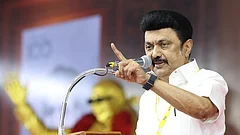


The Congress and the DMK have traditionally shared an ideological affinity, particularly in their opposition to the BJP. But the emergence of actor-turned-politician Vijay’s party, TVK, and the political optics surrounding its launch, triggered murmurs within sections of the Congress. Some senior leaders—reportedly encouraged by voices in the party’s central leadership—floated the idea of breaking away from the Dravidian ally and exploring an understanding with the fledgling outfit, believing such a move could place the Congress in a stronger position in Tamil Nadu. But reports suggest that the majority of MLAs favoured continuing the alliance with the DMK.
“DMK and its leader M. K. Stalin have always held the Congress in high regard. Despite that, if the Congress had thought its interests would be better served by aligning with Vijay’s TVK, it would have been a blunder. The Congress in Tamil Nadu is not a major force on its own. It has pockets of influence, but its natural ally is the DMK,” says senior journalist K. Vijayashankar.
The prolonged seat-sharing negotiations also reflected internal pressures within the Congress. Party leaders admit that cadres have increasingly questioned the leadership about the tangible political gains the party has derived from remaining in alliance with the DMK for so long.
Some leaders trace these anxieties to a deeper historical memory. “What the BJP is doing to regional parties in North and Central India today, the DMK did to the Congress earlier,” said a Congress leader on condition of anonymity. He was referring to the 1971 alliance between the Indian National Congress and the DMK, when the Congress, in the aftermath of the party’s split and the changing political landscape in Tamil Nadu, agreed not to contest Assembly seats and instead focused on a share of Lok Sabha constituencies.
“Had the party been more pragmatic then, the Congress would not have been relegated to playing second fiddle to regional parties. In fact, over time both the DMK and later the All India Anna Dravida Munnetra Kazhagam pushed the Congress to the margins,” he said. “Today the BJP is deploying a similar playbook in reverse—expanding its footprint at the expense of regional allies in places such as Bihar, and earlier in Goa and Maharashtra.”
“However, the political landscape has changed considerably over the decades. Today, barring a few pockets along the Kerala border, the Congress no longer enjoys strong independent bases in Tamil Nadu. Organisationally too, contesting fewer seats has often worked to the party’s advantage. When the Congress contested more than 60 seats, its strike rate was very poor—it won fewer than ten seats. But the last time, when it contested just 25 seats as part of the alliance, it won 18,” says political analyst Jenaaram.
The numbers, analysts say, underline the Congress’s current predicament in the State: while the party retains pockets of influence, its electoral fortunes are closely tied to its alliance with the DMK.
“The DMK is leaving no stone unturned. It is trying to bring all parties opposed to the Bharatiya Janata Party into its alliance,” says author and political scientist Dr Vignesh Rajamani. He points to an episode that illustrates Chief Minister M. K. Stalin’s political approach. When senior leader Mani Shankar Aiyar suggested that Stalin should distance himself from the INDIA bloc, Stalin reportedly responded by invoking his father, M. Karunanidhi's words: “I know my stature.” “He is an astute politician rooted in ideology,” Vignesh added.
Apart from the ideological commitment to bringing together all non-BJP and non-AIADMK forces, there are also practical and historical reasons for the DMK’s strategy of accommodating as many allies as possible.
A senior DMK leader recalled the experience of the 2001 Assembly election. At the time, many in the party were confident that the DMK would return to power. But in an attempt to project itself as the sole political representative of Tamil interests, the party neglected smaller allies. Sensing an opportunity, the AIADMK stitched together a broad coalition of smaller parties and went on to win the election—an outcome that surprised many who had expected the DMK to retain power.
In Tamil Nadu’s bipolar political landscape, the two major fronts led by the DMK and the AIADMK together account for nearly 80 per cent of the vote. The remaining 20 per cent, often held by smaller parties, can become decisive in a close contest—making coalition management a critical element of electoral strategy.
Seat-sharing talks with the remaining allies are expected to conclude in the next few days. According to party sources, the Left parties—CPI and CPIM may each settle for six seats, while the VCK is likely to secure one additional seat.
The DMDK, founded by late actor-politician Vijayakanth, is the latest entrant into the DMK-led alliance. The DMK has already allotted a Rajya Sabha seat to the party. There are around 20 parties now in the alliance.
In the rival camp led by the AIADMK, seat-sharing discussions are still underway. With Prime Minister Narendra Modi scheduled to visit Tamil Nadu on March 11, NDA leaders hope to finalise a consensus on seat distribution among allies before his arrival.
















