Hezbollah rejects Lebanon ceasefire deal, demanding full Israeli withdrawal
Fresh violence threatens broader US-Iran peace negotiations in West Asia
Oil prices steady as traders weigh diplomacy against regional conflict risks
The hope for a deal between the US and Iran again appeared low after Hezbollah on Thursday rejected the latest ceasefire agreement between Israel and the Lebanese government brokered in Washington.
The announcement from the militant group came after Israeli strikes killed at least four people, including a UN peacekeeper, in the crossfire. Hezbollah demanded a complete Israeli withdrawal from Lebanon.
Hezbollah leader Naim Qassem, in a written statement read on Hezbollah’s Al-Manar TV, called the negotiations “absurd, humiliating and insulting.” He said the agreement’s demand that Hezbollah fighters leave southern Lebanon under fire would mean “surrender, defeat and achieving the enemy’s goals.”
“What we are concerned about is an end to the aggression, ceasefire and Israel’s withdrawal,” he said, underscoring that Hezbollah has not made any commitment to stop fighting. “So long as our villages are not safe and are being bombed and destroyed and our people are killed,” Qassem added, northern Israel “will not be safe.”
Qassem also urges the Lebanese government to quit the “farce” of direct talks with Israel.
There was no immediate response from Israel, Lebanon or the US.
Meanwhile, drone alert sirens sounded in several border communities in northern Israel, including Shlomi, after Qassem's announcement. Israeli Prime Minister Benjamin Netanyahu was meeting local officials in Shlomi, but according to Israeli media reports, he left before the alerts sounded.


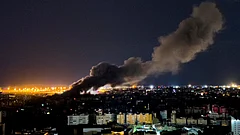


Impact on Oil
Oil prices were little changed on Friday, steadying after sharp falls in the previous session, as optimism surrounding potential US-Iran peace talks offset lingering uncertainty over a ceasefire between Israel and Lebanon.
Brent crude futures edged down 21%, or 0.22%, to $95.24 a barrel by 0003 GMT, having settled 2.84% lower in the prior session, according to Reuters. US West Texas Intermediate crude slipped 10%, or 0.11%, to $92.94 a barrel, following a 3.1% loss on Thursday.
Both contracts are nonetheless on course for their first weekly gain in three weeks, with WTI up more than 6%, after hostilities flared anew in West Asia as US-Iran peace talks dragged on and traffic through the Strait of Hormuz — through which roughly a fifth of the world's oil passes — remained severely constrained.