






Hezbollah acting leader Naim Qassem said Israel must withdraw unconditionally from Lebanese territory, calling any continued presence an occupation.
The statement was made during Ashura commemorations as Lebanese authorities reported six deaths from Israeli attacks this week.
Despite a fragile reduction in fighting following the Iran-U.S. deal, tensions remain high with both sides refusing to compromise on core demands.
Hezbollah’s acting leader Sheikh Naim Qassem has firmly stated that Israel has “no option” but to withdraw unconditionally from all Lebanese territories it occupies, delivering the message during a sermon marking the first day of Ashura.
In his televised speech on Friday, Qassem described any continued Israeli presence on Lebanese soil as an occupation that must end. He also referred to the recent Iran-U.S. deal that helped reduce fighting with Israel as an “American-Israeli defeat.”
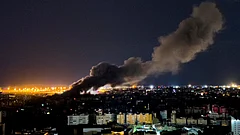
The remarks come as Lebanese authorities reported at least six deaths in Israeli attacks this week, highlighting the fragile security situation along the southern border. Qassem’s address was made while Shia Muslims across Lebanon commemorated Ashura, the day marking the 7th-century martyrdom of Imam Hussein.
Hezbollah has been engaged in near-daily exchanges of fire with Israeli forces since October 2023, when it opened a “support front” for Hamas in Gaza. Although a fragile understanding has reduced the intensity of clashes, Israeli forces continue to maintain positions inside Lebanese territory, which Hezbollah views as occupation.
Qassem’s strong stance reflects Hezbollah’s consistent position that full Israeli withdrawal from Lebanon is a non-negotiable demand. The group has repeatedly rejected any partial or conditional arrangements and has vowed to continue resistance until all Lebanese land is liberated.



The speech also comes at a time when diplomatic efforts led by the United States, France, and Qatar are attempting to broker a more permanent ceasefire and implement UN Resolution 1701, which calls for Hezbollah to withdraw north of the Litani River and for the Lebanese Army and UNIFIL to take control of the border area.
Lebanon’s fragile government, already struggling with economic collapse and political instability, has called for calm and international mediation. Prime Minister Najib Mikati has urged both sides to exercise restraint to prevent further escalation.
Israeli officials, on the other hand, have maintained that their actions are defensive and aimed at securing their northern border against Hezbollah threats. They have repeatedly stated that they will not tolerate a heavily armed Hezbollah presence near Israeli communities.
The situation remains highly volatile. While the recent Iran-U.S. deal has helped lower the intensity of fighting, deep mistrust persists on both sides. Analysts warn that any miscalculation could quickly lead to a wider conflict with devastating consequences for Lebanon and the region.
Hezbollah continues to enjoy significant political and military influence in Lebanon despite the country’s dire economic conditions. Its ability to sustain resistance against Israel remains a central part of its identity and support base.
As Ashura commemorations continue across Lebanon, Qassem’s message is likely to resonate strongly with Hezbollah supporters while raising concerns among those hoping for de-escalation and stability in the country.
















