Akhilesh Yadav demanded that the Supreme Court take immediate cognisance of the poll process and that the video recording of vote counting be made available to the people.
Yadav cited some elections and by-polls in UP in recent years as an example and claimed there were discrepancies during the counting process.
Responding to a question on whether he would meet Banerjee, Yadav said he would visit West Bengal.
In the wood-panelled quiet of his Lucknow office, Akhilesh Yadav did not just hold a press conference on Wednesday; he sounded an alarm that echoed from the banks of the Gomti to the Hooghly. For the Samajwadi Party president, the BJP’s landslide victory in West Bengal is not just a political result—it’s a cautionary tale of a "multi-layered election mafia" that he fears is currently being beta-tested before it arrives on the doorsteps of Uttar Pradesh in 2027.
The human element of Yadav’s plea was centre-ed on a single, modern demand: radical transparency. In an era where even the most solemn court proceedings are broadcast into our living rooms, Yadav questioned why the pulse of democracy—the counting of votes—remains shrouded in a digital fog. "When court proceedings have gone live, why can't vote counting go live?" he asked, his frustration palpable. By calling for the Supreme Court to intervene and make CCTV footage of the counting centres public, Yadav isn't just talking about data; he’s talking about the trust of the millions who stood in the Bengal sun to cast their ballots.

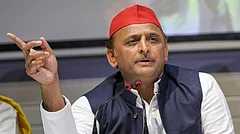


The former Uttar Pradesh Chief Minister’s words carried a personal weight, rooted in his own experiences with by-polls closer to home. He spoke of the developments in Bengal as a blueprint for a "bigger scale" operation in Uttar Pradesh, alleging that the very atmosphere of the elections was manipulated. For Yadav, who had actively extended his support to Mamata Banerjee, the defeat of the TMC feels like an institutional failure rather than a public mandate. He promised to take his solidarity a step further, confirming, "I will go to West Bengal," signalling a budding alliance of regional leaders determined to audit the process.
As the BJP prepares to take power in Kolkata, Yadav’s remarks serve as a reminder that the election's end is merely the beginning of a larger debate on electoral integrity. In his eyes, the "exposure" of these alleged tactics in Bengal is a warning light for the entire country. Behind the political jargon of "election mafias" and "counting discrepancies" lies a fundamental human anxiety: the fear that the person at the polling booth is no longer the most powerful person in the room.