Children’s distress is often diagnosed as individual behavioural issues, while overlooking the larger social, political and digital environments shaping their mental health.
Social media is both support system and stressor.
War and images of violence circulating online are creating new, under-studied psychological burdens for children.
As a parent on any social media platform, you are bombarded with information and awareness about parenting neurodivergent children, or how to cope or manage a child with hard-to-diagnose neurodivergent conditions such as Rejection Sensitivity Dysphoria, Autism Spectrum Disorders, Attention Deficit Hyperactivity Disorder. The more you engage with these posts and reels, the more you learn on how to deal with all this better, they promise.
Yet, the very nature of these reels make it a behavioral or information-deficit issue than a systemic concern. The demands and exposure on today’s child have also been conflated with the images of violence and destruction that are shared on digital news platforms, social media channels and online media portals. What then is ailing today’s children beyond the behavioral and attitudinal labels that are readily applied to them?

India accounts for almost one-third of the world’s suicides, depression and addiction cases. As per the National Crime Records Bureau and the Sample Registration System under the Ministry of Home Affairs, suicide is one of the leading causes of deaths among Indians aged 15-29. The World Health Organization reports that the majority of the youth living with mental illnesses do not receive proper diagnosis, or affordable treatment due to stigma, lack of awareness, and shortage of trained and sensitive professionals. What the young Indian children require is neuro-diverse affirming counsellors, clinical psychologists and psychiatrists providing sensitive and long-term support in affordable and accessible manner. But are we ready to send out children to counsellors and psychiatrists to rectify the social and political ills that are ailing them in the first place?


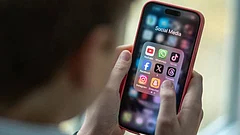

When we consider the range of issues that are on the minds of young children, the February 4, 2026, incident is fresh on our minds. Three sisters, aged 12, 14 and 16 in Ghaziabad killed themselves when their social media addiction and subsequent banning aggravated their mental health status. The young girls, one after the other, jumped off their balcony in the middle of the night while everyone was asleep. While preliminary information indicated that the young girls were influenced and addicted to Korean pop culture – music, drama and online content and that their father allegedly prohibited them from using the phone, which were the apparent triggers for their distress.
While screen addiction has physiological impacts – impaired vision, permanent effects on cognition and back pain as well as dexterity, or fine motor skills, there are several social and mental health consequences as well that several scientists and scholars are warning us about. Jonathan Haidt in The Anxious Generation (2024) warns us that there is a strong correlation between smartphone usage and adolescent mental health. However, opponents of such alarmist arguments have been looking for longitudinal evidence to establish causal relationships between digital technology use and mental health problems and have found limited conclusive arguments. There is no doubt that active and prolonged social media usage results will have some impact on mental health of adolescents and students; studies have found that social media impacts adolescent children’s lives by exposing them to online violence and bullying. Most of us on social media are seeking validation, but young minds especially learn to become self-critical, leading to body image issues, addiction, cyberbullying and body comparison.

While policy measures such as blanket bans on social media use have been promoted, the effectiveness of such drastic measures is yet to be established. In November 2024, the Australian government issued a ban on social media use for children under 16 years of age which came into effect in December 2025. This policy move shifted the onus of monitoring and implementation of the age-specific guidelines on the social media platforms themselves. Such bans have been criticized for withholding the digital rights of children, at the same time dismissing the potential opportunities that safe and supportive use of social media could offer, especially for children belonging to marginal and hard to reach areas. Social media platforms offer easy access to information, sharing and learning from peers for non-binary and gender-queer folks overcoming barriers of languages, geographical distances and affinities.
In the recent years, social media has provided a platform for climate activism for youth leaders through initiatives such as Extinction Rebellion, Future Fridays and several others. Fueled by climate anxiety, children and adolescents are turning to digital media to express their emotions, cope with the climate anxiety and collectively enrage against government inaction and lack of political will to take climate change seriously.
Similarly, armed conflict and exposure to violence have also become an urgent area of concern. Children across ages, gender and geographies are directly affected during violent attacks, however there are silent, often ignored indirect impacts through infrastructure destruction, forced displacement, breakdown of social support systems, limited access to basic facilities such as food, water, shelter, health, sanitation and education facilities. Studies have found that children who live far away from places of armed conflict are also affected; sometimes family members may participate in or be indirectly affected by conflict, children witness killings and images of injured children in news and social media. They are exposed to or access footage of armed conflicts, terrorist attacks, police violence, mass shootings and homicides at any time.
Since social media and online media – pictures, video or audio – can be accessed whenever and wherever, the repeated imagery, lack of nuance and internalization without appropriate framing makes children susceptible to various forms of trauma, anxiety and long-term mental health impacts. This area of concern remains under-researched and under-reported: how does this social media exposure to violent imagery amplify trauma and feed into children and teenager’s anxieties about the hostilities in this world?

Children in armed conflict themselves are at risk of six grave violations: the killing and maiming of children, the recruitment and use of children, sexual violence against children, the abduction of children, attacks on schools and hospitals, and denial of humanitarian aid. Nowhere else has this been more widely reported than in the ongoing attacks in Gaza. The last two years of active conflict in Gaza has led to “enormous nutritional consequences” for tens of thousands of children across Gaza.
Based on calculations and measurements of the circumference of the arms of 220,000 children aged between six months and five years old in Gaza between January 2024, and August 2025 experts have declared there is a famine which will have unforetold consequences for children in generations to come. As per the Integrated Food Security Phase Classification, Phase 5, where more than 1.6 million people (77 percent of the population analysed) faced high levels of acute food insecurity. There are well documented long-term effects, such as intergenerational consequences of starvation and food restriction in children, including inordinately high risks of non-communicable diseases and reduced life expectancy.
Not only has there been limited research and understanding of what happens to the mental health of children living in conflict, there is fewer evidence of what interventions help in mental health and psychosocial support (MHPSS) for children, adolescents and young adults in conflicts. A recent review conducted by the author found over half of the 51 studies across Africa, Middle East, Asia and Europe focused on MHPSS which included psycho-education and writing sessions, memory training techniques, narrative therapy as well as social skills building. Some have studied the effectiveness of psychosocial support for coping and emotional and behavioural regulation, and telemedicine psychotherapy.
Others have investigated the benefits of spatial interventions such as child or adolescent friendly spaces, where dedicated spaces within relief camps or displaced settings become a sanctuary for children to feel safe, protected and nurtured within their own community settings. Only one study focused on how children associated with armed forces and armed groups can be better reintegrated into society after conflict ends: the programme provided options to such children which included return to school, vocational training, apprenticeship, or income generation support via micro-grants or loans which showed reduced depressive symptoms and post-traumatic stress disorder.
Closer home, violence and ethnic conflict have affected several children in the northeastern state of Manipur. The violence which began in May 2023 led to 60,000 displaced and almost 260 killed and continues to impact children in families who still remain displaced, receive no health or educational support and continue to live with the aftermath of violence and trauma without proper healing. The shocking thing is that the government records on gender and age-disaggregated data including figures on how many children have been injured, killed or gone missing is unavailable or unreported.
As per the Ministry of Education, by August 2023 itself, 14763 school children had been displaced and fallen out of regular schooling. The lack of child-specific data represents a significant gap in government reporting and obscures the specific vulnerabilities and needs of children cross different ages in such conflicts. The People’s Tribunal found several mental health consequences of the conflict: survivors reported suffering from acute anxiety and depression in the face of uncertainty, loss of livelihood, and family separation. Children in particular were suffering from sleep disturbances, emotional withdrawal, bedwetting, aggression, and learning disabilities, while girls who survived sexual violence continue to suffer from shame, silence, and lack of safe spaces for redressal or care.

Evelyn Nianglianching, a public health researcher based in Churachandpur is studying psychosocial interventions for displaced children in Manipur. In her work with women and children she comes across several families still living in temporary shelters, where family interactions unfold under economic and emotional strain. She highlights how displaced children are settling into newer rhythms since the conflict has subsided. Observing how children of different age groups understand or silently absorb the experience of conflict differently, she says, “Many children have found it difficult and hard adjusting after forcibly leaving their homes. Some are struggling to fit into new schools and make friends, few worry a lot about their parents not being able to earn like before. Some have even had to pause their studies to help at home or support the family financially. All they need is better education, source of income and understanding from their parents.”
Today’s children are not only growing up faster; they are growing up under constant exposure to instability, comparison, and mediated violence. When distress becomes individualised and treatment becomes the primary response, the world that produced that distress escapes scrutiny. If we continue to medicalise what are often rational responses to an anxious world, we risk producing a generation that is treated for symptoms while still living inside the causes.