






The Bhabanipur assembly constituency is the epicentre of Kolkata’s electoral tussle this year.
It is Mamata Banerjee’s home turf that has shaped the electoral history of the TMC supremo over the years.
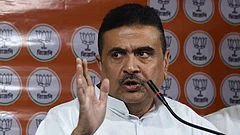
Suvendu Adhikari, the BJP’s chief ministerial face in Bengal, has announced that he would be contesting from Bhabanipur, besides his home constituency of Nandigram.
On the occasion of Chaitra Shukla Ashtami or Annapurna Puja, Prime Minister Narendra Modi recently took to social media to share a link to a Shyama Sangeet, a Bengali devotional song dedicated to Goddess Shyama or Kali. People flooded the comments section, thanking the PM for ‘leading them’ to the song, and reminding people what Bengali Hindu tradition is all about.
Tapan, a temple guide at the Kalighat Temple in Kolkata, scoffed when he was shown the PM’s post, his colleagues pitching in to the jeer. “Gimmick!They would not think twice about even using Maa for gimmicks,” he said, pulling out a picture of Suvendu Adhikari, the BJP’s chief ministerial face in Bengal, during a recent visit to the Kalighat Temple. “Even while walking into Maa’s place, his people chanted Jai Shree Ram. How will these people ever come to Bengal?” he said, a derisive smile on his face quickly morphing into anger.
The Kalighat Temple, lying in the political cynosure of the city, is a two-minute walk from Chief Minister Mamata Banerjee and Trinamool Congress (TMC) General Secretary Abhishek Banerjee’s residences, and Tapan has been a first-row spectator to Bengal’s political theatre. As the rhythmic commotion of the temple gives way to regimented discipline of walkie-talkies and iron barricades of the CM’s house, one walks into the Bhabanipur assembly constituency, the epicentre of the city’s electoral tussle this year.
When Adhikari announced that he would be contesting from Bhabanipur, besides his home constituency of Nandigram, the media went into a frenzy. The constituency has not only been Mamata Banerjee’s home turf, but it is also one that has shaped the electoral history of the TMC supremoover the years. Since 1991, she has represented the Kolkata Dakshin Lok Sabha constituency comprising Bhabanipur, maintaining a perfect record till 2011. Since coming to power in the state in 2011, Mamata Banerjee has contested from the assembly seat thrice (including by-polls), winning in 2021 by a margin of around 58,000 votes.



This time, Bhabanipur is the buzzword, as it stages a 2021 redux―when the CM took the fight to Nandigram, Adhikari’s home constituency, but also a place which had altered the landscape of the state and Mamata Banerjee’s path almost two decades back. Marred by controversy and confusion, Adhikari won the seat by a margin of 1,956 votes forcing Mamata Banerjee to contest the by-polls from her home constituency to retain her chair.
Amit Das, in his late 20s and a member of the Young Boys’ Club, remembers the day like it was yesterday, alluding to a power cut in Nandigram on the day of counting in 2021, which became a controversial talking point during the last stage of counting. “They (BJP) needed a power cut to alter the results in Nandigram. In Bhabanipur, we do not need any of that. It is Didi’s den; it will always be that. No bait would work for the very streets and lanes which have seen our leader grow,” he said. A Bhabanipur boy since birth, for Amit, Mamata Banerjee’s rise from the streets of the constituency, has been nothing less than contemporary urban folklore.
Busy with arrangements of the Ram Navami rally, he said, with an almost preachy bass to his voice, “Please do not be mistaken. The tilak on my forehead, the Ram Navami planning, the stickers on my bike do not make me a Bharatiya Janata Party (BJP) supporter. Our Hindutva is very differentfrom theirs. Our rally does not have open swords, or violent acts. It is a peaceful one with songs and worship, respectful of boundaries.”
For most people in Bhabanipur, religion is the last of the cards which can reap electoral benefits in a constituency of contrasts. Besides Bengalis, Bhabanipur houses a sizable population of Gujarati, Marwari, Sikh, Sindhi and other communities and people belonging to multiple religions. A cultural melting pot, Bhabanipur has seen the Bengali aristocracy, the nouveau riche, the migrant businessmen and the working class existing in symphony over the years. Sanjit Chowdhury, 56, who has been running a family garage for four decades, speaks of Bhabanipur with aged gumption. “Bringing the BJP to Bengal would ruin the state, but it is a game of masks. Defection is the law of the land. The two parties are sides of the same coin. Politics in Bhabanipur, or in Bengal, does not have space for ideology anymore. They keep benefitting off the system, while the working man suffers,” he believes.

Discarding Adhikari’s decision to contest polls from the constituency, Chowdhury says, “It is a fluff move, to make some noise in a place which does not have any space for their politics or their politicians. There is absolutely no ground connection, and religion is not a factor here. Even Ayodhya had no space for the BJP even after all the noise surrounding the Ram Mandir. A place like Kolkata, that too Bhabanipur, certainly won’t. That being said, the TMC is no different. Things need to change in Bengal, but the BJP can never be that change.”
Bhabanipur, however, proved to be a tricky spot for the TMC during the 2024 Lok Sabha elections, when they led by only 8,000 votes. Ward 70 and 74 of the constituency, comprising almost 45 per cent non-Bengali voters are being considered the only roadblock to TMC’s run in its bastion. The deletion following the Special Intensive Revision (SIR) of around 47,000 voters in the constituency―almost close to Mamata Banerjee’s win margin in 2021―had stoked some fear in the TMC camp. However, even in these wards, with Mamata Banerjee’s recent push of confidence, the streets feel a change of air.
“In Bhabanipur, politics is unilinear. The religion card being played by the BJP will not change that,” says Umesh Kashyap, a fruit vendor, who runs a busy shop at Roy Street Crossing, Ward 70. “Most people I know from this ward voted for Modiji during the Lok Sabha elections, and they will vote for Didi in the assembly elections. When our councillor was in the BJP, we voted for the BJP. Since he joined the TMC, we vote for the TMC. But beyond all of that, even though I am not a voter here, it is because of Mamata Banerjee, we receive all the help, aid and support possible. The Gujarati vote might go to the BJP, but most of the ‘non-Bengali support’ has shifted to Didi, because of all the work she has done.”
Beside the shop, stands the newly-erected Mahavir Stambh, inaugurated by Mamata Banerjee last month, for the Sakal Jain Samaj, a move which has proved to be a significant one for the community in the area in addition to providing police security to Jain monks. “The Stambh has changed the face of the chowk. I might not be a voter here, but there is beautiful religious co-existence. The Gujaratis might vote for the BJP. But even they realise that Adhikari is no Modi. You cannot run Bhabanipur by springing up and showing your face once every five years,” asserts Kashyap.

Hemant, 55, whose grandparents migrated from Gujarat to Bengal, is aware of the fact that the couple of wards which comprise the Gujarati population could bring about a very ‘necessary change’. “We, as a community, are facing a crisis in Bengal. We have to think of our businesses. Our properties are depreciating in value every passing day. Plots are being sold off to Muslim promoters in the area, while our children seek to build a life in Bengaluru or Hyderabad. Our Gujarati brothers in other states have been warning us. Educated Hindus in all states have been choosing the BJP,” says Hemant, toeing an ambiguous line in deciding who is more endangered in Bengal―Gujarati businesses or Hindus in general.
“We are not against Muslims, but we cannot live in ‘their areas’. Neither can they live in ours. The Muslim population has been increasing in Bhabanipur under the TMC’s watch, which was never the situation. You get to hear their bikes' throttles and exhausts throughout the night,” he adds. His associate, Shekhar, says: “Hindus are in danger in Bengal. Muslims have been given the upper hand, and Gujarati businesses are facing mounting risks. We are seeing development in other states, and Bhabanipur used to hold potential and promise. But lately, the situation has worsened. So, it is important to give the only other alternative a chance.”

The BJP has repeatedly alleged that the demographic changes in the core districts of West Bengal are altering the state’s political landscape. Union Minister and former BJP state president Sukanta Majumdar reiterated that the 2026 assembly polls could therefore be the “last election” where Bengali Hindus remain the deciding factor in the state’s electoral outcomes. Adhikari has openly and confidently predicted his victory margin in Bhabanipur to about 25,000, pinning his hopes on door-to-door campaign strategies and appealing to the Hindu sentiments in the constituency. In a recent rally in the area, Adhikari led slogans of ‘Hindu-Hindu Bhai Bhai’ directed at the rousing 'Sanatani sentiments' within the people of the area.
“Areh kaunsa Hindu khhatre mein hein?” (Which Hindus are in danger?) asks Maya, a homemaker in her 50s, whose husband works in a nearby garage. “I am a Hindu. I have never been better. We are poor, but we know our religion. As a woman and somebody who’s been in Bhabanipur for four decades, Didi has changed our lives. We feel safe. Lakshmir Bhandar helps me support my family. My family is from Bihar. Look at the situation there. There is no healthcare, safety, or education. They followed Didi’s footsteps and gave Rs 10,000 to women. Didi has built a system which not only helps women but also prioritises women. Bhabanipur will protect Didi and give her everything.”
The BJP has repeatedly alleged a culture of intimidation dominating politics in Bhabanipur, where the party was finding it difficult to even find a space for its office or a wall for graffiti. “The absence of a single wall having Adhikari’s name in Bhabanipur might be sad, but it is as real as it gets, and not very surprising. People leasing out office space to the BJP might be marked, or their supporters might be targeted. It is the TMC’s den. The muscle flexing is not surprising,” says Paresh, who runs a peda-shop in Kalighat.
Banners and flags from the opposing camps jostle to find a space in Bhabanipur. For a place priding in its co-existence and harmony, the walls, however, write their own rules. Poems, couplets, limericks and a splash of colours pollinate the political air, as a friendly tussle of Bengali and Hindi graffiti in support of Mamata Banerjee define the visual landscape of the constituency. Kids throng the corners as buckets of wall paint line the pavement. In Bhabanipur, the contest has taken the form of a festival, a battle primed for the centre-stage. People oscillate between loyalty and the lure for change in a constituency of contrasts, which has seen the fabled politics of Calcutta make way for the messy stories of Kolkata.
















