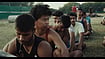
Chronicling three generations of a Kashmiri Muslim family, Tees was abruptly shelved by Netflix.
Dibakar Banerjee premiered the film at the Dharamshala Film Festival 2024.
Banerjee has been screening the film in universities and private events all across the country, wooing new buyers.
Dibakar Banerjee’s brave, brilliant Tees is a mirror of identity put in a stranglehold. Across three parallel timelines woven between 1989 and 2042, minority identity experiences escalating blows of subjugation and erasure. A Netflix original thrown in a limbo, Tees has become an integral part of the contemporary contraband canon of resistance, speaking directly to fear that grips modern-day India. Over three blending chapters, it traces majoritarian ostracisation till targeted communities are wholly wiped out. Tees is a history of violence and enforced disappearance. It chronicles the drab homogeneity fascism pushes and how the cultural frontier of rebellion is laid siege.
Opening in dystopic 2042 Delhi, the gigolo-cum-writer protagonist Anhad’s (Shashank Arora) circumstances have turned uncannily prescient of Tees’ fate. Banerjee himself could well pass off as him. Anhad’s manuscript "Tees" is turned down by the literature ministry that oversees and approves every single thing that’s published. The book mentions a 2030 communal riot, which underpins the regime’s Islamophobic anxieties.

Originally commissioned by Netflix in 2019 and shot in 2020, the streamer ultimately shelved Tees. Banerjee has spoken in interviews how the streamer itself encouraged him to go all out in its satirical jabs whenever he broached possible censure. It’s impossible to isolate the film from the post-Taandav (2021) brutal haranguing that plunged all OTT platforms in fear. Taandav’s depiction of student protests and a play with references to a Hindu god drew ire from the perpetually offended Hindu Right. Though Amazon Prime Video chopped out the said scenes from the show, cases were slapped against its top executive in police stations across the country. Incidentally, Gaurav Solanki, who co-wrote Tees, had also worked on Taandav. In 2024, Tees premiered at the Dharamshala International Film Festival. Banerjee even proposed taking out snippets from the film, but Netflix showed no appetite for charting a release plan. In a 2025 interview with The Hindu, Banerjee emphasised, “The risk of a global company stepping out of the line appears bigger because its connections and relationship with the power centres determine its survival in the Indian market.” Hence, he wrested the film back and has since screened the film in universities and private events, luring new buyers.


In its political ambit, Tees is fiercely unapologetic. It sweeps in direct nods to Aadhaar in forging matrices of division and containment. Its portrait of a fully calcified autocratic Hindu Rashtra hits home like a sledgehammer. Visions Banerjee offers are deliberately designed like silos. The regime aligns citizens within particular boundaries. Any trespassing diminishes social security points. Precarious identity becomes Tees’ driving engine, even as Jabeen Merchant’s edit fluidly makes disparate timelines contemporary and kindred.
Desire for home—unfettered, un-negotiated, un-harassed—seeps through all strands. Anhad cannot even name his ancestral roots for it can endanger him. Rights, endowed or stripped, are dictated by the all-seeing State’s configuration.

Intensification of Segregation
The 2042 chapter presents its most overt articulation. Anhad/the minority’s mobility is constantly curtailed. The city is tightly regimented, with access contingent on identity markers and amenable conduct. There’s no space to drift or wander if you don’t fit the nation’s desired attributes. Citizens are firmly placed within a grid where every thought and action is monitored and interrogated. Even the air they breathe is literally cast into surveillance, regulated as per conduct. Loudspeakers droning official dictums render every movement minutely watched. Ironies are rich. The Supremo is eager to expunge anything faintly critical, even as the all-pervasive voice states, “We write, we progress”. Anhad’s entanglement with a Commission Reader, Niharika (Zoya Hussain), further illuminates the establishment’s insidious overreach.
Intense segregation in this chapter mark its embers in the subsequent one, following a queer interfaith couple, Zia Draboo (Huma Qureshi) and her partner, Meera (Ruchi Pujara). Travails of finding a place to rent in 2019 Mumbai occupy this strand, coupled with its mental toll. Ghettoisation and exclusionary prejudice permeate Tees. Rental discrimination is but one of the countless facets of systemic isolation minorities battle. Zia’s gradual breakdown lends the chapter its trembling heart. Zia has to battle condescension and bigotry on a daily basis to even survive. There are barbs and unfunny digs in the guise of casual Othering. The question of proving national loyalty is constant, putting her Muslim identity in tension.
A Ruptured Home
Elsewhere, the film switches to Anhad’s grandmother, Ayesha Draboo (Manisha Koirala), a Kashmiri Muslim in 1989 Srinagar. Her relationship to Srinagar is suffused with nostalgia. The severity of Anhad’s sections is fleetingly counterposed by fragile restfulness in Ayesha’s track. She sees volatility all around, having recently been dismissed from her State Radio job. Yet, she’s hopeful that her home won’t be overrun by violence. She’s entrenched in denial. Tucked away in a corner, she slips into wistful memories with the son of the Kashmiri Pandit who owned her house. But disillusionment slowly creeps in. The segment—the deftest, most melancholic and cohesively effective of all—displays fear invading the long friendship between Ayesha and Usha (Divya Dutta). Communities of Kashmiri Muslims and Pandits, living together for decades, were riven in the 1990s.
The chapter zeroes into the moment of dramatic rupture, while also reflecting half-measures that had so long hemmed the Kashmiri Pandits and Muslims together. While Ayesha peddles platitudes amidst crisis, choosing oblivious optimism, Usha is more withering. The latter puts it bluntly in a devastating admission. Kashmir is confronted with annihilation. When Ayesha, masking distress, enthusiastically talks about publishing a cookbook to highlight the best of Kashmiri cuisine, Usha is resigned, defeated. Soon, what’ll even remain of Kashmir? What value would food even hold when their home itself stands the risk of being blown up? The incipient Kashmiri Pandit mass exodus from the Valley shades the relationship. Banerjee folds in the delicate cross-navigation the communities have been doing long before the exodus. In the futuristic section, a single mention of Kashmir is enough to push Anhad’s cookbook into the proscribed.

Yet, for all its surveillance, Tees also caustically reminds dictatorships too call on good artists to do their bidding. They need intelligence and acuity. Easy pandering, sycophantic artists wouldn’t do, but those fiery ones are in demand, only after being bullied into submission. Anhad’s identity as a writer is in crisis. He cannot fathom being reduced to the government’s mouthpiece. Tired, he bursts that he just wants to write something that’ll mean nothing. Tees condenses myriad frustrations—yearning for a home cutting across control, an identity beyond silencing and undiluted expression—into an echoing howl.
Tees screened at FETSU Chhayanat Film and Theatre Festival 2026 at Jadavpur University, Kolkata.