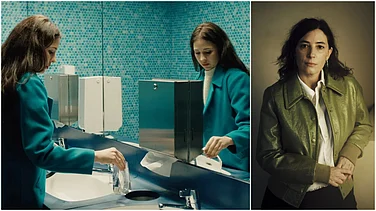
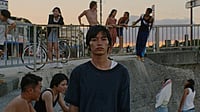
Chie Hayakawa's sophomore feature, Renoir, was in Cannes Competition last year.
The film is now headed for a US release later this month.
Renoir explores a child's fractured perspective towards loss and bereavement.
Ahead of the release, Hayakawa sat down for a quick interview with Outlook.
Japanese filmmaker Chie Hayakawa broke out in 2022 with her debut feature, Plan 75, a muted chiller lamenting a society that regards anyone as disposable. Premiering in Un Certain Regard at Cannes, it earned the Camera d’Or Special Mention. Hayakawa returned to Cannes last year with her new film, Renoir, scaling into the main Competition. Her thesis short, Niagara, also screened at Cannes in 2014 as part of Cinéfondation.
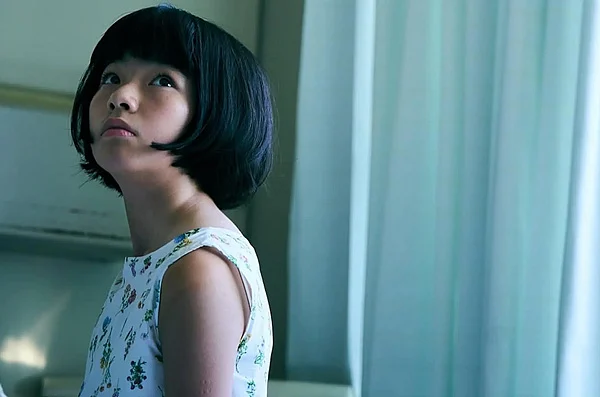
Swapping the elderly protagonist of Plan 75 for a riveting 11-year-old lead this time around, Renoir demonstrates Hayakawa’s formidable control, a fine grip over slipping, cracked emotional reality. Unfurling over the summer of 1987 in Tokyo, it trails Fuki (a revelatory Yui Suzuki, the film’s enigmatic heartbeat) as she wrestles with impending loss, grief and mortality. While her father is untethered by terminal cancer and her exhausted mother barely holding on, Fuki’s inner, imaginative world drives Renoir’s tenuous, drifting textures. Fuki is in denial over the ensuing heartbreak, retreating into all sorts of odd hobbies. Hayakawa fuses the quotidian and the slightly elevated in a riff on mourning from a child’s point of view. Renoir quietly ambushes you.

![Former Pakistan Prime Minister Imran Khan [File Photo] - null](https://cf-images.assettype.com/outlookindia/import/public/uploads/articles/2019/8/26/BRF_1_20190426_402_602.jpg?auto=format%2Ccompress&fit=max&format=webp&w=240&dpr=1.0)

The film is also a true-blue international co-production, entailing Japan, Singapore, France, Indonesia, the Philippines and Qatar. Ahead of the film’s North American release later this month, Outlook’s Debanjan Dhar caught up with Chie Hayakawa for a quick chat. Edited excerpts:
You bear so much of your own memories and experiences on this film. You’ve been wanting to make this for a while now. Can you speak a bit on the way you feel time shapes how you want to tell a story? Does the core of it remain the same at some level? Do only the angles shift?
When I made Plan 75, I was asked why I’m so interested in themes of death and ageing. I didn’t realise why that might be then. But when I reflected on it, I understood that was because I grew up with a father who had been battling cancer for a long time. So, to share space and life with someone who’s near and confronting death meant I had a very specific kind of perspective. I grew up going to the hospital to visit him. That meant seeing other people who were dying and their families. Having empathy for those people meant that I spent a lot of time thinking whether people can die with dignity or circumstances that deprive them of that. That perspective on death is at the core of a lot of my filmmaking.
I’m curious about the fragmented, episodic structure. Contrasted with Plan 75, this film feels loose, airy and languid. Were you always very prepared for the risks this potentially came with—that of few people not being able to get on its wavelength and drifting away? Was it, in some way, also freeing?
Yes, I took a very different approach here. Typically while writing a script, you want to know what kind of film you’re wanting to tackle and have those things concretised before. But with this film, I wanted to depict and express experiences and feelings that cannot be put in words. I went into it wanting not to be very clear on the ideas. I didn’t want to approach things logically, at least in the beginning. I knew there was risk involved. If there are things I’m still exploring and don’t know, there’s the risk of viewers not being able to grasp what’s playing out.

Remarkably, the film avoids the sentimentality and cuteness that often comes into films that walk this terrain. How early in the production do you know the particular tone you want to go for?
I knew I didn’t want to make a film too sad or excessively dark. I wanted to temper the film with humour. Despite such efforts, I received some feedback that the film is in some sort of unrest.

There’s also this playful sense of mystery that creeps up in the film, be it the telepathy, games or Fuki’s fantasies. In cinema, how vital is it for you to retain this attitude, this twist upon reality?
With regard to those elements, when you are a child, boundaries between reality and the imaginary are very blurry. For me, magic and fantasy were completely a part of my reality when I was a child. So it’s less about wanting mystery to be retained in cinema; rather, more about depicting childhood experiences in a real way.
The striking thing here is how you really respect and honour Fuki’s gaze. Can you talk about how Yui Suzuki and you worked together? How much of the Fuki that we see did exist on the page and what did she distinctly bring in or enhance?
Yui herself has said that while she’s acting, she tries to complete lose herself and be in a state of nothingness. Fuki has few lines so we never really know what she’s thinking. There’s a blankness onto which the viewer can project. That blankness is apparent through her eyes and expression. That’s the most valuable quality Yui brought.

Does being in Cannes Competition increase the pressure around the follow up? Or is that something totally removed from your relationship with your work?
When I was thinking about what film to make after Plan 75, I did feel some pressure, especially given its success. However, once I decided on making Renoir, I felt very focused on the project.
Are you working on anything next that you can share?
My next film is going to be a little bit sci-fi, a story that’ll serve as a fable or an allegory. It’s at a very nascent stage right now.
Renoir rolls out in the U.S. from May 29, with Film Movement distributing. With special thanks to Monika Uchiyama for translating.