Berthold Wahjudi's "Vaterland" or A Bule Named Yanto circles a state of being unmoored.
Much of the short film’s restless anguish, twitching uncertainty stems from Saibuma’s perplexed, disoriented gaze.
Premiered in Cannes Critics' Week 2026, the film skewers fossilised notions around roots, national belonging and supposedly immutable ideas of home.
By design, an intelligent, probing short film is burdened with compressing and indicating a swathe of history, subtext and implication in every tiny pocket. Consider the opening chapter of Berthold Wahjudi’s cheeky short film, "Vaterland" or A Bule Named Yanto, which played at Cannes Critics’ Week 2026. A complicated social and political history sweeps in to underpin each interaction in not just the first but all the sections in this film. Structured around a photo or a video that serves as a launchpad, the film slyly skewers fossilized notions around roots, national belonging and supposedly immutable ideas of home. Yanto (Aggai Saibuma) shares the German-Indonesian filmmaker’s mixed roots. By default, his anxieties, confusion and alienation seep through a series of brief, telling vignettes.
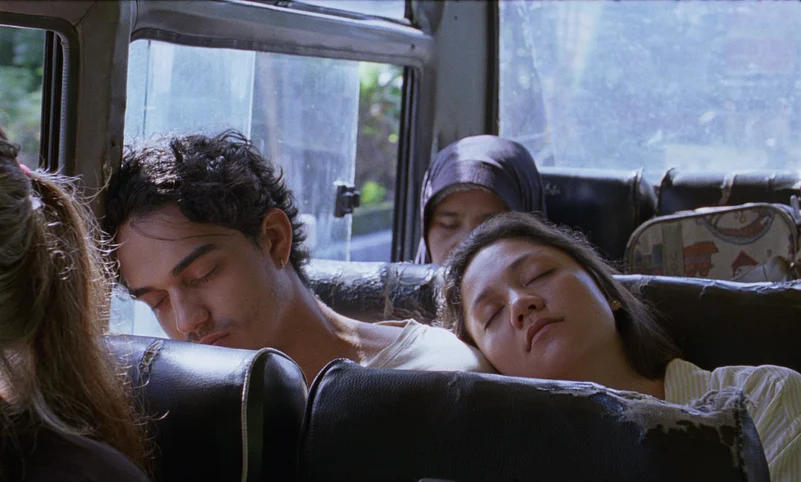
On a German train, Yanto is asked for his passport for the umpteenth time. Miffed, he doesn’t hesitate to call out the obvious racism. It’s the third time on the route he has been singled out whereas the others attract no scrutiny. Clearly, something is amiss. Even after the police are gone, Yanto is met with another form of violation. A girl skips up to Yanto, commiserating with him and passionately reassuring him that she can help him. She projects the kind of performative outrage designed for virality. She has recorded the haranguing. He can use the video, she nudges.


Barely masking an uneasy chuckle, Yanto swats away the glib concern. If there’s not racial profiling by authorities themselves, other citizens gladly and customarily rush in to do the most privacy breaches. A flurry of sharp, sceptical glances rains on Yanto even as the argument over deleting the footage ends in an amused contestation of Germanness.

"Vaterland" or A Bule Named Yanto circles a state of being unmoored. As Yanto arrives in Yogyakarta, reuniting with his younger sister, Sara (Sarah Muckarin Röser), tensions within his half-Indonesian identity also palpably chafe. DP Noah Böhm strikes a softly tinted tone, perched between gauzy dreaminess of siblings on a day out and the illusion of a country/home appearing loosely out of grasp. Straddling trans-nationally, identity is caught in flux. Yanto finds himself almost in a double bind. His sense of belonging forages for itself amidst drifting questions of privilege, immigration, assimilation and losing the thread to his homeland.
Much of the wry film’s restless anguish, twitching uncertainty stems from Saibuma’s perplexed, disoriented gaze. Yanto can’t really jive to the Javanese music his sister’s boyfriend belts out. She too is hurt and slighted at his disconnect. Everything initially seems overwhelming to Yanto, including the way she speeds through busy streets. It’ll take him some time to realign to the chaos of a once-familiar place. Saibuma is enormously charming and amiable even in moments of bewilderment. The absurd, comic chaos of always being seen as an outsider in the most mismatched situations perfectly ripples across his frequently wide-eyed front.
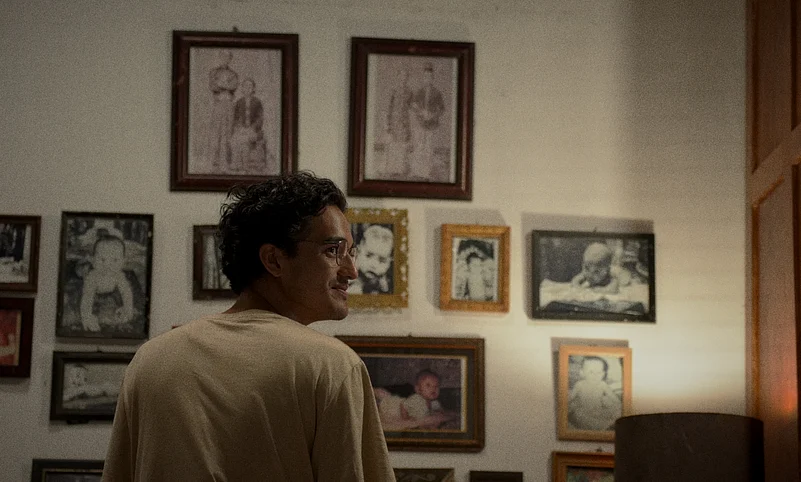
Wahjudi doesn’t fill in details as to Yanto’s pre-existing relationship with Indonesia, apart from a crucial scene with family pictures. Neither are we told how long apart the siblings have been. Nor does the film, in its subtlety and incisiveness, press such a need. But you do wish it also devoted some space and agency to Sara, how the churn of her feelings pans out. Certainly, she seems infinitely relaxed and content in Indonesia, confident and settled in her sense of self whereas he wanders.

"Vaterland" or A Bule Named Yanto remains steadily committed to Yanto’s perspective, his flailing footing upon homecoming, the edged-out-ness he feels both in Germany and Indonesia. On the streets of Indonesia, he’s taken for a white guy as schoolkids request pictures with him. As a member of the diaspora coming to his country of origin, Yanto would have anyway run up against colliding expectations. He’s in a stew of behavioural projection, feeling obligated to course-correct his appearance and yet failing to tide over exclusion. "Vaterland" or A Bule Named Yanto offers an incredibly astute, pointed, funny and ultimately humane reckoning with all these varying tussle. A trip to an aunt’s place, where Yanto gets to pore over family photos, including his own childhood snaps, helps to centre him, abate all the slipstream of being untethered. A profound sense of connection is born, which may steer him for a while.