Sunny Deol and Akshaye Khanna deliver committed performances despite an underwhelming screenplay.
The courtroom drama loses credibility as personal rivalries overshadow the pursuit of justice.
Strong performances cannot rescue a legal thriller weakened by shallow writing and incomplete character arcs.
There is something inherently satisfying about a good courtroom drama. It does not need explosions or elaborate action set pieces to keep audiences invested. A sharp cross-examination, a cleverly argued case, or a moral dilemma can create more tension than any chase sequence. Films like Pink, Jolly LLB and Section 375 understood that. They respected both their audience's intelligence and the complexity of the legal system while using the courtroom to explore broader social questions.
Ikka has little interest in doing either.
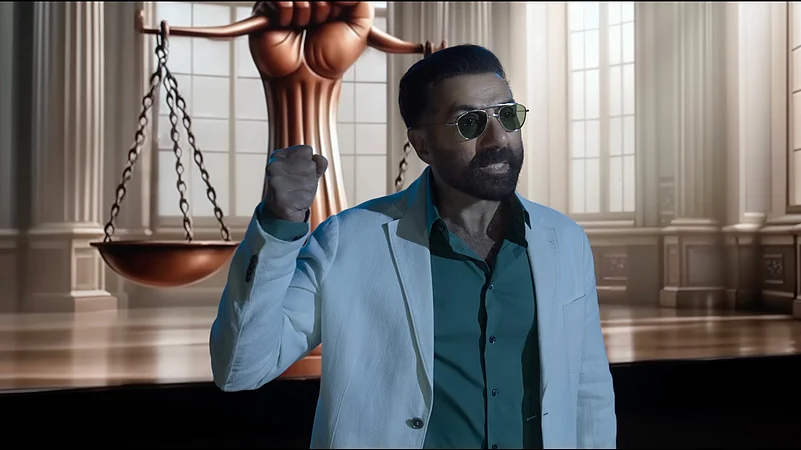
Directed by Siddharth P. Malhotra, the Netflix legal drama begins with the promise of an intense battle between an upright lawyer and a deeply unlikeable accused. On paper, it has all the ingredients of a gripping thriller. Sunny Deol plays Arjun Mehra, a celebrated defense lawyer whose reputation is built on integrity. Akshaye Khanna stars as Shauryamann Gaur, the privileged son of a powerful family who finds himself at the center of a high-profile criminal case. Circumstances force Arjun to represent a man he neither trusts nor respects, setting up what should have been a fascinating moral conflict.




Instead, the film slowly abandons its legal drama in favour of personal rivalries and melodrama. Without revealing too much, Ikka spends far more time exploring the history between its central characters than it does examining the case itself. The courtroom becomes little more than a backdrop for unresolved personal scores. Rather than asking difficult questions about justice, guilt, or ethics, the narrative repeatedly shifts its attention towards emotional confrontations that rarely feel convincing.
That is where the screenplay begins to unravel.
The writing introduces several interesting ideas, but almost none of them receive a satisfying payoff. Characters arrive carrying emotional baggage, hidden motivations and moral conflicts, only for those threads to disappear without proper resolution. The film constantly hints at greater emotional depth beneath the surface, but it never commits to exploring it.
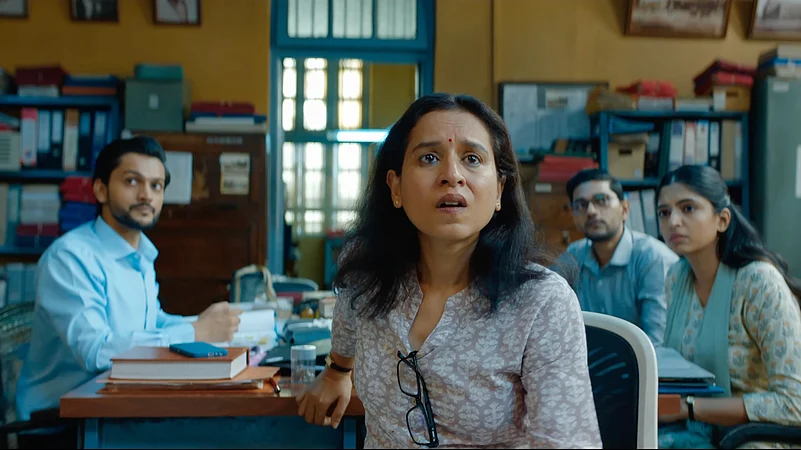
Perhaps the biggest casualty of this uneven writing is Tillotama Shome's portrayal of the prosecutor. She enters the story as an underconfident lawyer trying to prove herself against one of the country's most respected defense attorneys. It is a promising setup. Small glimpses into her personal struggles suggest there is far more to her than the film initially reveals. Yet those details ultimately lead nowhere. Her professional growth, emotional journey and courtroom strategy all remain frustratingly incomplete. It feels as though an entire character arc has been left unfinished.
Dia Mirza fares even worse. Her role exists primarily to push the story forward, but she is given very little to work with. The emotional weight expected from her character never lands because the writing refuses to develop her beyond the basics. It is difficult to invest in someone whose presence feels more functional than meaningful. The performance itself does little to elevate the material, making the casting feel like a missed opportunity.
Sunny Deol, meanwhile, appears trapped between two different films.
The script repeatedly insists that Arjun Mehra is a morally conflicted lawyer forced into an impossible position. Yet Deol often approaches the character with the same heroic certainty that has defined many of his larger-than-life performances over the years. Even when the film attempts to explore ethical dilemmas, his portrayal rarely reflects the vulnerability those moments demand. Instead of watching a lawyer wrestling with his conscience, it often feels as though another familiar Sunny Deol hero has wandered into a courtroom.
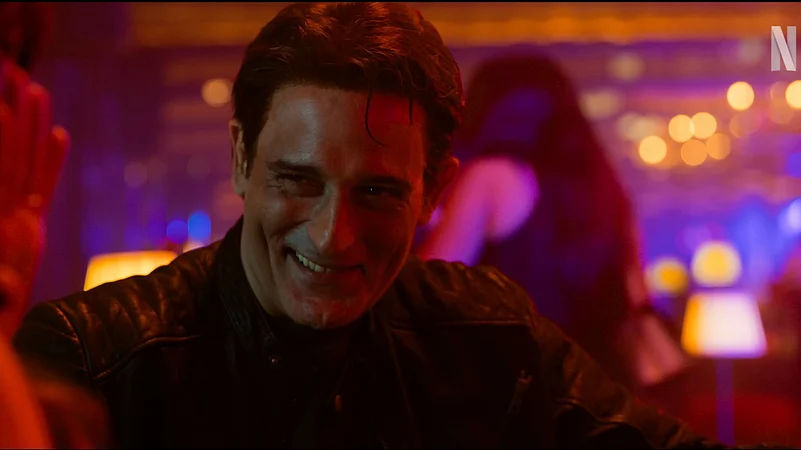
Akshaye Khanna delivers his usual intensity, but even he cannot escape the script's limitations.
After several memorable villainous performances in recent years, there is an expectation that he will bring something fresh to Shauryamann. Unfortunately, the character never evolves beyond familiar mannerisms. The icy stares, calculated delivery of dialogue, and detached arrogance all feel reminiscent of roles he has played before. While his screen presence remains undeniable, the performance never discovers a distinct identity of its own.
Ironically, the central conflict never feels like a legal battle at all.
Instead of building tension through evidence, arguments and courtroom strategy, the film reduces its conflict to two men settling personal differences while an accused person's fate hangs in the balance. That emotional imbalance makes many of the courtroom scenes surprisingly difficult to believe. Lawyers appear driven less by professional ethics than by unresolved grudges, making the legal proceedings feel manufactured rather than authentic.
For a film built around the justice system, Ikka spends remarkably little time convincing viewers that justice actually matters.
The direction does little to compensate for these shortcomings. While Siddharth P. Malhotra keeps the narrative moving at a reasonable pace, the emotional beats rarely land because the screenplay never earns them. Several twists appear designed purely for shock value instead of emerging naturally from the characters or the investigation. By the time the film reaches its climax, logic gives way to hero worship, sacrificing credibility for applause-worthy moments that never feel deserved.
That is perhaps the film's greatest disappointment. There is a genuinely compelling courtroom drama buried somewhere inside Ikka. The cast is capable. The premise is intriguing. The moral conflict has potential. But every time the film approaches something thought-provoking, it retreats into conventional heroics and underwritten emotional confrontations.
A legal thriller should leave audiences debating the verdict long after the credits roll. Ikka leaves them wondering how so many interesting ideas could result in such an unconvincing film. Despite a committed cast led by Sunny Deol and Akshaye Khanna, weak writing, shallow character development and implausible courtroom proceedings make this one of the year's most frustrating disappointments.