Frame asks important questions about journalism, professional ambition and the emotional consequences of witnessing suffering.
It presents a compelling central performance, a thoughtful mentor-student relationship and an honest look at the ethical compromises that often accompany success
However, it settles for an ending that feels easier than the questions it asks for the rest of the film.
There are professions that constantly ask impossible questions. Journalism is one of them. When tragedy unfolds before you, do you put down the camera and help, or do you document history as it happens? There is no universal answer, only personal choices that can define an entire career. Frame builds itself around that uncomfortable dilemma, asking where professionalism ends, and humanity begins.
Directed by Vikram Patwardhan, the Marathi drama uses photojournalism not simply as a profession but as a way of exploring obsession, ambition and the emotional cost of repeatedly witnessing human suffering. It is an intriguing premise, and for much of its runtime, Frame delivers a mature character study anchored by an excellent performance from Nagraj Manjule.
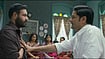
The story follows two photojournalists working at a Pune newspaper. Chandu Pansare (Nagraj Manjule) is a veteran photographer who believes the camera comes first. Experience has taught him that emotions can cloud judgment, and over the years, he has trained himself to look through the viewfinder before looking at the people standing in front of him.


His junior, Sidharth Deshmukh (Amey Wagh), enters the profession with a very different outlook. Idealistic and compassionate, he struggles to accept that documenting suffering sometimes requires emotional distance. Their conflicting philosophies form the foundation of the film, particularly after they are assigned to cover a devastating earthquake, in which every photograph carries a moral consequence.
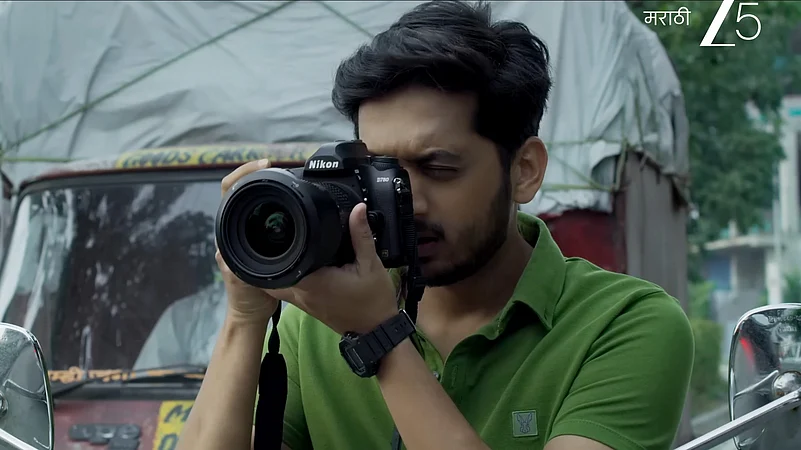
Rather than turning the disaster into a spectacle, Frame uses it to ask larger questions about journalism itself.
Can a photograph change lives if it is never taken? Does documenting suffering automatically make someone exploitative? At what point does professional ambition begin to overshadow empathy? These are questions the film repeatedly returns to, and they remain its greatest strength. What impressed me most was how honestly the film portrays journalism as just another profession.
There is often a tendency to romanticise reporters as fearless truth-seekers or condemn them as opportunists. Frame chooses a more balanced path. It acknowledges that journalists, like people in every profession, carry ambition, insecurity, ego and personal struggles into their work. Career progression, recognition and competition influence decisions just as much as ethics do. It is an uncomfortable observation, but one that feels painfully honest.

The portrayal of photojournalism is particularly compelling.
The film understands that photography is not simply about pressing a shutter. It is about waiting, observing and deciding which moment deserves to become permanent. There is genuine respect for the craft throughout the film, especially in scenes that capture photographers searching for the right frame as chaos unfolds around them.
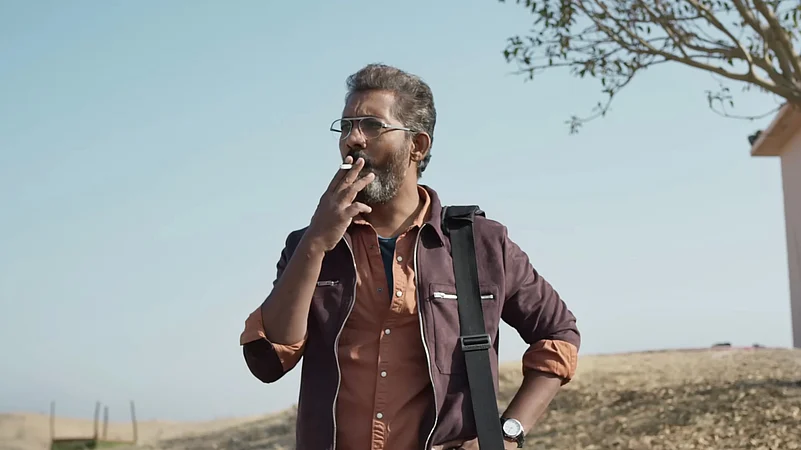
At its heart, however, Frame is less about journalism than obsession. It explores how devotion to one's craft can slowly transform into something destructive. Chandu is not presented as a villain. Instead, he is shown as someone who has spent years convincing himself that emotional detachment is necessary to survive his profession. As his personal life deteriorates and alcohol gradually becomes a coping mechanism, the film suggests that the price of becoming exceptional at one's work may sometimes be losing the ability to connect with everything outside it.
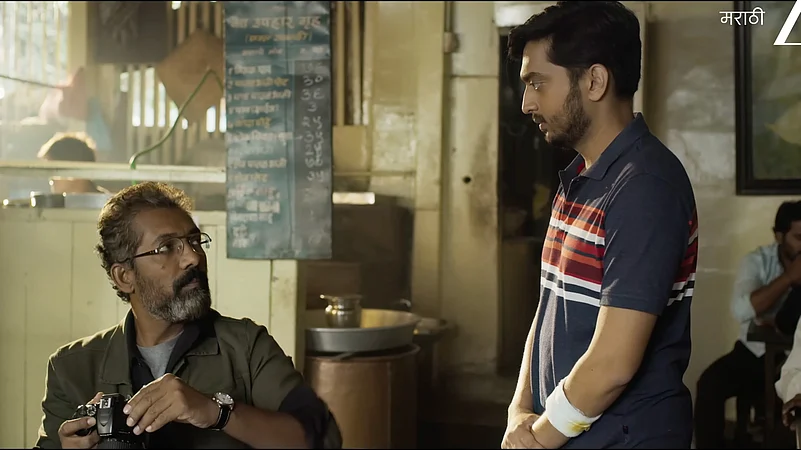
That journey belongs entirely to Nagraj Manjule. He delivers a performance built on restraint rather than dramatic outbursts. His arrogance never feels theatrical. Instead, it grows naturally out of years spent believing his way is the only way. Beneath that confidence sits exhaustion, loneliness and emotional decay. Manjule captures those contradictions beautifully, making Chandu both frustrating and deeply human.
Amey Wagh provides an effective contrast as the idealistic newcomer. Their mentor-mentee relationship becomes one of the film's strongest elements because neither character is entirely right or entirely wrong. Their differing approaches create thoughtful conversations about ethics without reducing either perspective to a simplistic moral lesson.
This dynamic occasionally recalls films like Whiplash, not because of narrative similarities, but because of its exploration of mentorship, obsession and the blurred line between pushing someone towards greatness and pushing them towards self-destruction.
Technically, the film remains grounded throughout. The cinematography naturally complements its subject matter, frequently allowing photographs themselves to carry emotional weight. The newsroom and disaster-stricken locations feel authentic without becoming overly stylised, helping to maintain the realism the story depends on.
Unfortunately, Frame struggles to maintain that consistency until the end.
The screenplay gradually loses its confidence, and the final act begins relying on developments that feel far less believable than everything that came before. After spending so much time building complex moral questions, the resolution simplifies them in ways that undermine the emotional impact. The ending feels more designed to create drama than to remain faithful to the characters the film had carefully established.

It is disappointing because so much of what comes before works remarkably well. Frame asks important questions about journalism, professional ambition and the emotional consequences of witnessing suffering. It presents a compelling central performance, a thoughtful mentor-student relationship and an honest look at the ethical compromises that often accompany success. Had it trusted its own ideas until the very end, it could have become one of the more memorable dramas about journalism in recent years.
Instead, it settles for an ending that feels easier than the questions it asks for the rest of the film.